

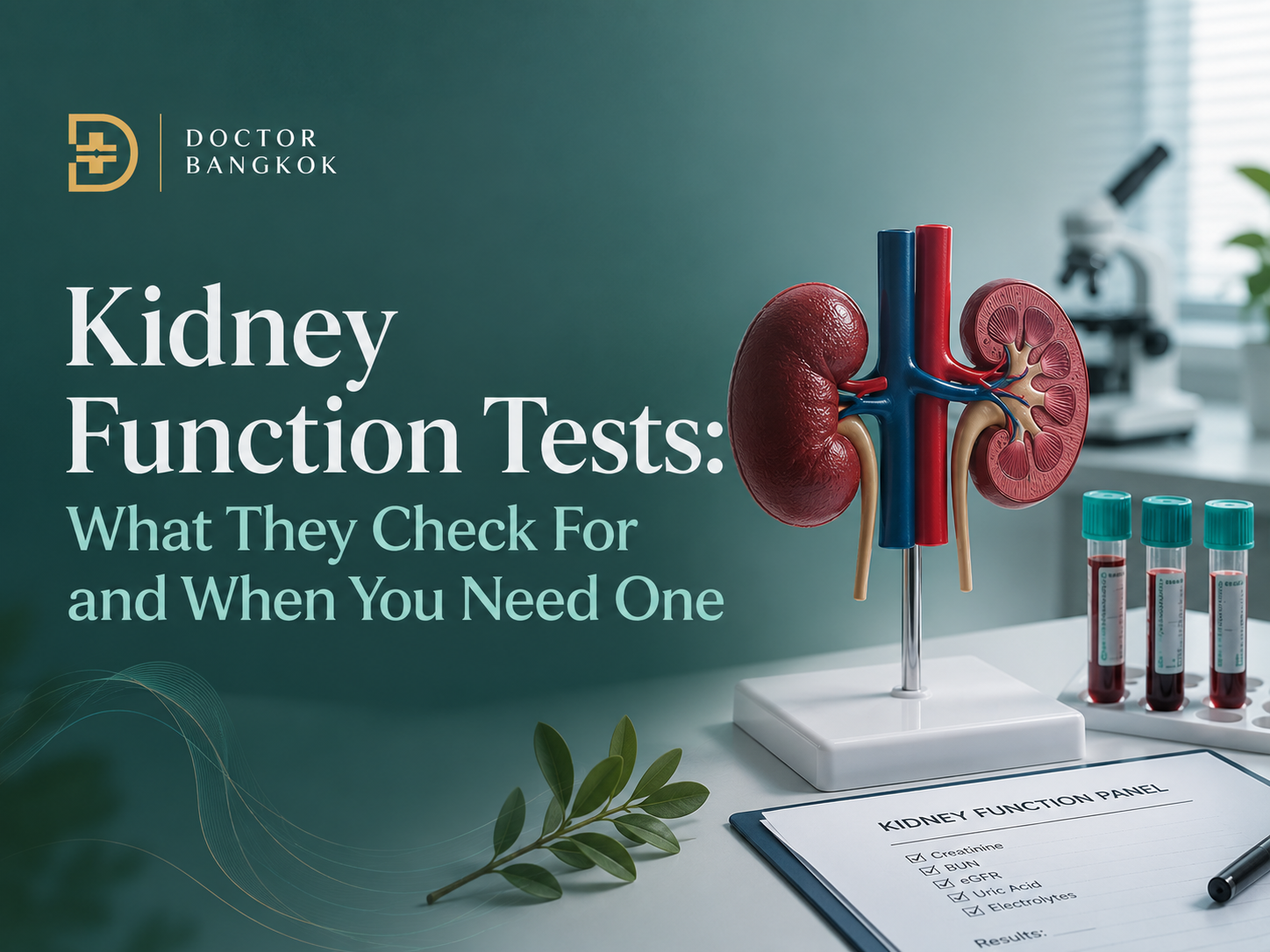
Clinically reviewed by Dr. Ponlawat Pitsuwan, Physician, Doctor Bangkok. Last reviewed: July 2026
A kidney function test is a blood and sometimes urine test that checks how well your kidneys are filtering waste from your body. The main markers are creatinine, eGFR, and BUN. Most results are ready within a few hours to one business day. You do not need symptoms to get tested, and no referral is required at Doctor Bangkok.
Most people who ask me about kidney tests are not sick. They are expats who have been in Bangkok for six months, never had a baseline blood test here, and something, a friend’s diagnosis, a bout of dehydration after a long weekend, made them think: when did I last check my kidneys? The answer is usually never, or not for years.
That is actually the right time to test. Kidney disease is quiet. It does not announce itself with pain or obvious symptoms until it is well advanced. A kidney function test, sometimes called a renal function panel, gives you a clear picture of how your kidneys are doing right now. If something is off, you catch it early.

What a Kidney Function Test Actually Measures
There are three markers I always look at first. Together they tell a much more complete story than any one of them alone.
Serum Creatinine
Creatinine is a waste product your muscles produce constantly. Healthy kidneys filter it out of your blood and into your urine. When the kidneys are struggling, creatinine builds up in the blood. A high creatinine level is one of the clearest early signals that the kidneys are under stress.
One thing I always tell patients: creatinine has to be read in context. A muscular person will naturally run a higher level than a smaller person. Dehydration can push it up temporarily. We never interpret creatinine in isolation.
eGFR, Estimated Glomerular Filtration Rate
eGFR is calculated from your creatinine result alongside your age and sex. It estimates how well your kidneys are filtering your blood each minute. Think of it as a rough percentage of your kidneys’ filtering capacity. A score above 90 is generally healthy. Below 60, sustained over time, starts to indicate chronic kidney disease.
This is the number that matters most. It gives a much cleaner picture than creatinine alone.
Blood Urea Nitrogen, BUN
BUN measures another waste product that builds up when kidneys are not clearing it properly. I use BUN alongside creatinine because BUN on its own is too easily influenced by other things: diet, hydration, and liver function. The BUN-to-creatinine ratio helps us work out whether a kidney problem is the real cause, or whether something else is moving the numbers.
Urine Tests, Protein, and Albumin
A full kidney panel often includes a urinalysis and sometimes a urine albumin-to-creatinine ratio, known as UACR. Protein in the urine, called proteinuria, is one of the earliest signs of kidney damage. Healthy kidneys do not let protein leak through. When they do, it means the filtering system is starting to break down, and this often happens before creatinine even rises.
Some panels also include electrolytes like sodium and potassium. The exact panel depends on what we are looking for and your risk profile.
How to Read Your Results
The CKD Staging Scale
If your eGFR comes back below 60 on more than one occasion, we stage chronic kidney disease, or CKD, from G1 through G5. G1 and G2 mean eGFR is still relatively preserved, usually above 60, but early signs like protein in the urine are present. G3 means eGFR has dropped to between 30 and 59. G4 is 15 to 29. G5 is below 15, which is kidney failure.
Most patients I see, even those with abnormal results, are in the G1 to G3 range. That is the window where lifestyle changes and treatment make a real difference.
One Abnormal Result Is Not a Diagnosis
A single high creatinine or low eGFR is a flag, not a diagnosis. It means we retest, check what else was going on, look at your medications and hydration, and decide together whether this needs investigation or just a repeat test in a few weeks. I see patients panic over a result that turns out to be dehydration from a long flight. Context matters every time.

Who Should Get a Kidney Function Test
Standard Risk Factors
The usual candidates are people with diabetes, high blood pressure, a family history of kidney disease, or a history of kidney stones. If you are on long-term medications, especially pain relievers, certain antibiotics, or blood pressure drugs, your kidneys should be checked regularly.
Bangkok-Specific Reasons to Test
This is the part that surprises most expats. Bangkok’s heat is a genuine kidney risk. Chronic mild dehydration, the kind where you never feel desperately thirsty but you are not drinking enough, puts sustained low-level stress on your kidneys over months. I see this regularly.
NSAID painkillers like ibuprofen and naproxen are easy to buy over the counter here. Many travellers and expats use them regularly for headaches, back pain, or post-travel soreness. Used frequently, they can reduce blood flow to the kidneys and cause real damage over time. The same applies to certain antibiotics picked up at pharmacies without a prescription.
High-protein diets and creatine supplements, very common in the expat gym community, also push kidney markers up. That does not automatically mean damage, but it is worth having a baseline so future results can be read correctly. If you are new to Bangkok and have never established a medical baseline here, a kidney function test is one of the most practical things you can do.
Factors That Can Skew Your Results
Before you read your results, know what can temporarily push numbers in the wrong direction. Dehydration is the most common one I see. Even mild dehydration raises creatinine and BUN. Being well hydrated on the day of your test gives a cleaner result.
Intense exercise the day before can raise creatinine, because muscles produce more waste when they are working hard. A high-protein meal the night before can nudge BUN upward.
Medications matter too. NSAIDs, some antibiotics, contrast dye from recent imaging scans, and certain supplements can all affect your results. When you come in, tell us everything you are taking. That includes herbal products bought at markets here and anything you brought from home. We cannot read your results accurately without that information.
Do You Need to Fast Before a Kidney Function Test?
The short answer: not for the kidney markers themselves. Creatinine, eGFR, and BUN do not require fasting.
The longer answer: most people getting a kidney function test are also having other tests done at the same time, a lipid profile, fasting glucose, or a full health check panel. Those tests do require fasting. When you book, confirm exactly what is included. At Doctor Bangkok, we go through this at the time of booking so you arrive prepared. If you are doing a standalone kidney panel only, water is fine. Stay hydrated.
Getting a Kidney Function Test at Doctor Bangkok
What the Visit Looks Like
There is no complicated process here. You come in, we take a brief history covering medications, symptoms, and any relevant conditions, and we draw blood. If a urine test is included, you provide a sample at the clinic. The whole process takes under thirty minutes.
Results from a standard kidney panel are typically ready within a few hours to one business day. A physician goes through your results with you, explains what the numbers mean in plain language, and tells you whether any follow-up is needed. You are not handed a printout and sent home.
English Reports You Can Share With Your Home Doctor
Your results are documented in English in a format your home-country GP or health insurer can read. If you have no prior records here, we establish your baseline. If you need ongoing monitoring, we keep that record here so there is continuity.
For expats who travel frequently, carrying recent kidney function results is practical. If something happens while you are abroad or back home, your doctor has a reference point. You can find out more about our diagnostic services and health panels and what is included in each.
Who Does Not Need to Wait for a Scheduled Appointment
If you have swelling in your legs, face, or around your eyes, if you are urinating much less than normal, or your urine is foamy or dark, come in. Persistent fatigue and nausea without an obvious cause also warrant clinical assessment. Doctor Bangkok is accessible from BTS Asok and open to walk-ins.
Concerned about your kidney health or due for a routine check-up? Doctor Bangkok offers kidney function testing with same-day blood draws, English-language results, and a physician consultation to walk you through what your numbers mean. No referral needed. Located in central Bangkok, BTS accessible. Book online or walk in at doctorbangkok.co.th.
Frequently Asked Questions
Do I need to fast before a kidney function test?
For creatinine, eGFR, and BUN, fasting is not required. But if your kidney panel is being run alongside a lipid profile or fasting glucose, which is common in full health checks, fasting applies to the entire blood draw. Doctor Bangkok will confirm exactly what you need to do before you arrive when you book.
What does a high creatinine level mean?
It usually means your kidneys are not clearing waste as efficiently as they should be, but it can also mean you were dehydrated, exercised hard the day before, or have a large muscle mass. One high result is not a diagnosis. We look at it alongside eGFR and BUN, and often repeat the test before drawing any conclusions.
How long does it take to get results in Bangkok?
At Doctor Bangkok, a standard kidney function panel is typically ready within a few hours to one business day. A physician goes through your results with you to explain what the numbers mean and whether any follow-up is needed.
I have no medical records from my home country. Can I still get tested?
Yes, and you should. A kidney function test does not need prior records. Your results stand on their own as a baseline. Doctor Bangkok provides English-language documentation you can share with a home GP or health insurer, which is exactly how new expats start building a medical record here.
How often should I get a kidney function test as an expat?
For healthy adults with no risk factors, once a year as part of a routine health check is usually enough. If you have diabetes, high blood pressure, take regular medications, or spend a lot of time in Bangkok’s heat without drinking enough water, every six months is more appropriate. A doctor at Doctor Bangkok can advise on the right frequency for your situation.
Can the Bangkok heat actually affect my kidneys?
Yes, and this is genuinely underappreciated. Chronic mild dehydration over months creates sustained low-level stress on the kidneys. Most expats are not severely dehydrated, but many are not drinking enough, especially in the dry season or when exercising outdoors. This is one reason I recommend expats get a kidney function test as part of their annual health check.
Dr. Ponlawat Pitsuwan
Physician, Doctor Bangkok
a private medical clinic in central Bangkok. He sees expats, residents, and medical tourists for general health checks, kidney function testing, and chronic disease monitoring. His focus is straightforward, evidence-based care delivered in plain language.
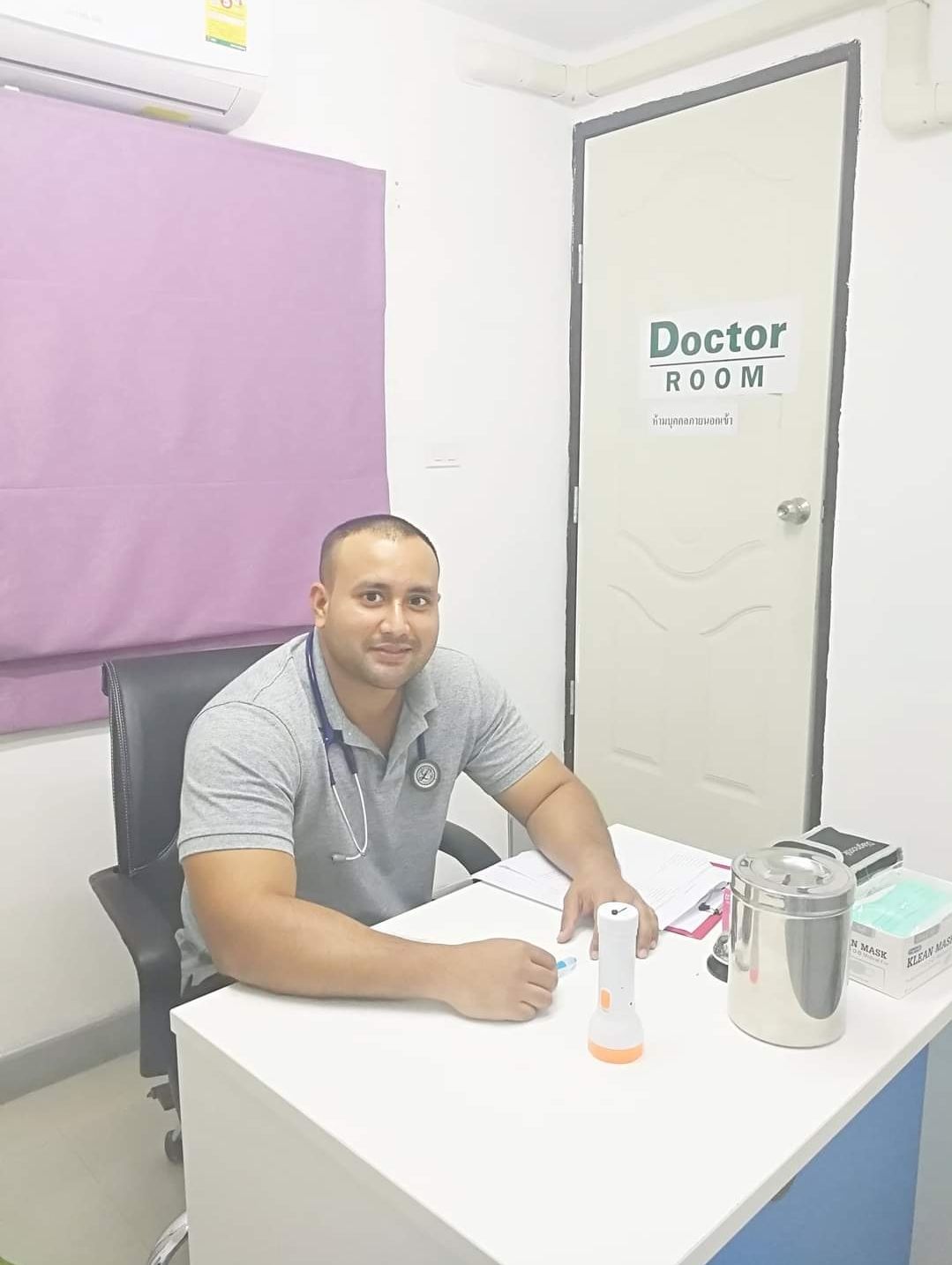
Dr. Ponlawat Pitsuwan is a physician at Doctor Bangkok, a private clinic in central Bangkok. He sees expats, residents, and medical tourists for general medicine, wellness consultations, and IV therapy. His focus is straightforward, evidence-based care delivered in plain language.