
Clinically reviewed by Dr. Ponlawat Pitsuwan, Physician, Doctor Bangkok.
Last reviewed: July 2026
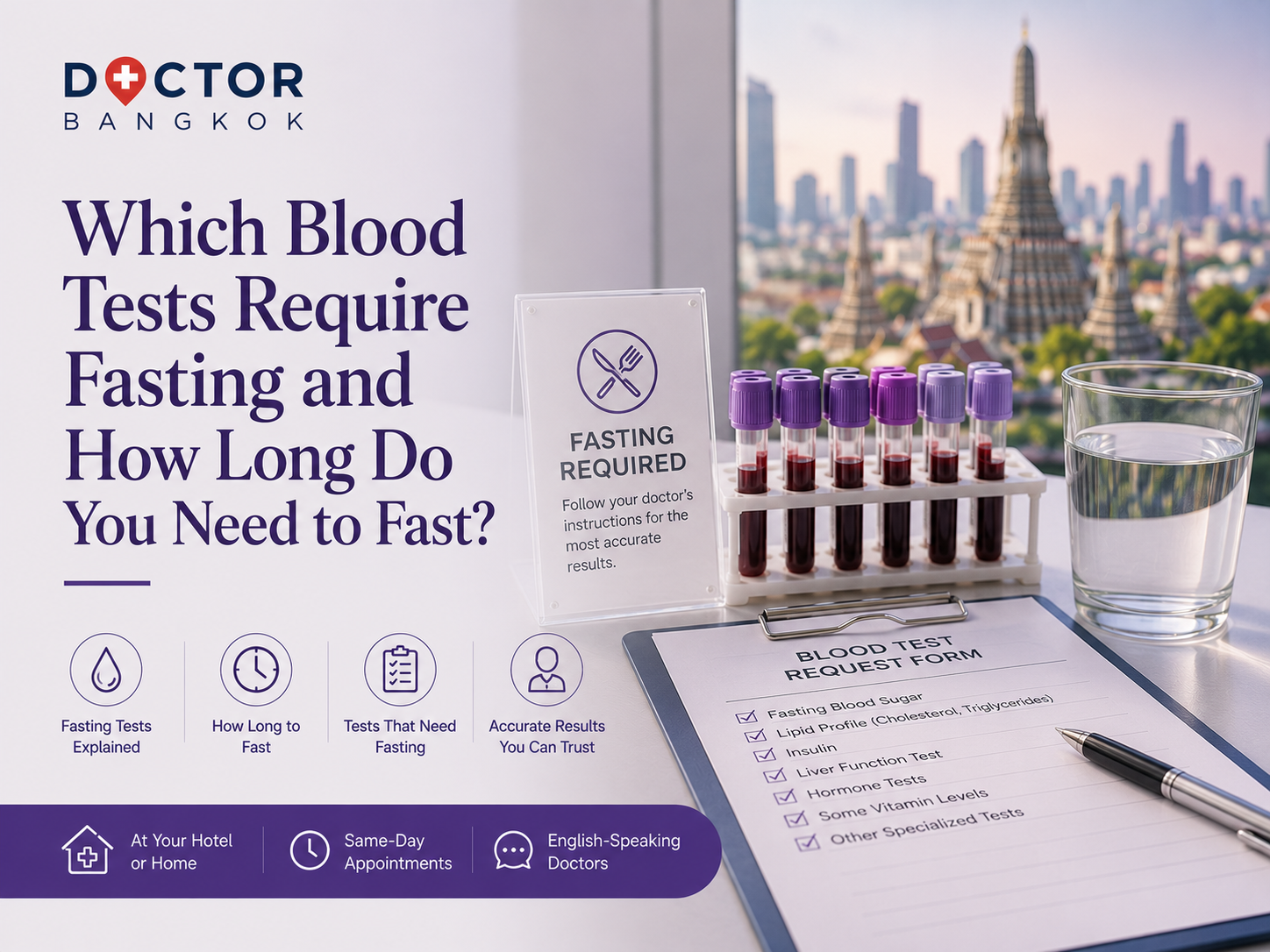
Most fasting blood tests need 8 to 12 hours without food or drink, except plain water. The tests that require fasting are mainly glucose, lipid panels, iron studies, and certain hormone tests. CBC, thyroid, HbA1c, and STI panels do not require fasting. If you are unsure, check with your clinic before you arrive.
You have a blood test booked and you are not sure whether to skip breakfast. Maybe it is a full health check, a lipid panel, or just a routine screen. This is one of the most common questions I get at the clinic, and the answer depends entirely on which test you are having.
Most tests fall into one of two clear groups: those that need fasting and those that do not. Get this right and your results will be accurate. Get it wrong and you may need to come back, or receive a result that does not reflect what is actually going on. Here is what you need to know before you arrive.

Which Blood Tests Require Fasting
Glucose and diabetes-related tests
Fasting glucose is the test where this matters most. Eating before it, even something small, will raise your blood sugar and make the result meaningless. This test screens for diabetes and prediabetes, so an inaccurate number can lead to unnecessary follow-up or a missed diagnosis.
Fasting insulin works the same way. Eating raises your insulin level and the result will not reflect your true baseline. This test is only useful after an overnight fast.
Lipid panel and cholesterol
Your lipid panel covers total cholesterol, LDL, HDL, and triglycerides. Triglycerides are highly sensitive to food. Eating beforehand can push your triglyceride level well above your true baseline and make your LDL calculation unreliable. Treatment decisions, including whether to start a statin, are often based on these numbers.
Iron studies
Iron, ferritin, and transferrin tests are best done fasted. Iron levels can shift noticeably after eating, especially after iron-rich foods or supplements. If you are being checked for anaemia or iron deficiency, fasting gives a cleaner result.
Uric acid
Uric acid levels can rise after eating, especially after a meal high in meat, seafood, or alcohol. If you are being checked for gout or high uric acid, fasting makes the result more reliable.
Certain hormone tests
Some hormone panels, including cortisol and certain fertility hormones, are best collected fasted and at a specific time of day. Cortisol should ideally be drawn in the morning while fasted. If you are having a hormone panel, confirm the timing and fasting requirements when you book.
Which Blood Tests Do NOT Require Fasting
This is where I see a lot of unnecessary confusion. Many patients fast for an entire morning before tests that simply do not need it.
A complete blood count, or CBC, does not require fasting. It looks at your red cells, white cells, and platelets, and food does not meaningfully change those numbers. Thyroid function tests, including TSH, T3, and T4, do not require fasting either. I see patients skip breakfast before thyroid panels all the time when there is no reason to.
HbA1c reflects your average blood sugar over roughly three months, so what you ate this morning has no effect. STI and sexual health panels, vitamin levels including vitamin D and B12, liver function tests, kidney function tests, and most infection markers like CRP also do not require fasting.
If your health check includes a mix of fasting and non-fasting tests, the practical move is to fast for the whole panel. You are having blood drawn once, so there is no downside to covering everything together.

How Long Do You Need to Fast
The standard fasting window is 8 to 12 hours. For most patients, the simplest approach is to stop eating after dinner, drink only plain water, and come in the next morning.
Eight hours is the minimum for most tests. Twelve hours is ideal for lipid panels. Going beyond 14 hours is unnecessary and can affect glucose levels in people prone to low blood sugar.
| Test | Fasting Required | Minimum Fasting Duration |
|---|---|---|
| Fasting glucose | Yes | 8 hours |
| Fasting insulin | Yes | 8 hours |
| Lipid panel (cholesterol, triglycerides, LDL, HDL) | Yes | 9 to 12 hours |
| Iron studies | Yes | 8 hours |
| Uric acid | Yes | 8 hours |
| Cortisol (morning draw) | Yes | 8 hours |
| CBC (complete blood count) | No | None required |
| HbA1c | No | None required |
| Thyroid function (TSH, T3, T4) | No | None required |
| Vitamin D / B12 | No | None required |
| STI / sexual health panel | No | None required |
| Liver function tests | No | None required |
What You Can and Cannot Have During a Fast
Plain still water is always allowed and encouraged. Staying hydrated before your blood draw actually helps. It keeps your veins easier to find.
Coffee is not allowed, even black with no sugar. Caffeine can raise cortisol and slightly affect glucose levels. Tea has the same problem. Sparkling or flavoured water is also out. If it is not plain still water, avoid it during your fasting window.
Medications are generally fine to continue as normal. That said, high-dose biotin supplements can interfere with certain thyroid results. Bring a list of everything you take and let the clinical team know when you arrive.
What Happens If You Accidentally Ate Before a Fasting Blood Test
Tell us as soon as you arrive. Do not try to push through and hope for the best.
For glucose and lipid tests, eating beforehand can significantly change your results. A non-fasting number can look abnormal when your actual levels are fine, or it can mask a real problem.
At Doctor Bangkok, if you arrive having eaten, we will work out the best approach together. That might mean proceeding with the tests unaffected by food, noting the non-fasting status on your result, or rescheduling the fasting tests for another morning. It happens regularly and there is always a practical solution.
Tips for Fasting in Bangkok’s Heat
This is something I rarely see addressed, but it genuinely matters here. Bangkok is hot. Even early in the morning, the humidity means you are losing fluid just sitting still.
Dehydration during a fast makes the blood draw harder. Veins become smaller and more difficult to locate. The fix is simple: drink extra plain water the evening before your test and again in the morning.
Book the earliest appointment you can. Coming in at 8am rather than 11am keeps your fasting window overnight, avoids the midday heat, and means you can eat as soon as you are done. If you feel dizzy or unwell during your fast, drink water and tell the clinical team when you arrive.
Getting a Fasting Blood Test at Doctor Bangkok
Doctor Bangkok offers walk-in and same-day fasting blood tests at our clinic in central Bangkok, close to BTS. Our team speaks English and your results are delivered in English.
We run a full diagnostics service covering glucose, lipid profiles, iron studies, uric acid, hormone panels, and more. You can review what is included before you book. If you need results formatted for a physician back home or documentation for travel insurance, let us know when you check in.
We see a lot of expats who have been in Bangkok for months or years without a proper health check. If that is you, a fasting morning appointment is an easy way to get a clear baseline in one visit. Find out more about which blood tests require fasting and what to expect before you arrive.
Ready to book your fasting blood test in Bangkok? Doctor Bangkok offers same-day and walk-in blood testing in central Bangkok with English-speaking physicians and results in English. Walk in or book ahead at doctorbangkok.co.th/diagnostics/. Morning appointments are available and we will confirm exactly which tests in your panel require fasting before you arrive.
Frequently Asked Questions
Can I drink coffee before a fasting blood test?
No, even black coffee with nothing added can affect certain results. Caffeine raises cortisol and can nudge blood glucose upward. Plain still water is the only thing you should have during a fast. If you had a coffee before coming in, just tell us when you arrive.
Do I need to fast before a health check-up in Bangkok?
It depends on what is included. Most health check packages include fasting glucose and a lipid panel, both of which require fasting. Since other tests like CBC and thyroid are drawn at the same time, fasting for the full panel is the practical approach. Confirm with Doctor Bangkok at the time of booking and we will tell you exactly what to do.
What should I do if I accidentally ate before a fasting blood test?
Tell the clinic straight away. Eating before a glucose or lipid test can change your results and lead to incorrect follow-up. At Doctor Bangkok, we will work out the best approach together, whether that is proceeding with non-fasting tests, noting the timing on the result, or rescheduling. There is always a solution.
Is fasting harder in Bangkok because of the heat?
Yes, and it is worth planning for. The heat and humidity increase fluid loss even at rest, which can make you more dehydrated during a fast and make veins harder to find. Drink plenty of plain water the night before and again in the morning, and aim for the earliest possible appointment to avoid the midday heat.
Can I take my regular medications before a fasting blood test?
Generally yes. Most prescribed medications should be continued as normal. However, high-dose biotin supplements can affect thyroid test accuracy, and timing can matter for certain panels. Bring a list of everything you take and let the Doctor Bangkok clinical team know when you check in.
Does HbA1c require fasting?
No. HbA1c reflects your average blood sugar over roughly three months, so what you ate this morning has no effect on the result. You can have this test at any time of day without fasting. It is often included alongside fasting glucose in health check panels, which is why patients sometimes assume the whole panel needs fasting.
How early should I book a fasting blood test in Bangkok?
As early as possible in the morning. This keeps your fasting window overnight so you are not skipping meals during the day. Morning walk-in slots are available at Doctor Bangkok, and it is the approach I recommend to every patient having fasting tests. You can eat as soon as you are done.
Dr. Ponlawat Pitsuwan
Physician, Doctor Bangkok
a private medical clinic in central Bangkok. He sees expats, residents, and medical tourists for general medical consultations, diagnostics, health checks, and preventive care. His focus is straightforward, evidence-based care delivered in plain language.
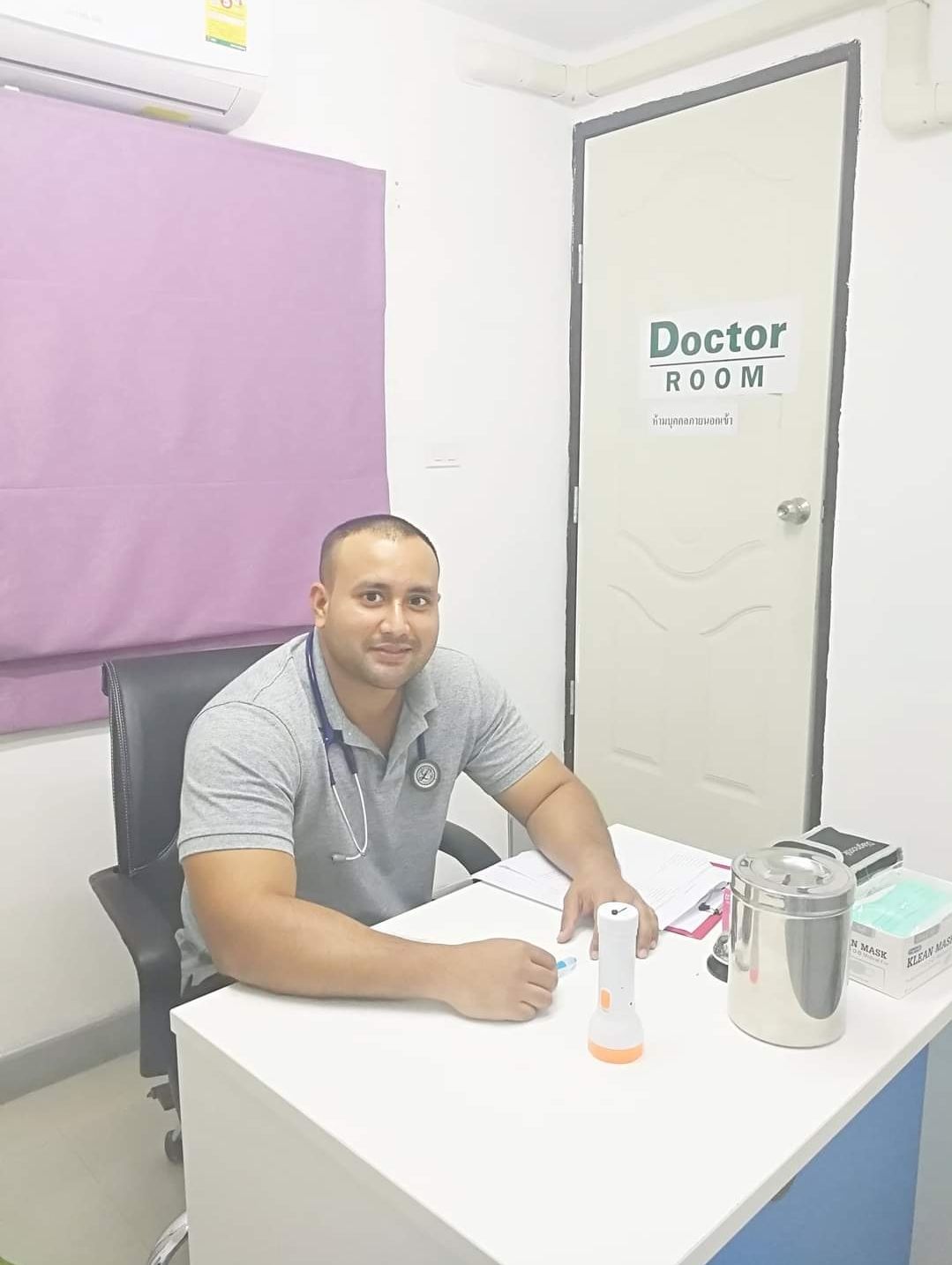
Dr. Ponlawat Pitsuwan is a physician at Doctor Bangkok, a private clinic in central Bangkok. He sees expats, residents, and medical tourists for general medicine, wellness consultations, and IV therapy. His focus is straightforward, evidence-based care delivered in plain language.