
Clinically reviewed by Dr. Ponlawat Pitsuwan, Physician, Doctor Bangkok.
Last reviewed: July 2026
Flight attendants in Thailand require a separate aviation medical assessment — not the pilot Class 1 certificate many applicants expect. The exam covers vision, hearing, heart health, blood tests, mental health screening, drug testing, and vaccination records. At Doctor Bangkok, English-speaking physicians on Sukhumvit can complete supporting health checks, vaccinations, and serology in a single visit to help you meet your airline’s clearance requirements.
If you have just been offered a cabin crew position in Bangkok, or you are renewing your existing clearance, you have probably started searching for what this medical actually involves. Airlines and recruitment agencies do not always explain it clearly. For expat applicants doing this in a second language, the process can feel confusing fast.
The key thing to know upfront: flight attendants in Thailand do not need the same medical as pilots. The standards are different, the exam is different, and knowing that from the start will save you a lot of unnecessary anxiety. Here is what the process actually looks like.

What Class of Medical Certificate Do Flight Attendants Need in Thailand?
Pilots in Thailand require a Class 1 or Class 2 medical certificate issued under Civil Aviation Authority of Thailand (CAAT) standards. Cabin crew do not sit within that framework.
Flight attendant medicals fall under a separate occupational aviation health standard, sometimes called a Class 4 assessment or cabin crew fitness evaluation. The focus is on functional fitness for duty, not the stricter benchmarks that apply to pilots. The pass threshold is meaningfully different. Many conditions that would affect a pilot’s certificate have no bearing on cabin crew clearance at all.
If someone told you the standard was the same as a Class 1 pilot medical, they were wrong.
What Does the Flight Attendant Medical Exam Include?
Your vision is tested for adequate distance and colour discrimination. Your hearing is checked to confirm you can communicate clearly in a noisy cabin environment.
Your heart health is assessed through a blood pressure check, a resting ECG, and a review of any cardiac history. You do not need a perfect ECG, but significant uncontrolled findings will be flagged.
Blood tests are standard. These typically include a full blood count, liver and kidney function, blood sugar, and serology for infectious diseases relevant to international travel. Drug and alcohol screening is routine and expected.
Mental health is assessed through a structured questionnaire and clinical interview. If you are on long-term psychiatric medication, bring documentation of your diagnosis and current treatment.

Common Conditions That May Affect Clearance — and What Happens Next
Being flagged during your medical is not the same as being refused. This is the part most applicants do not realise until they are sitting in front of a doctor.
Findings that tend to cause concern include uncontrolled high blood pressure, untreated significant psychiatric conditions, active substance dependence, and significantly uncorrected vision or hearing. The word to focus on is uncontrolled. A stable, treated condition with solid clinical documentation is a very different conversation.
If your exam raises a concern, the examiner may issue clearance with conditions, refer you for specialist review, or recommend a temporary hold pending further information. Under CAAT rules, you also have the right to appeal a refusal to the Board of Aeromedical Specialists within 30 days.
The biggest mistake I see is candidates assuming a flagged result is final. It often is not. Getting a clinical review early, before your hiring deadline, gives you the most options.
How Missing Vaccination Records Can Delay Your Hiring — and How to Fix It
Incomplete vaccination records are one of the most common reasons clearance gets delayed. I see this regularly with expat applicants who have vaccination histories from multiple countries, sometimes in different languages, with no single coherent document to present.
If your records are missing or incomplete, the practical solution is serology. A blood test can confirm whether you already have immunity to specific diseases, even without a paper record. If the result shows a gap, catch-up vaccination is straightforward and can often be done the same day.
The vaccines most commonly required or recommended for cabin crew in Thailand include hepatitis A, hepatitis B, typhoid, influenza, and yellow fever if you are flying relevant routes. At Doctor Bangkok, our travel health and vaccination service can check your existing immunity, administer any missing vaccines, and issue official documentation in a single visit. For expat applicants managing this without local HR support, that kind of consolidated visit makes a real practical difference.
How Vaccinations Affect Your Deployment and Visa Eligibility
Some routes and some countries require proof of specific vaccinations before you can operate them. Yellow fever is the most common example. If you are based in Bangkok and your airline operates West African or South American routes, your vaccination record becomes part of your deployment eligibility, not just your health clearance.
This is also relevant to visa applications in some countries. An incomplete or outdated vaccination record can trigger delays that have nothing to do with your clinical health. Keeping your records current and in a single, legible English-language document saves significant headaches down the line.
Getting Your Flight Attendant Medical in Bangkok — What to Bring and What to Expect on the Day
Preparation is straightforward, but missing one document can push your appointment back. Bring a valid passport or ID, your existing vaccination records in whatever language you have them, any medical history relevant to conditions you are managing, and a list of current medications with dosages.
If your exam includes fasting blood tests, you will be asked not to eat for at least eight hours beforehand. Check with your clinic when you book. The physical exam is not long, but vision, hearing, ECG, and blood tests together take a couple of hours.
At Doctor Bangkok, appointments are booked in advance and conducted entirely in English. We see a high volume of expat applicants for pre-employment health checks and can coordinate vaccination, serology, and documentation in the same visit where needed.
Renewal — How Often Do You Need to Come Back?
Your certificate does not last forever. Renewal frequency is set by your airline’s policy and CAAT guidance, and it varies by individual circumstances.
One rule applies consistently: if you are off work due to illness for more than 14 consecutive days, most airlines and CAAT-aligned examiners require a medical review before you return to duty. Do not assume you can go back to flying after a significant illness without checking this with your employer and examiner.
Book your renewal appointment at least four to six weeks before your certificate lapses. A lapsed certificate can affect your roster, your pay, and in some cases your employment status. Do not let it catch you off guard.
Need your flight attendant medical, vaccinations, or serology done in Bangkok? Doctor Bangkok offers pre-employment health checks, travel vaccinations, and serology testing in a single visit, conducted in English on Sukhumvit and accessible by BTS. Whether you are a first-time applicant or due for renewal, we can help you get the documentation you need. Visit doctorbangkok.co.th/travel-health-bangkok to learn more or book your appointment.
FAQ
Do flight attendants in Thailand need a Class 1 medical certificate like pilots?
No. Class 1 is a pilot certification. Cabin crew in Thailand are assessed under a separate occupational aviation health standard, sometimes called a Class 4 or cabin crew fitness evaluation. The standards are less restrictive in most clinical areas, and many conditions that would affect a pilot’s certificate have no impact on cabin crew clearance.
What happens if I am flagged during my flight attendant medical?
Being flagged is not the same as being refused. The examiner may issue clearance with conditions, request a specialist review, or recommend a short hold while further information is gathered. Under CAAT rules, you can also appeal a refusal to the Board of Aeromedical Specialists within 30 days, so getting reviewed early gives you the best chance of meeting your hire date.
My vaccination records are incomplete or in a foreign language. Will this delay my clearance?
It can, but it is usually fixable. A serology blood test can confirm your existing immunity even without paper records, and if gaps are found, catch-up vaccination is often available the same day. A clinic that offers serology and vaccination together, such as Doctor Bangkok, can resolve most documentation issues in a single visit.
How often do flight attendants need to renew their medical in Thailand?
Renewal frequency depends on your airline’s policy and CAAT guidance and varies by individual circumstances. What applies consistently is that if you are off sick for more than 14 consecutive days, a medical review is typically required before returning to duty. Book renewals at least four to six weeks ahead of your certificate expiry to avoid roster disruptions.
Can I get my flight attendant medical and vaccinations done at the same clinic in Bangkok?
Yes, and that is the most efficient approach. At Doctor Bangkok, we offer pre-employment health checks, travel vaccinations, serology, and supporting documentation in a single visit, conducted entirely in English. This is particularly useful for expat applicants who do not have local HR support walking them through the process.
I have a managed chronic condition. Can I still pass a flight attendant medical?
Very possibly, yes. Stable, treated conditions including managed hypertension, corrected vision, and stable mental health conditions on medication are regularly compatible with cabin crew clearance. What matters is control and documentation, so bring your diagnosis records, current medications, and any specialist letters to your appointment.
Dr. Ponlawat Pitsuwan
Physician, Doctor Bangkok
a private medical clinic in central Bangkok. He sees expats, residents, and medical tourists for pre-employment health checks, travel medicine, vaccinations, and general medical consultations. His focus is straightforward, evidence-based care delivered in plain language.
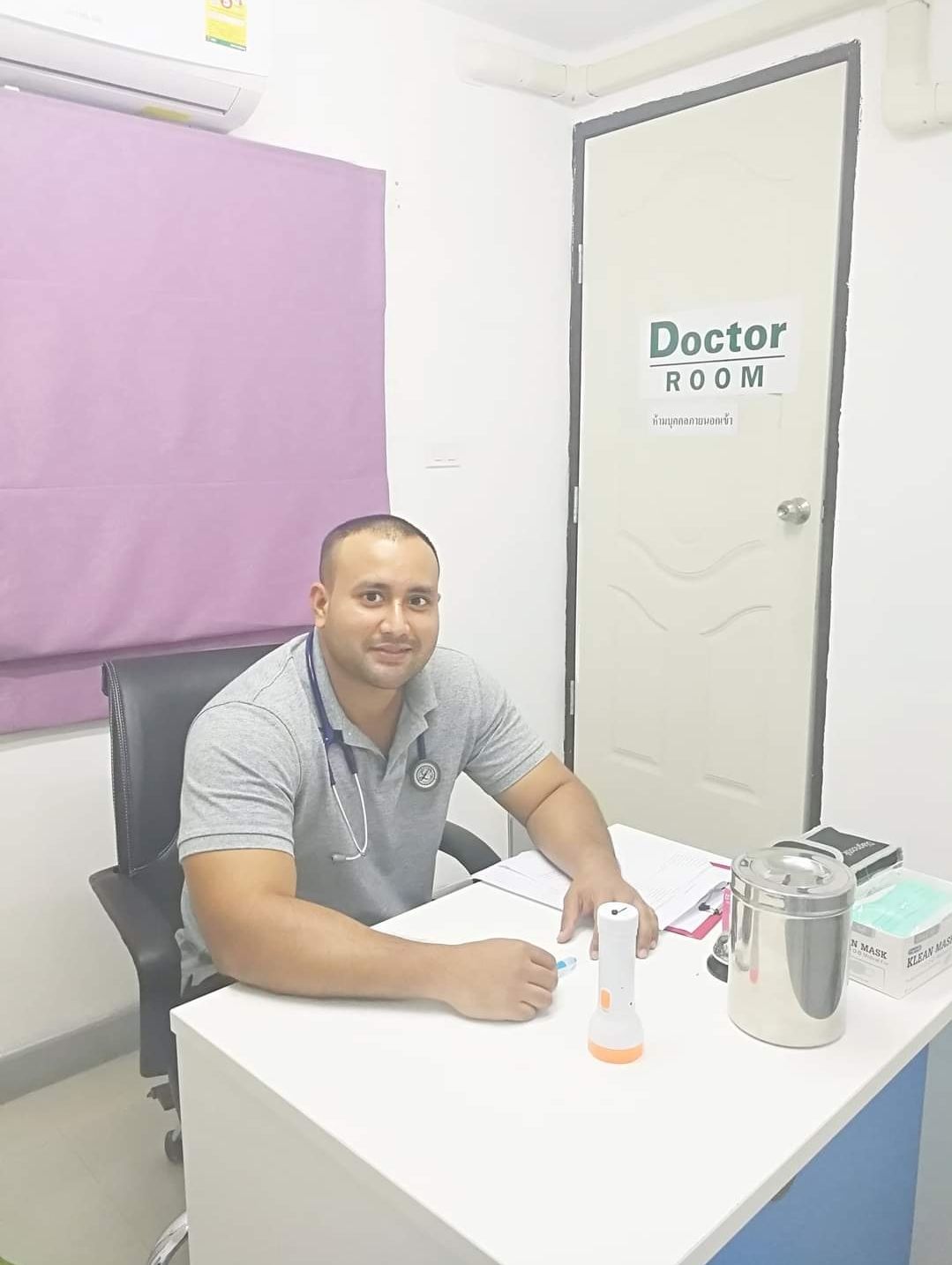
Dr. Ponlawat Pitsuwan is a physician at Doctor Bangkok, a private clinic in central Bangkok. He sees expats, residents, and medical tourists for general medicine, wellness consultations, and IV therapy. His focus is straightforward, evidence-based care delivered in plain language.