
Clinically reviewed by Dr. Ponlawat Pitsuwan, Physician, Doctor Bangkok. Last reviewed: July 2026
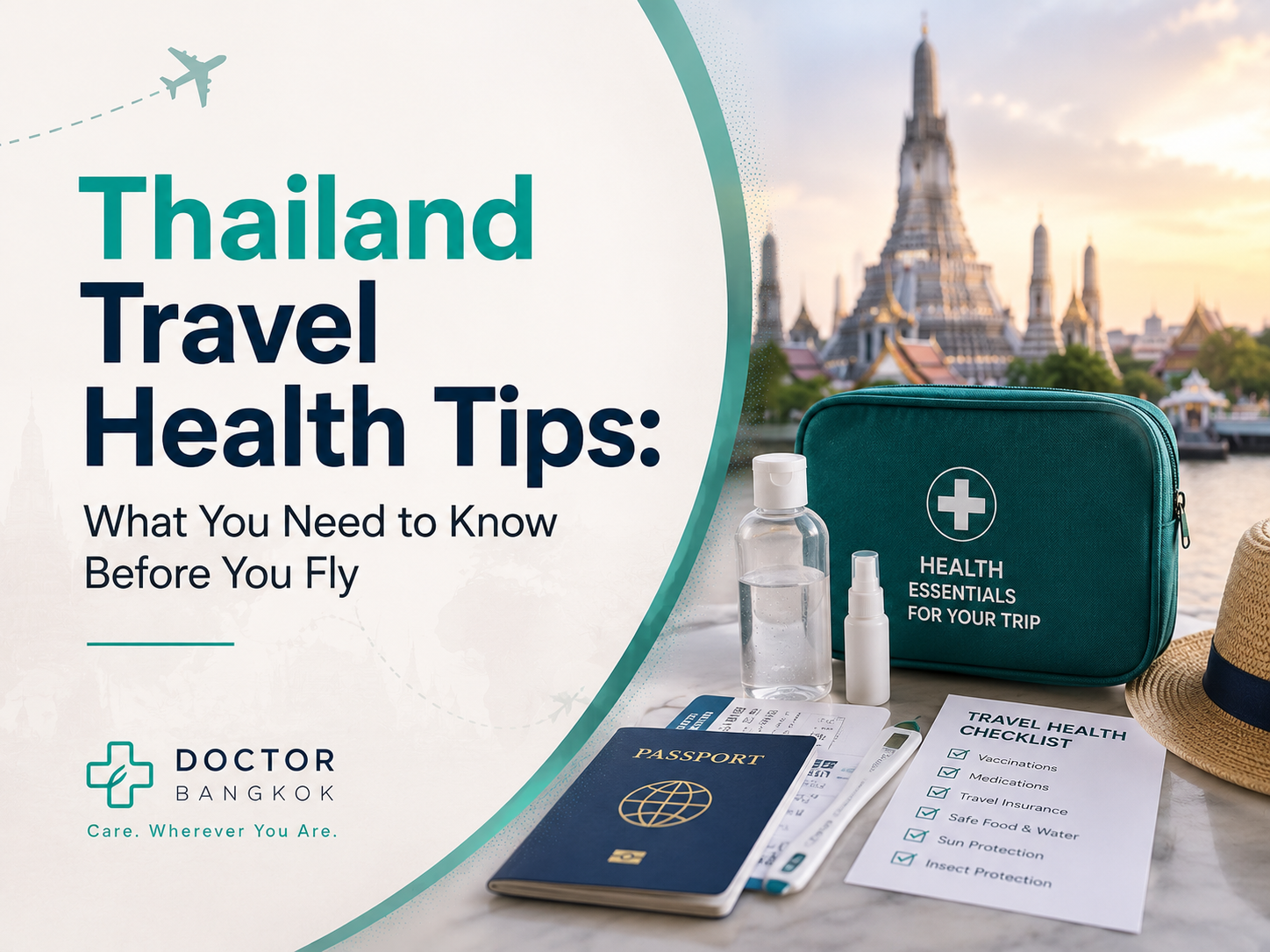
Thailand is a low-to-moderate risk destination for most travellers, but a few specific hazards catch people off guard every week. The biggest ones are dengue fever, traveller’s diarrhoea, rabies exposure from street animals, and sexually transmitted infections. Getting vaccinated before you fly and knowing where to go when something goes wrong will save you a lot of stress.
If you are planning a trip to Thailand, or you have already landed and something feels off, this is the guide I wish every patient had read before walking into my clinic. Most travel health information for Thailand is generic and cautious to the point of being useless. This is written by someone who is actually in Bangkok, treating these problems every week.
The good news is that most Thailand travel health issues are preventable. The ones that are not preventable are very treatable, as long as you act quickly. What I see go wrong is almost never the illness itself. It is people waiting too long to do something about it.

Before You Fly: Your Pre-Travel Health Checklist for Thailand
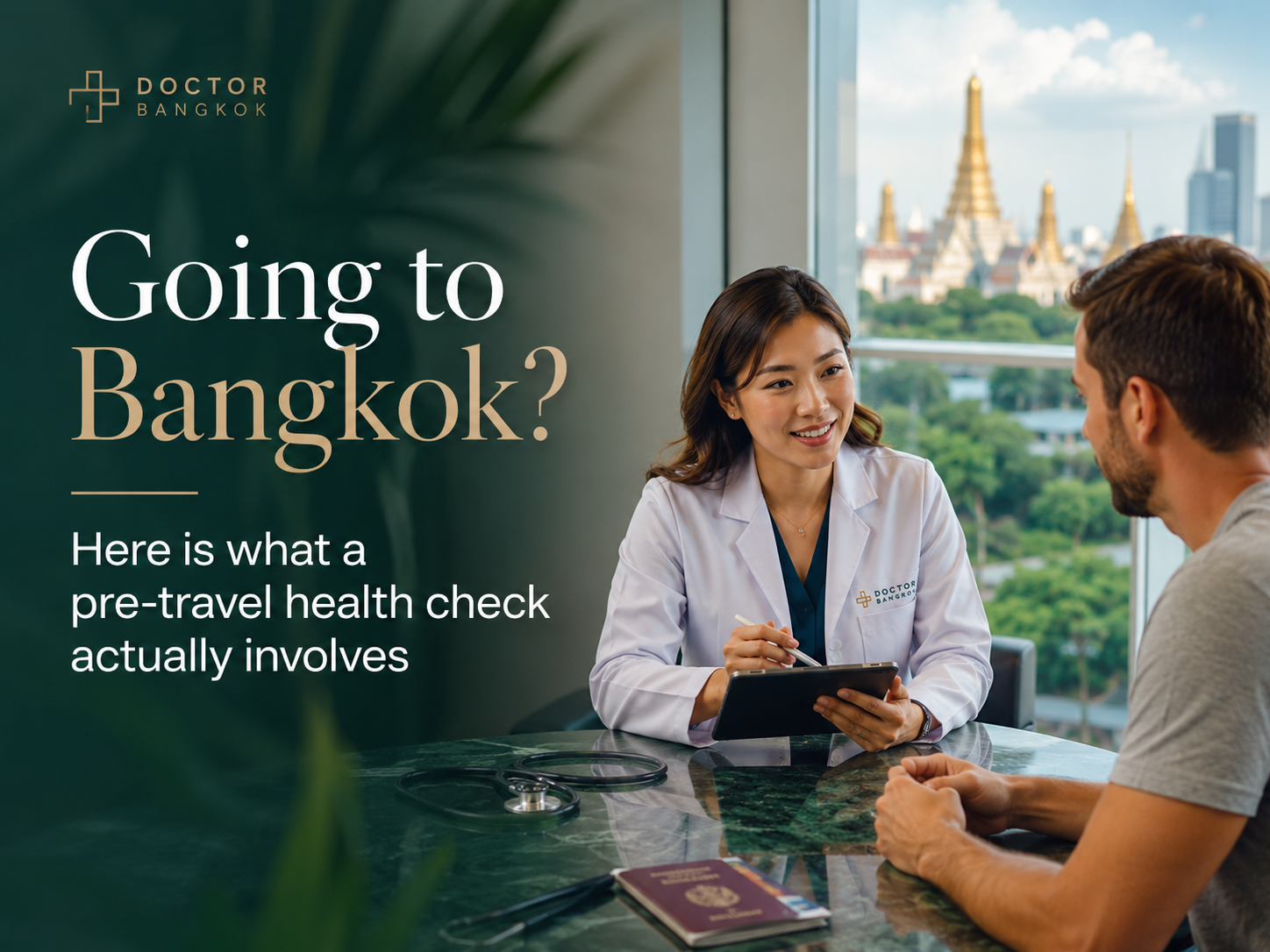
The single most useful thing you can do is book a travel medicine consultation four to six weeks before you leave. That window matters because some vaccines need time to work, and a few require more than one dose before departure.
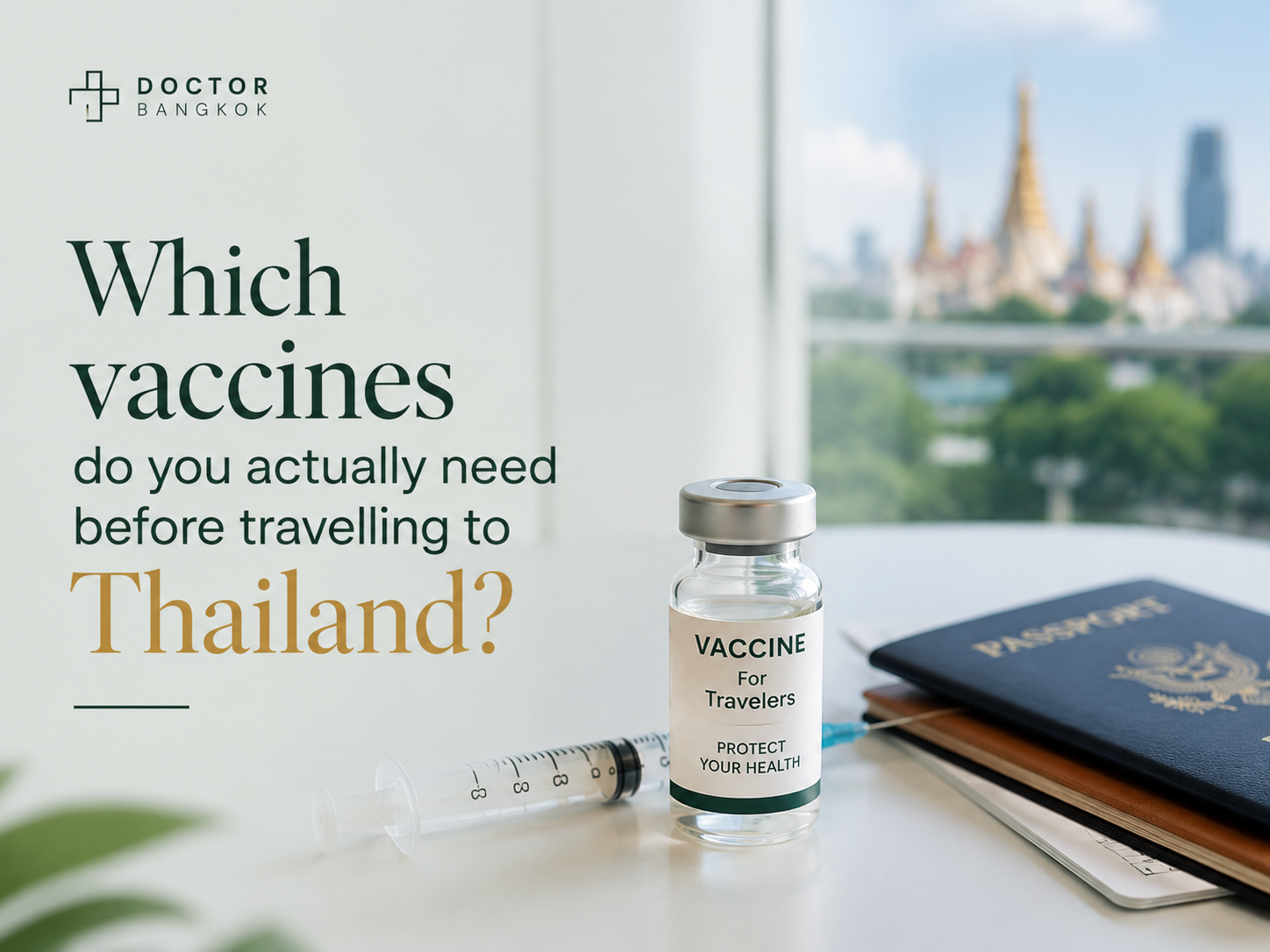
For most travellers coming to Thailand, the recommended vaccines are hepatitis A, typhoid, and tetanus-diphtheria. If you are going to rural areas or staying longer than a month, Japanese encephalitis and rabies pre-exposure vaccines are worth discussing. Hepatitis B is worth checking if you are not already covered. No vaccine is required for entry to Thailand from most countries, unless you are arriving from a yellow fever endemic zone.
If you skipped pre-trip preparation and are already in Bangkok, that is fine. Doctor Bangkok offers same-day travel vaccinations in Bangkok at our Sukhumvit clinic with no appointment needed.
Bring enough of your regular prescription medications to cover your whole trip, plus a few extra days. Specific brands can be hard to find here, and generic substitutes may not be the same formulation. Travel insurance with medical evacuation cover is essential, not optional.
Dengue Fever and Other Mosquito-Borne Risks in Thailand
Dengue is the mosquito-borne illness I talk about more than any other. It is present year-round in Bangkok. The mosquitoes that carry it bite during the day, which means bed nets alone will not protect you.
Symptoms usually appear three to fourteen days after a bite: sudden high fever, severe headache, pain behind the eyes, and joint or muscle aches. It often feels like being hit by a truck. Most cases recover with rest and fluids, but some develop into a more severe form that needs hospital care. If you have a high fever with these symptoms, come in and get tested. Do not try to wait it out.
DEET-based repellent at 30 to 50 percent concentration is the most reliable protection. Apply it to all exposed skin and reapply after sweating or swimming. Chikungunya is another mosquito-borne virus in Thailand with symptoms similar to dengue. Malaria risk in Bangkok itself is extremely low, but it is a real concern in forested border areas near Myanmar and Cambodia.

Food and Water Safety: Street Food, Ice and Bangkok Belly
I am not going to tell you to avoid street food. That is bad advice and nobody follows it. What I will tell you is how to choose wisely.
Freshly cooked food from a busy stall is lower risk than pre-prepared dishes sitting in the heat. Bangkok temperatures of 34 to 40 degrees Celsius speed up bacterial growth faster than most travellers expect. Avoid raw shellfish, salads where you cannot confirm how they were washed, and fruit that has been pre-cut and left out. Tap water in Bangkok is not safe to drink. Bottled water is cheap and available everywhere.
If you get traveller’s diarrhoea, the priority is staying hydrated. Oral rehydration sachets are sold at every pharmacy here and work well for mild cases. Dehydration happens fast when it is 38 degrees and you have been losing fluids all day. If you cannot keep fluids down, if there is blood in your stool, or if you have a fever alongside the diarrhoea, come in. IV rehydration gets people back on their feet within a few hours when oral fluids are not working.
Bangkok-Specific Environmental Hazards: Heat and Air Quality
Bangkok’s heat is a genuine health risk, not just discomfort. Heat exhaustion can develop quickly if you are walking long distances or sightseeing without breaks. Symptoms are heavy sweating, weakness, dizziness, and nausea. If you stop sweating and feel confused, or your skin is hot and dry, that is heat stroke. It is a medical emergency. Cool down immediately and get help.
Air quality is the other hazard. Bangkok has a real PM2.5 pollution problem, and it is worst from January to April. This is when agricultural burning in northern Thailand combines with Bangkok’s vehicle emissions. On bad days, symptoms can include eye irritation, coughing, and shortness of breath. People with asthma or heart conditions are most at risk. Check IQAir before outdoor exercise during those months. An N95 mask is worth carrying during burning season if you have any respiratory condition.
If you develop a cough, wheeze, or chest tightness during your stay, get it assessed rather than assuming it will pass.
Rabies Risk in Bangkok: Dogs, Monkeys and What To Do if Bitten
Street dogs and cats are common throughout Bangkok. Monkeys are present at tourist sites like Lopburi and several temples. Rabies is present in Thailand and the risk from a bite or scratch is real.
If an animal bites or scratches you, wash the wound immediately with soap and running water for at least 15 minutes. Then go to a clinic the same day. Rabies symptoms only appear after the virus has reached the brain, at which point treatment cannot help. The vaccine course given after a bite works best when started within 72 hours of exposure.
Doctor Bangkok can assess animal bites and start post-exposure treatment on the same visit. Walk in, no appointment needed.
Sexual Health While Travelling in Thailand
This is one of the most common reasons I see both short-stay visitors and long-term expats, and it is the topic most travel health guides skip. I am not going to skip it.
Many sexually transmitted infections have no symptoms at all. Chlamydia, gonorrhoea, syphilis, and early HIV can all be present with no sign that anything is wrong. The only way to know your status is to get tested. If you have had unprotected sex with a new partner during your trip, testing before you leave Thailand is sensible.
A full STI screen at Doctor Bangkok covers HIV, hepatitis B, syphilis, chlamydia, and gonorrhoea. The service is confidential and no ID is required. If you are concerned about HIV exposure within the last 72 hours, PEP (post-exposure prophylaxis) needs to start as soon as possible. Come in immediately. For longer-term visitors and expats who are sexually active, PrEP (pre-exposure prophylaxis) is available at our clinic and has strong evidence behind it as an HIV prevention tool.
When to See a Doctor in Bangkok and Where to Go
Self-treating minor illness is fine. A mild stomach upset that clears in 24 hours, a small cut you can clean yourself, or a headache from the heat does not need a clinic visit.
What does: fever above 38.5 degrees Celsius lasting more than 24 hours, any fever with a rash, severe or bloody diarrhoea, a suspected animal bite, symptoms after unprotected sex, and anything that is getting worse rather than better.
Bangkok has no shortage of medical facilities, but dealing with them in a second language when you are unwell is stressful. Doctor Bangkok is an English-speaking private clinic on Sukhumvit, BTS accessible, with walk-in availability for travel health consultations in Bangkok and same-day assessments. We see expats, residents, and visitors for everything from a one-off travel concern to ongoing care during a longer stay. If you are not sure whether you need to come in, call us and ask.
Visiting or living in Bangkok and need travel health support? Doctor Bangkok is a private English-speaking clinic on Sukhumvit. We offer same-day travel vaccinations, confidential STI testing, rabies post-exposure assessment, IV rehydration therapy, dengue testing, and general medical consultations. Walk-in patients are welcome. Visit doctorbangkok.co.th/travel-health-bangkok or drop in at our Sukhumvit location, BTS accessible.
Frequently Asked Questions
Do I need vaccinations before travelling to Thailand?
No vaccine is required for entry from most countries, though proof of yellow fever vaccination is needed if you are arriving from an endemic zone. The recommended vaccines for most travellers are hepatitis A, typhoid, and tetanus-diphtheria. If you are already in Bangkok and missed pre-trip prep, same-day travel vaccines are available at our Sukhumvit clinic with no appointment needed.
Is it safe to eat street food in Bangkok?
Yes, with some basic judgement. Choose stalls where food is cooked fresh in front of you and turnover is high. Avoid pre-prepared dishes sitting out in the heat, raw shellfish, and pre-cut fruit from unknown sources. If your stomach does react, stay hydrated and pick up oral rehydration sachets from any pharmacy here.
What should I do if a dog or monkey bites me in Thailand?
Wash the wound immediately with soap and running water for at least 15 minutes, then go to a clinic the same day. The window for effective post-exposure rabies treatment is within 72 hours of the bite. Do not wait to see if symptoms develop. Doctor Bangkok offers same-visit rabies assessment and can start treatment on the day you come in.
Should I get an STI test while visiting or living in Bangkok?
If you have had any new sexual contact during your stay, testing before you leave is worth doing. Many STIs cause no symptoms at all, so you cannot rely on how you feel. Doctor Bangkok offers confidential testing covering HIV, syphilis, hepatitis B, chlamydia, and gonorrhoea, with no ID required and results available quickly.
What is the air quality like in Bangkok, and should I be worried?
Bangkok’s air quality is generally manageable for healthy people, but it gets significantly worse between January and April due to agricultural burning in the north. Check the IQAir app before outdoor exercise during those months. If you have asthma, heart disease, or another respiratory condition, carry an N95 mask and limit outdoor time on high-pollution days.
What should I do if I think I have been exposed to HIV in Bangkok?
If the exposure was within the last 72 hours, come in immediately. PEP needs to start as soon as possible and every hour matters. If you are sexually active in Bangkok on an ongoing basis, ask about PrEP, which is available at Doctor Bangkok and prevents HIV infection with strong clinical evidence behind it.
How do I find an English-speaking doctor in Bangkok quickly?
Doctor Bangkok is a private clinic on Sukhumvit with English-speaking physicians and walk-in availability seven days a week. We are BTS accessible and see patients for travel health concerns, emergency assessments, and ongoing care. No appointment is required for most visits.
Dr. Ponlawat Pitsuwan
Physician, Doctor Bangkok
a private medical clinic in central Bangkok. He sees expats, residents, and visitors for travel health consultations, infectious disease assessment, STI testing, and general medical care. His focus is straightforward, evidence-based care delivered in plain language.
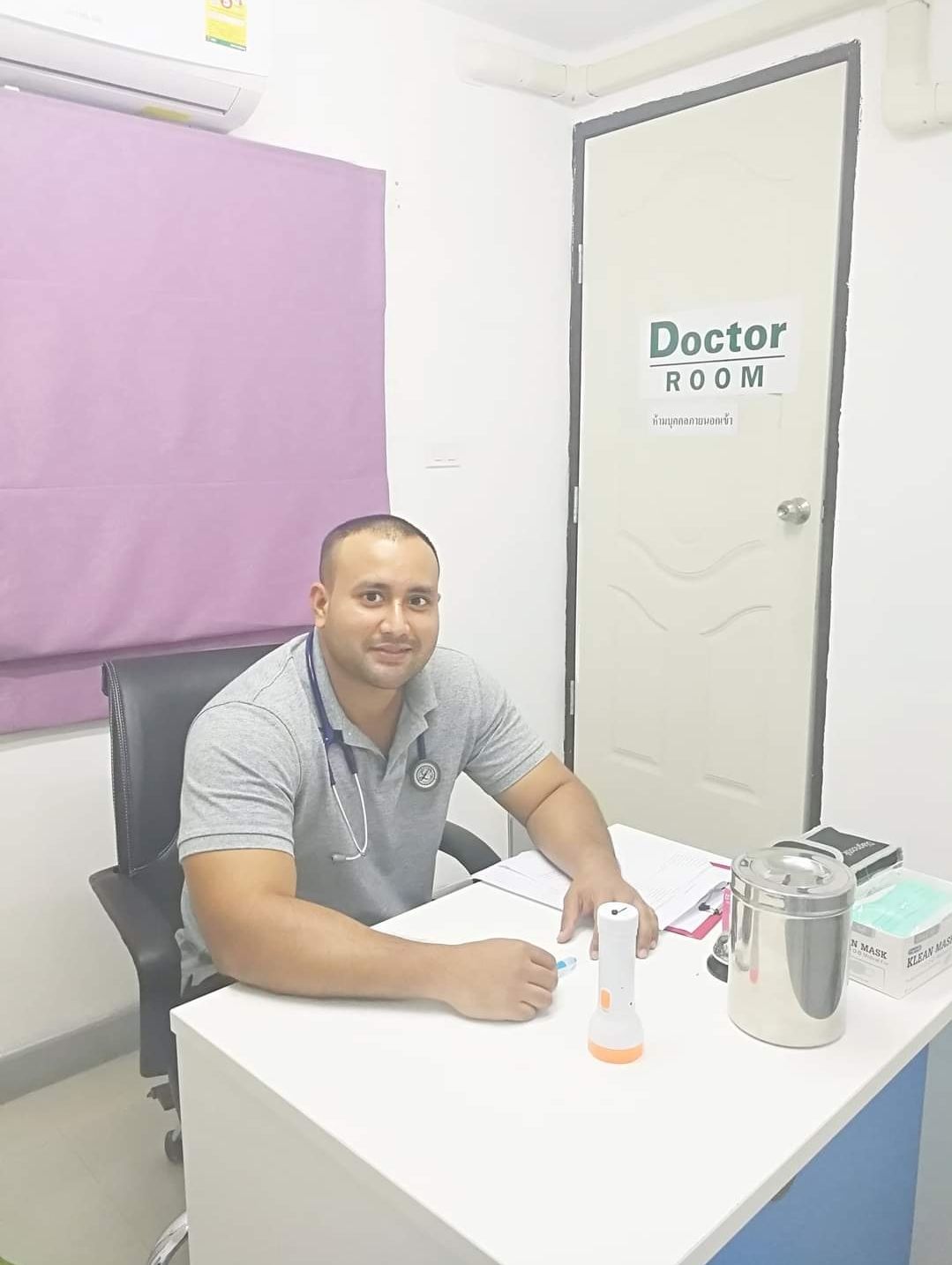
Dr. Ponlawat Pitsuwan is a physician at Doctor Bangkok, a private clinic in central Bangkok. He sees expats, residents, and medical tourists for general medicine, wellness consultations, and IV therapy. His focus is straightforward, evidence-based care delivered in plain language.