
Clinically reviewed by Dr. Ponlawat Pitsuwan, Physician, Doctor Bangkok. Last reviewed: July 2026
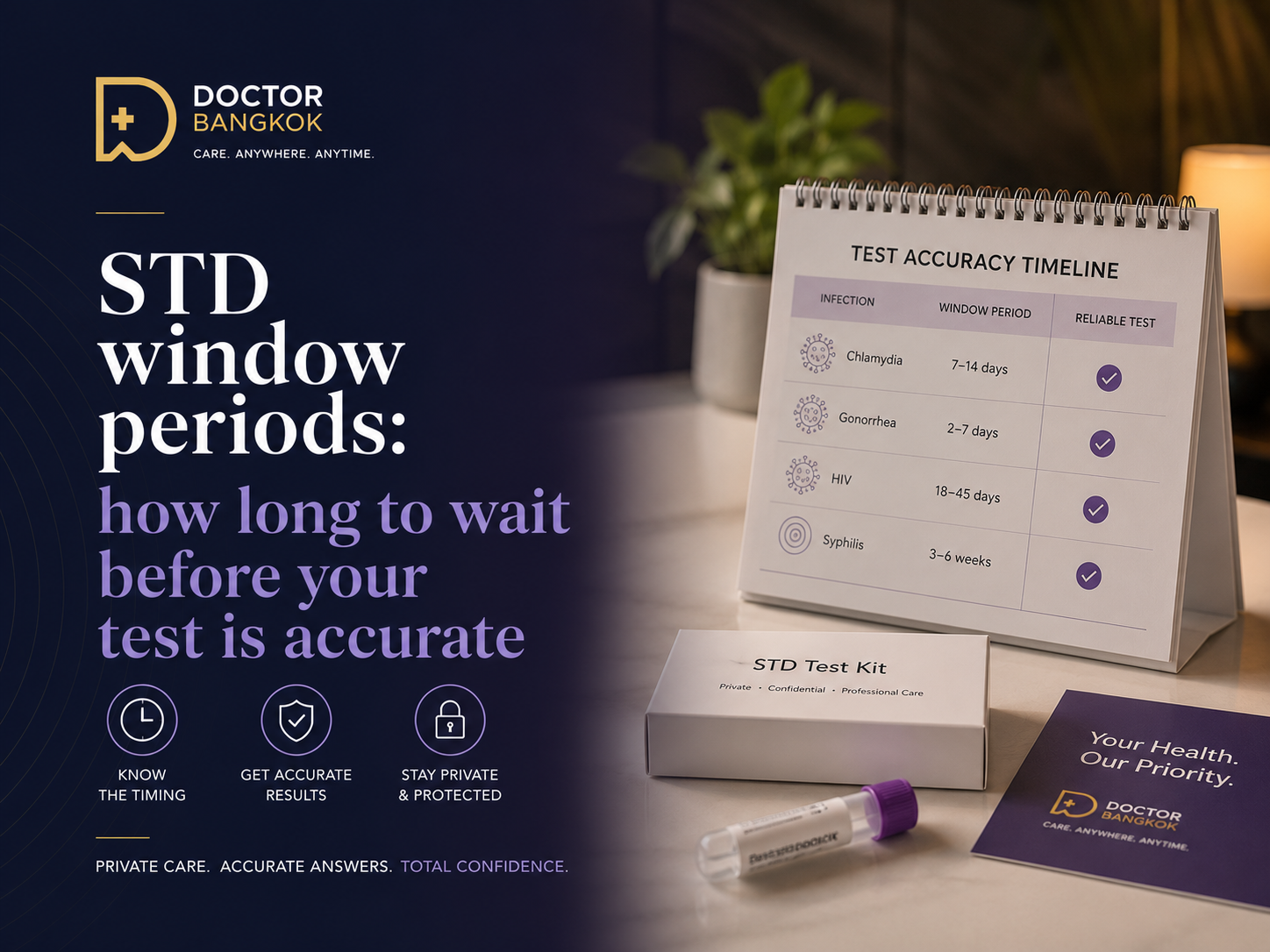
Every STD has a window period — the gap between exposure and when a test can reliably detect infection. Testing too early gives a false negative, meaning you could be infected but your result says otherwise. The window varies by infection and by which test you use. HIV with a 4th-generation test can be reliably detected from around 4 to 6 weeks. Chlamydia and gonorrhoea need at least 1 to 2 weeks. Syphilis can take up to 90 days for complete certainty. If your exposure was in the last 72 hours and HIV risk was involved, PEP is your priority right now, not a test.
You had unprotected sex in Bangkok. Maybe a condom broke. Maybe it was a moment you did not plan. Now you are sitting with that familiar anxiety, Googling symptoms and timelines, trying to work out what to do next. If that is you, you are in the right place.
The most common mistake I see is people testing too soon and taking a negative result as reassurance. It is not. A negative result only means something when you test after the window period has closed. Get the timing wrong and you can miss a real infection entirely. This guide gives you the exact timing for each infection, tells you how the type of test changes things, and explains what to do if you only have a few days left in Bangkok.

Window Period vs. Incubation Period — They Are Not the Same Thing
I hear these terms used interchangeably all the time. They mean different things and the difference matters.
The incubation period is how long before you feel symptoms. The window period is how long before a test can detect the infection. They do not move together.
Gonorrhoea symptoms can appear within days, but the infection is already detectable on a swab from around one to two weeks after exposure. Herpes may never cause obvious symptoms, but a blood antibody test still will not be reliable until 12 to 16 weeks after exposure. Plan your test around the window period, not around how you feel.
STD Window Periods at a Glance
| Infection | Test Type | Earliest Reliable Test | Full Certainty |
|---|---|---|---|
| HIV | 4th-gen Ag/Ab combo | 4 to 6 weeks | 45 days (99%), 12 weeks (definitive) |
| HIV | 3rd-gen antibody only | 6 to 12 weeks | 12 weeks |
| HIV | RNA PCR / NAT | 10 to 14 days | 14 days |
| Chlamydia | NAAT / PCR | 1 to 2 weeks | 2 weeks |
| Gonorrhoea | NAAT / PCR | 1 to 2 weeks | 2 weeks |
| Syphilis | Blood antibody test | 3 to 6 weeks | 90 days |
| Herpes HSV-1/2 | IgG antibody blood test | 4 to 6 weeks | 12 to 16 weeks |
| Hepatitis B | Antigen / antibody | 3 to 6 weeks | 6 weeks |
| Hepatitis C | Antibody test | 8 to 11 weeks | 6 months |
| Trichomoniasis | NAAT / swab | 5 to 28 days | 4 weeks |

HIV Window Period — Which Test You Use Changes Everything
This is where I see the most confusion, and the most unnecessary anxiety.
The older 3rd-generation test only looks for your body’s response to HIV. Your body takes weeks to build that response, which is where the old "test at 12 weeks" advice comes from. That guidance still applies if you are using that test.
The 4th-generation combination test looks for two things at once: your antibody response and a protein the virus releases early in infection, called p24 antigen. That combination shortens the window significantly. A negative result at 45 days is highly reliable. A negative at 12 weeks is definitive. This is the test we use at Doctor Bangkok and what most private clinics in Bangkok offer. You do not need to wait three months to have a meaningful result, provided you are using the right test.
If you need an answer earlier than that, an RNA PCR test can detect HIV from 10 to 14 days after exposure. This is not a routine first-line test and is used mainly in specialist settings, but it is available. Ask when you come in and we will advise what makes sense for your situation.
What a Negative Result During the Window Period Actually Means
It means very little. I know that is not what you want to hear, but testing too early gives you false reassurance, and that is dangerous.
If you slept with someone three days ago and tested today for HIV or syphilis, a negative does not tell us anything useful. The infection, if present, has not had time to become detectable. You need to retest after the window closes to know where you actually stand.
This matters for transmission too. You can carry and pass on an STD during the window period. The infection is active even while your test says negative. Do not assume you are in the clear until you have tested at the right time.
What Most People Miss — Site-Specific Testing
Testing from a urine sample alone is not enough if the exposure involved oral or anal contact. Chlamydia and gonorrhoea can infect the throat or rectum and will not show up on a urine test if those sites are not swabbed.
I see this regularly. Someone tests negative on urine, assumes they are clear, and comes back months later with a throat or rectal infection they have been carrying. If your exposure involved oral or anal sex, tell us. We swab those sites separately. It changes what we look for and where.
Immediate Actions After High-Risk Exposure — Before the Window Even Opens
If your exposure happened in the last 72 hours and there was a real risk of HIV, the window period is not your first concern. PEP is.
PEP, post-exposure prophylaxis, is a 28-day course of medication. When started within 72 hours of exposure, it can prevent HIV from taking hold. The sooner you start, the better — ideally within 24 hours. After 72 hours, it is no longer effective.
PEP is not a substitute for ongoing prevention. If you are at regular risk, PrEP, pre-exposure prophylaxis, is a daily tablet that prevents HIV before any exposure happens. Both are available through Doctor Bangkok. If last night was high-risk, contact us now. This is time-sensitive.
Why Bangkok Specifically Raises the Stakes
Bangkok is not a uniquely dangerous city, but the combination of nightlife, a transient population, and frequent unprotected encounters creates conditions where STI rates run higher than many visitors expect. Syphilis rates in Thailand have risen steadily in recent years according to Thai public health surveillance data, and that pattern matches what I see clinically.
What makes it more complicated here is that most people passing through are not residents. They have days, not weeks. They cannot come back for a repeat test. That time pressure leads to bad decisions — testing too early, treating a negative as final, or not testing at all.
How to Time Your Test When You Are Only in Bangkok for a Few Days
This is the question I get from travellers more than any other.
If more than one to two weeks have passed since exposure, test now for chlamydia and gonorrhoea. Those windows are short and you can get a reliable result before you leave. For HIV, syphilis, hepatitis, and herpes, a test now may still fall inside the window period — but a baseline result is still worth having. If it comes back positive, that tells us something important. If negative, we know you will need a follow-up test after the window closes.
At Doctor Bangkok, we provide a written testing schedule you can take to your GP at home. You leave knowing exactly what you were tested for, when, and when to retest. Your doctor at home can run the follow-up using that plan. You do not have to manage this alone from another country.
If you cannot get to the clinic, we offer hotel visit appointments. A doctor comes to you. This is useful for travellers who want privacy, feel unwell, or have an early flight.
After a Positive Result — What Happens Next
A positive result is not the end of the conversation. Most STDs are treated straightforwardly. Chlamydia and gonorrhoea are curable with the right antibiotic course. Syphilis, when caught early, responds well to treatment. Hepatitis B has effective management options. HIV is not curable but is very well managed with daily medication, and people on effective treatment cannot transmit the virus to partners — this is U=U, Undetectable equals Untransmittable, supported by strong clinical evidence.
After treatment, a test of cure is sometimes needed, particularly for gonorrhoea where antibiotic resistance is an ongoing concern in Thailand. We will tell you whether you need one and when. Do not assume finishing a course of antibiotics means you are clear without confirming it.
Had a potential exposure in Bangkok and unsure when to test? Doctor Bangkok offers confidential STD testing with English-speaking physicians, same-day appointments, and hotel visits for maximum privacy. We will tell you exactly what to test for, when to test, and what to do next. Visit our sexual health testing page to book or get in touch directly at doctorbangkok.co.th.
Frequently Asked Questions
If I test negative during the window period, does that mean I am definitely not infected?
No. A negative result during the window period cannot rule out infection. The markers a test looks for — antibodies, antigens, or viral load — may not yet be at a detectable level. You need to retest after the window has fully closed. At Doctor Bangkok, we tell you exactly when that retest should happen based on what was tested and which test was used.
How long do I need to wait before getting tested after unprotected sex?
It depends on the infection. For chlamydia and gonorrhoea, wait at least one to two weeks. For syphilis, three to six weeks minimum, with 90 days for full certainty. For HIV with a 4th-generation test, four to six weeks gives a meaningful result and 12 weeks is definitive. Herpes IgG can take up to 12 to 16 weeks, and hepatitis C up to six months. Testing earlier for a baseline can still be useful — your doctor can advise based on your specific situation.
I am only in Bangkok for a few more days. Is it worth testing now?
Yes, with a caveat. If more than one to two weeks have passed since exposure, we can reliably test you for chlamydia and gonorrhoea before you leave. For HIV, syphilis, and herpes, a test now may still be inside the window period, but a baseline result is still useful. Doctor Bangkok can give you a written plan so your GP at home knows exactly when to run your follow-up tests.
I had unprotected sex last night. Should I consider PEP?
If there was a real risk of HIV, yes. PEP must be started within 72 hours of exposure to be effective, and ideally within 24 hours. It is a 28-day course that can prevent HIV from establishing if started in time. Contact Doctor Bangkok urgently — this is time-critical. After 72 hours, PEP is no longer an option.
Does the type of HIV test change how early I can get a reliable result?
Yes, and this is one of the most important things to understand before you test. A 3rd-generation antibody-only test requires six to twelve weeks. The 4th-generation combination test, which detects both antibody and p24 antigen, gives a highly reliable result from around 45 days — this is the test we use at Doctor Bangkok. An RNA PCR test can detect HIV from 10 to 14 days but is not a routine first-line option. Always confirm which test you are receiving before interpreting any result.
Can I transmit an STD to someone else during the window period?
Yes. The window period applies to test detection, not to whether you can pass the infection on. If you are infected, you can transmit it to a partner even while your test result still reads negative. This is one of the main reasons that testing at the right time matters, and why using protection between exposure and a confirmed result is important.
Do I need to be tested at different body sites depending on what I did?
Yes. A urine test alone misses throat and rectal infections entirely. Chlamydia and gonorrhoea are common at all three sites, and each needs to be tested separately. Tell your doctor exactly what kind of sexual contact was involved so the right samples are taken. At Doctor Bangkok, we ask these questions as standard because the answer directly changes what we test and where.
Dr. Ponlawat Pitsuwan
Physician, Doctor Bangkok
a private medical clinic in central Bangkok. He sees expats, residents, and medical tourists for STD testing, sexual health consultations, PEP and PrEP assessment, and general infectious disease concerns. His focus is straightforward, evidence-based care delivered in plain language.
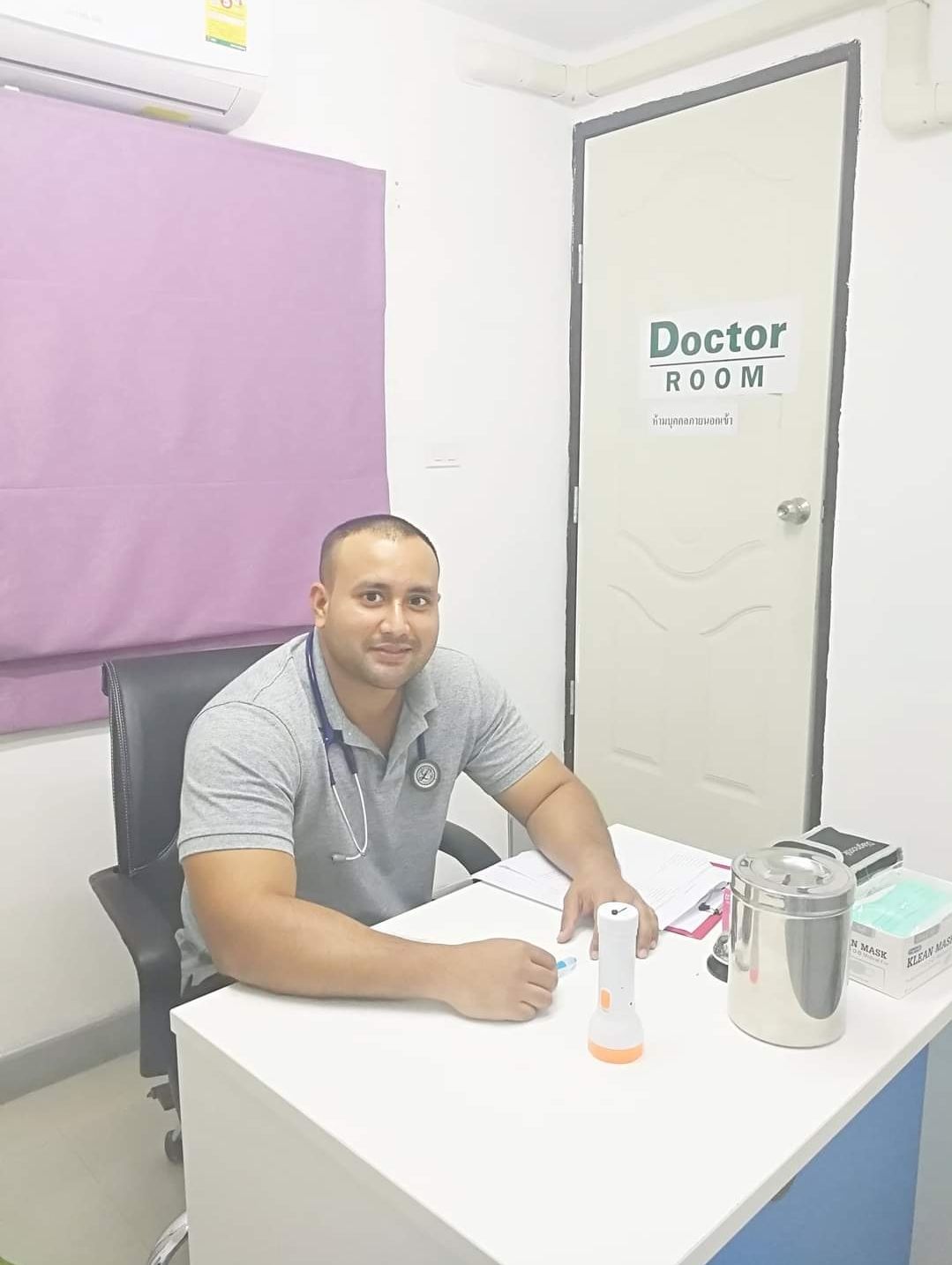
Dr. Ponlawat Pitsuwan is a physician at Doctor Bangkok, a private clinic in central Bangkok. He sees expats, residents, and medical tourists for general medicine, wellness consultations, and IV therapy. His focus is straightforward, evidence-based care delivered in plain language.