
Clinically reviewed by Dr. Ponlawat Pitsuwan, Physician, Doctor Bangkok. Last reviewed: June 2026
HIV symptoms in the early stage often feel like a bad flu: fever, sore throat, swollen glands, fatigue, and sometimes a rash on the trunk. They usually appear two to four weeks after infection and last a few days to a few weeks. But around one in three people feel nothing at all. The only way to know your HIV status is to test. A 4th generation HIV test can detect infection from around 28 days after exposure.
If you are reading this because you had unprotected sex recently and now feel unwell, I want to tell you two things upfront. First, symptoms alone cannot tell you whether you have HIV. Second, if you are within 72 hours of a possible exposure, speak to a doctor today about PEP, post-exposure prophylaxis, before that window closes.
For everyone else trying to understand what HIV actually feels like at different stages: this guide covers the real picture. Not the textbook version. What I see in patients who come through clinic in Bangkok, far from home, trying to piece together whether what they are feeling matters.

Early symptoms of HIV: what does acute HIV infection feel like?
Most people who develop early symptoms describe it as the worst flu they have ever had. Fever is almost always present. The lymph nodes in your neck, armpits, or groin swell and feel tender. You feel exhausted in a way that sleep does not fix. Your throat hurts and your muscles ache.
This initial response typically starts two to four weeks after infection. The viral load is extremely high at this point, which also means this is when you are most infectious to others.
Other symptoms can include night sweats, headaches, joint pain, and diarrhoea. Some people develop mouth ulcers. Some develop a rash, which I cover in its own section below.
The episode usually lasts one to three weeks and then fades. That fading is not the infection clearing. The virus has moved into a quieter phase, and without treatment it is still there and still doing damage.
HIV incubation period: how long before symptoms appear after exposure?
Symptoms, if they appear at all, usually show up two to four weeks after infection. But around one in three people feel nothing at all during this stage. Feeling fine tells you nothing about your HIV status.
Testing is a separate question from symptoms. The 4th generation test used at clinics like Doctor Bangkok detects both the p24 antigen, a protein the virus produces early on, and HIV antibodies. This means it can reliably detect infection from around 28 days after exposure. A confirmatory test at 45 days gives near-complete certainty.
If you need to test before that window, a nucleic acid test, or NAT, can detect HIV as early as 10 days after exposure. Your doctor can advise whether this is right for your situation.
The main point: do not wait for symptoms before testing. And a negative result at day seven does not mean you are clear.

HIV symptoms in men: what to watch for
Most early HIV symptoms are the same regardless of sex. But a few things come up more specifically in men, or that men tend to present with at my clinic.
Genital ulcers during acute infection can occur and are sometimes mistaken for syphilis. In Bangkok, syphilis and HIV co-infection is not rare, and the two can occur together. If you have a genital ulcer and a recent possible HIV exposure, get tested for both.
Later in infection, as the immune system weakens, some men develop low testosterone caused by the effect of chronic illness on the body’s hormonal regulation. This shows up as fatigue, low libido, and loss of muscle mass. It is not something most people associate with HIV, but it is something I check for in male patients who are not yet on treatment.
For men in higher-risk groups, PrEP, pre-exposure prophylaxis, is worth discussing. It is highly effective when taken correctly and available in Bangkok. If you are not on PrEP and had an unprotected encounter, this is the conversation to have before the 72-hour PEP window closes.
HIV symptoms in women: how they differ
Women experience the same core acute symptoms as men. But there are female-specific presentations that can delay the right diagnosis, especially when HIV is not the first thing on anyone’s mind.
Recurrent vaginal yeast infections are common in women with falling immune cell counts. A healthy immune system keeps Candida in check. When that fails, infections become frequent and difficult to treat. This is often one of the first signs that something more serious is happening.
Pelvic inflammatory disease, or PID, an infection involving the uterus and fallopian tubes, can be more severe and harder to treat in women with HIV. If you are having recurrent pelvic infections that are not responding to treatment, HIV should be part of the picture.
Because HPV clears less effectively when the immune system is under strain, abnormal cell changes on the cervix can progress faster in women living with HIV. More frequent cervical screening is recommended. If any of this sounds familiar and you have had a possible HIV exposure, confidential English-language HIV testing is available at Doctor Bangkok.
HIV rash: what it looks like and when it appears
The HIV rash that appears during acute infection typically looks like flat red spots that may become slightly raised. It most commonly appears on the chest and back, and sometimes spreads to the face, arms, or palms.
It usually arrives two to three weeks after infection, alongside fever and swollen glands. One thing that sometimes helps: it is typically not itchy. An itchy, blotchy rash after sun exposure or a new product is more likely allergic.
That said, visual identification alone is unreliable. In Bangkok, dengue fever also causes a rash and it can look similar. The difference is context. If your rash came within three weeks of a possible HIV exposure, that matters clinically. You need a test, not just a rash assessment.
Later in HIV disease, different skin conditions can appear as immune function drops. If you are living with HIV and develop new or changing skin findings, get them assessed.
HIV mouth sores and oral symptoms: what causes them and when they appear
Mouth sores can appear at different stages of HIV, and the type tells you something about where in the disease someone is.
During acute infection, painful ulcers can develop on the inside of the cheeks, lips, or tongue. They usually resolve on their own but can be severe.
Later in the disease, oral thrush can appear. This is a white, cottage-cheese-like coating on the tongue or inner cheeks that wipes off and leaves a red, sometimes bleeding surface underneath. It is one of the more visible signs of a weakened immune system.
Oral hairy leukoplakia is another late-stage finding: white, ridged patches on the sides of the tongue that cannot be wiped off. Seeing this in someone who does not know their HIV status is a reason to test immediately.
Persistent, severe, or recurring mouth sores after a possible HIV exposure are a reason to get an HIV test, not just treat the sores.
What if you have no symptoms?
This is the part people often miss. Around one in three people infected with HIV feel completely normal during the early phase. The virus then moves into a quiet stage that can last a decade or more without treatment. You may feel fine. You may have no idea. And you can still pass HIV to others throughout this period.
This is exactly why testing matters regardless of how you feel. If you have had a possible HIV exposure, whether recently or years ago, a test is the only answer.
HIV symptoms versus dengue, flu, and glandular fever in Bangkok
This comes up constantly at my clinic. A patient develops fever, rash, and swollen glands two weeks after unprotected sex. Is it HIV, dengue, or glandular fever?
The honest answer is you cannot tell from symptoms alone. All three can cause fever, fatigue, lymph node swelling, and a rash. Dengue tends to produce a rash on day three to five of fever and often causes a significant drop in platelet count. Glandular fever tends to cause a very sore throat and deep fatigue. Acute HIV can mimic both.
In Bangkok, where dengue is genuinely common, the instinct is to assume it is dengue. That assumption can delay an HIV diagnosis by weeks. The practical answer: if there was a possible HIV exposure in the past four weeks and you now have any of these symptoms, test for HIV alongside anything else. A 4th generation HIV test and a dengue NS1 antigen test can be run at the same visit. Get both done.
What to do in Bangkok if you think you have HIV symptoms
If you are within 72 hours of a possible exposure, the first step is PEP. It must be started within 72 hours and every hour counts. Come in today.
If you are past 72 hours, book an HIV test. A 4th generation test at 28 days or later gives a reliable result. If you cannot wait that long, ask about NAT testing when you come in.
If you are not sure how long ago a possible exposure happened, get tested now. There is no wrong time to know your status.
At Doctor Bangkok, our HIV testing in Bangkok is confidential, conducted in English, and handled without judgment. Results for 4th generation tests are typically available the same day or within 24 hours. You do not need a referral. Walk-in appointments are available and we are easy to reach by BTS.
One more thing worth knowing: people on effective HIV treatment with an undetectable viral load do not transmit HIV sexually. This is clinically well-established and known as U=U, Undetectable equals Untransmittable.
Concerned about HIV symptoms or a recent possible exposure in Bangkok? Doctor Bangkok offers confidential 4th generation HIV testing with same-day results, English-speaking physicians, and walk-in appointments in central Bangkok. If you are within 72 hours of exposure, come in now to discuss PEP. Book your HIV test at Doctor Bangkok or walk in.
FAQ
Can HIV symptoms feel exactly like dengue fever or flu in Bangkok?
Yes, and this is something I see in clinic regularly. Both dengue and acute HIV can cause fever, rash, muscle pain, and fatigue within weeks of a trigger. If you had a possible HIV exposure in the past month and now feel like this, test for both. A 4th generation HIV test and a dengue NS1 test can be done at the same visit at Doctor Bangkok.
How soon after exposure can HIV symptoms appear, and does symptom-free mean HIV-free?
Symptoms usually appear two to four weeks after infection, if they appear at all. Around one in three people feel nothing. Feeling fine does not mean you are negative. The only way to know your status is to test, and a 4th generation HIV test is reliable from around 28 days after exposure.
What does an HIV rash actually look like, and how is it different from other rashes?
It typically looks like flat red spots, sometimes slightly raised, most commonly on the chest and back. It usually appears two to three weeks after infection and is generally not itchy, which can help distinguish it from an allergic reaction. Visual identification alone is not reliable, so a clinical assessment and HIV test are both needed.
Are HIV mouth sores a sign of early or late infection?
It depends on the type. Painful canker-type ulcers can appear during early acute infection. Oral thrush and oral hairy leukoplakia tend to appear later, when the immune system has been significantly weakened. Persistent or severe mouth sores after a possible HIV exposure are a reason to test, not just treat the sores.
I had symptoms after unprotected sex in Bangkok. What should I do right now?
If you are within 72 hours of the exposure, come in today to discuss PEP. Do not wait to see if symptoms develop or worsen. If you are past 72 hours, book a 4th generation HIV test. You can walk into Doctor Bangkok without a referral, and our doctors speak English and handle this confidentially.
Can someone with HIV have no symptoms for years?
Yes. After the acute phase, HIV enters a quiet stage that can last a decade or more without obvious symptoms. During this time, the immune system is slowly being damaged and you can still pass HIV to others. Regular testing is the only way to know your status if you have ongoing risk.
Dr. Ponlawat Pitsuwan
Physician, Doctor Bangkok
a private medical clinic in central Bangkok. He sees expats, residents, and medical tourists for HIV testing and sexual health consultations, including PEP and PrEP counselling, STD screening, and general infectious disease concerns. His focus is straightforward, evidence-based care delivered in plain language.
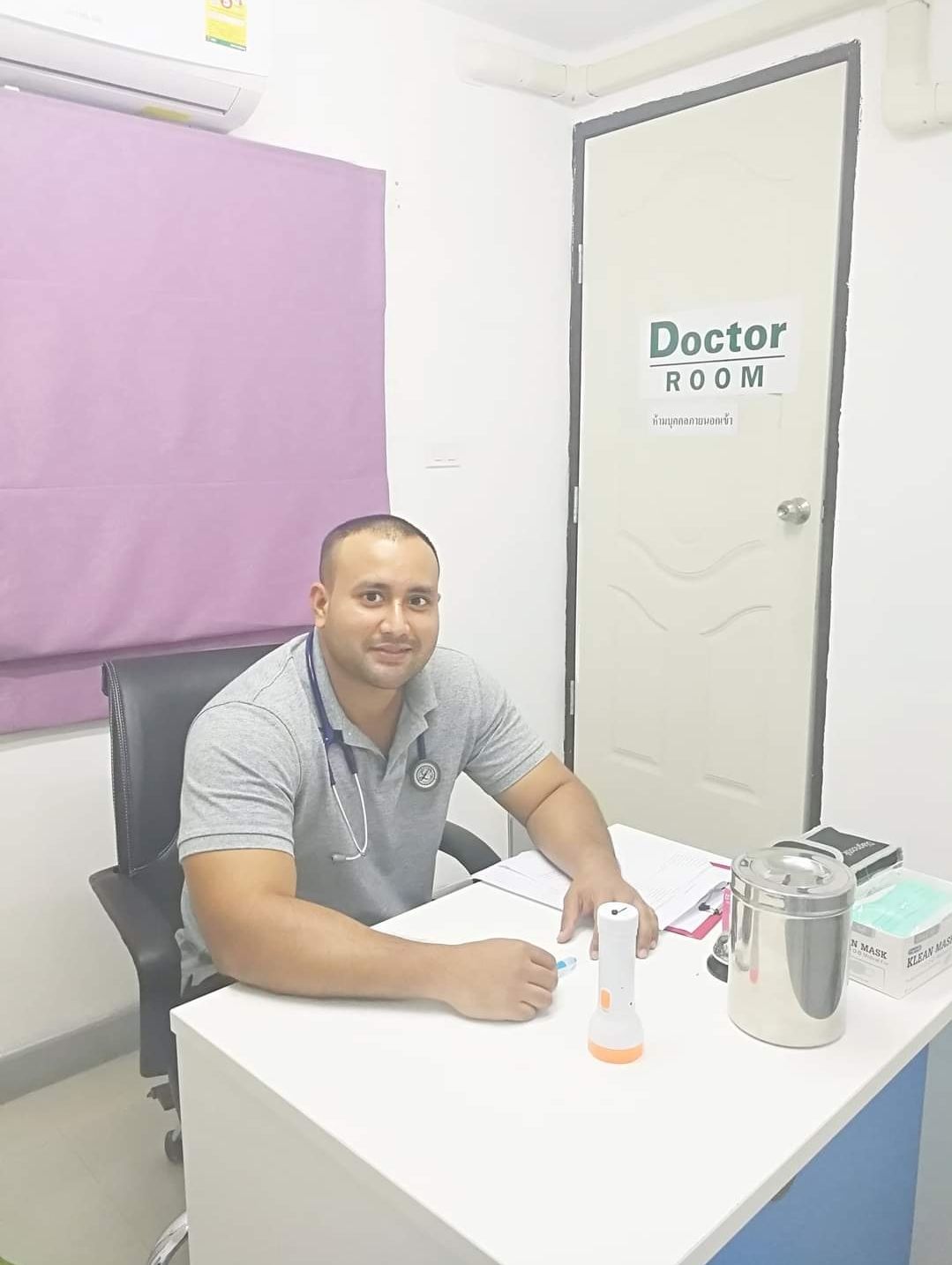
Dr. Ponlawat Pitsuwan is a physician at Doctor Bangkok, a private clinic in central Bangkok. He sees expats, residents, and medical tourists for general medicine, wellness consultations, and IV therapy. His focus is straightforward, evidence-based care delivered in plain language.