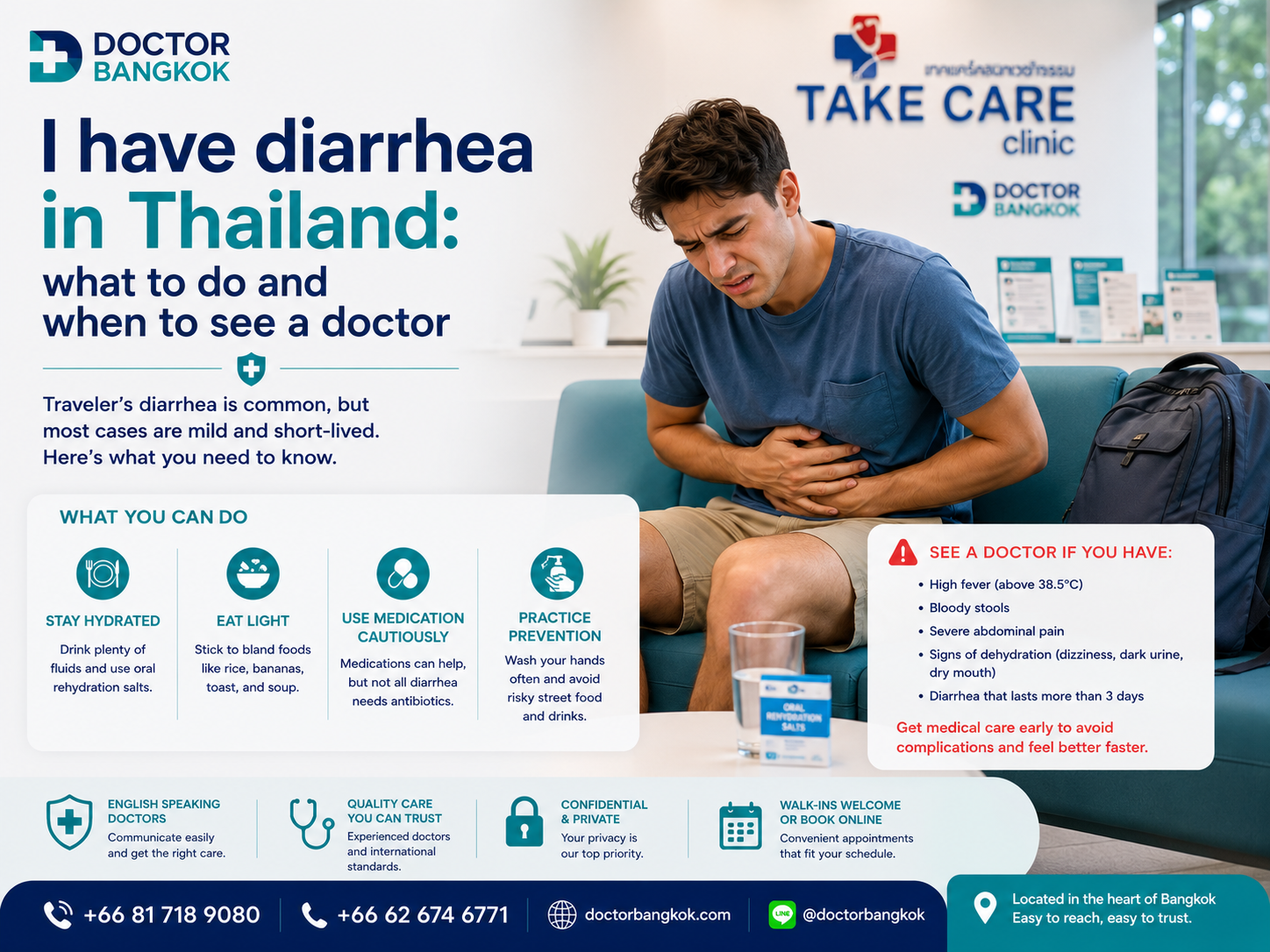


Bloody diarrhea means visible blood or dark, tarry stool mixed with loose bowel movements, and it should always be checked by a doctor rather than treated at home. In Bangkok, the most common cause is a bacterial or parasitic gut infection picked up from food or water. Most cases need stool testing to identify the right treatment, and same-day evaluation is recommended if blood is visible, especially with fever, severe pain, or signs of dehydration.
Seeing blood in your stool is frightening, and it usually sends people straight to a search engine before a doctor. In a decade of treating expats, residents, and travellers in Bangkok, bloody diarrhea is one of the most common reasons people come in for an urgent appointment, and the pattern is fairly consistent. Most arrive within a day or two of eating street food, returning from a trip to another province, or after the rainy season starts and water contamination rises across the city.
The question on everyone’s mind is the same: is this an infection that will pass with treatment, or something that needs immediate attention right now. This article walks through what causes bloody diarrhea, how to tell the difference between a manageable gut infection and a genuine emergency, and what happens during a consultation at Doctor Bangkok.

What Causes Bloody Diarrhea in Bangkok?
Bacterial infections explain most of the bloody diarrhea cases seen at this clinic. Salmonella, Shigella, and Campylobacter are the organisms most frequently identified on stool culture in Bangkok, and all three can damage the lining of the colon enough to cause visible blood or blood-streaked mucus. These bacteria spread through contaminated food and water, and rates climb noticeably during the rainy season when flooding overwhelms drainage and sanitation in parts of the city.
Parasitic infection is the other major category, and one that catches longer-term residents off guard. Entamoeba histolytica, the parasite responsible for amoebic dysentery, is still present in Thailand despite improvements to municipal water treatment, and it tends to cause a more gradual onset than bacterial food poisoning. Instead of a sudden, violent illness after a single meal, patients often describe several days of looser stools that slowly become bloodier, sometimes with cramping that comes and goes rather than constant pain.
Infectious Causes: Food Poisoning and Traveller’s Diarrhea
Food poisoning is the single most frequent cause of bloody diarrhea among expats in Bangkok, and it is rarely about exotic dishes. The more common culprits are food left out at room temperature for too long, ice or vegetables washed in unfiltered water, and undercooked meat or seafood from busy market stalls where turnover is high but storage conditions vary. None of this means street food itself is the problem. It means temperature control and water source are the variables that matter most.
Traveller’s diarrhea becomes bloody when a more aggressive bacterial strain invades the lining of the colon rather than simply irritating it. Certain toxin-producing strains of E. coli trigger an inflammatory response in the colon wall, and that inflammation is what produces visible blood. This pattern most often appears within one to three days of eating the food that caused it, which is one reason patients are often surprised: they have already forgotten the meal they suspect.
Inflammatory Bowel Conditions: When It Keeps Coming Back
Crohn’s disease and ulcerative colitis are far less common than infectious causes, but they matter because they are easy to miss in a city where almost every episode of diarrhea gets attributed to food. A pattern seen regularly at Doctor Bangkok is the long-term expat who has had three or four episodes of bloody diarrhea over a year, each one treated as food poisoning, before someone finally asks whether the episodes are connected. Inflammatory bowel disease causes ongoing inflammation in the digestive tract that flares and settles, and it requires long-term management rather than a short course of treatment.
Ulcerative colitis specifically affects the lining of the colon and tends to produce continuous bloody mucus rather than the more episodic bleeding seen with infections. The clearest distinguishing feature is recurrence without a clear trigger. If bloody diarrhea keeps coming back regardless of what you eat or where you travel, that pattern itself is useful clinical information worth raising directly with a doctor.
Bloody Mucus in Diarrhea: What Is Causing It and Is It Serious?
Mucus appears when the cells lining the intestine increase their output in response to irritation or infection, acting as a protective layer. When inflammation is severe enough to damage small blood vessels in that lining, blood mixes with the mucus, producing the sticky, reddish-streaked stool that many patients describe as the most alarming symptom.
Shigella infection is particularly associated with this presentation because it targets colon cells directly, producing widespread inflammation over a relatively short period. The seriousness of bloody mucus diarrhea depends less on the mucus itself and more on what is happening around it: fever, the frequency of episodes, and how well the person is coping with fluid losses. Mild cases settle within days once appropriate treatment starts. Severe cases can lead to dehydration, electrolyte imbalance, or rarely more serious complications that require hospital-level care.
Blood in Diarrhea: How Much Is Too Much?
Small streaks of bright red blood on the surface of loose stool usually point to mild irritation of the lower bowel and often improve as the underlying infection resolves with treatment. This is the pattern most commonly seen with straightforward bacterial gut infections.
Larger amounts of blood, blood clots, or stool that looks dark and tarry are a different situation and deserve same-day assessment. Dark, tarry stool in particular can indicate bleeding higher up in the digestive tract, which is a more serious finding than fresh red blood from the lower bowel. The exact volume of blood matters less than whether it keeps happening and whether it comes with other symptoms such as fever, worsening cramping, dizziness, or a noticeably faster heartbeat.

When Bloody Diarrhea Is a Medical Emergency
Most bloody diarrhea in Bangkok is uncomfortable rather than dangerous, but a smaller number of presentations need urgent care. A fever above 38.5 degrees Celsius alongside bloody stool suggests a more aggressive bacterial infection that may need antibiotics started promptly rather than waiting to see if symptoms settle on their own.
Abdominal pain that becomes constant, localised, and progressively worse, rather than coming and going in waves, is a different kind of pain signal and should not be managed at home. In rare cases this kind of pain can indicate inflammation severe enough to put the bowel wall at risk, which is the threshold for genuinely urgent assessment.
Bangkok’s heat accelerates fluid loss in anyone with diarrhea, and dehydration can progress faster here than it would in a temperate climate, particularly for people who are already adjusting to the heat after arriving from somewhere cooler. Dizziness on standing, a noticeable drop in how often you are urinating, a dry mouth, or confusion are all signs that fluid losses have outpaced intake and that supervised rehydration is needed rather than just drinking more water.
Red Flag Symptoms That Need Same-Day Care
Seek same-day care for: fever above 38.5 degrees Celsius with bloody stool, constant and worsening abdominal pain in one area, dizziness or racing pulse suggesting significant blood loss, vomiting that prevents keeping any fluids down, confusion or difficulty staying alert alongside diarrhea and fever.
Pale skin, a racing pulse, and persistent dizziness can indicate that bleeding has been significant enough to affect blood count, and these signs warrant urgent evaluation including blood tests. Confusion, severe drowsiness, or difficulty staying alert are different again: combined with diarrhea and possible infection, these can point toward sepsis, where an infection has spread beyond the gut into the bloodstream. This is a genuine medical emergency that needs hospital-level care without delay.
Vomiting that will not stop on top of bloody diarrhea is its own red flag because it removes the option of rehydrating by mouth. When fluid cannot go in and is also being lost from both ends, dehydration accelerates quickly, and IV fluid replacement becomes necessary rather than optional.
At Doctor Bangkok, patients describing any of these red flag symptoms are seen the same day wherever possible. Same-day diarrhea consultations are available at our Sukhumvit Soi 13 clinic, and a doctor can also be sent to your hotel if you cannot travel.
What to Do If You Notice Blood in Your Diarrhea
In the first few hours, the practical priorities are rest for the gut and steady fluid replacement. Solid food can usually wait, but fluids cannot. Water, oral rehydration solution, or clear broths help replace what is being lost. Dairy, caffeine, and alcohol tend to make loose stools looser and are worth avoiding until things settle. Oral rehydration sachets are inexpensive and widely available at pharmacies across Bangkok, and keeping a few in a bag while travelling is one of the simplest things expats can do to stay ahead of dehydration if symptoms start suddenly.
It helps to keep a rough note of what is happening: how often blood appears, whether it is a streak or a larger amount, whether fever develops, and how often you are passing urine. This information is genuinely useful to a doctor and can speed up the assessment considerably.
As a general rule, any visible blood in diarrhea is worth having checked within 24 hours, and sooner if fever, severe pain, or signs of dehydration appear. Earlier evaluation means stool testing can identify the cause before complications develop, and it allows treatment to be targeted rather than guessed at.
Bloody Diarrhea Treatment: What a Doctor Will Do
A consultation starts with a check of hydration status and an examination of the abdomen for tenderness or distension, since these findings help decide how urgently things need to move. From there, stool testing is the key diagnostic step. A stool culture and microscopy can identify whether a bacterial or parasitic organism is responsible, and this evidence guides treatment far better than guesswork.
At Doctor Bangkok, stool testing and basic blood work are available on site, which means most patients can be assessed and started on appropriate treatment during a single consultation rather than waiting days for results from an outside laboratory. This matters in a city where many expats do not have an established relationship with a local doctor and would otherwise be navigating an unfamiliar referral system while feeling unwell.
Treatment depends on what the testing shows. Confirmed bacterial infections are often treated with a targeted course of antibiotics, while parasitic infections such as amoebic dysentery need antiparasitic medication rather than antibiotics, which is one reason testing matters before treatment starts. Supportive care, meaning fluid replacement and medication to ease symptoms while the underlying cause is treated, runs alongside this regardless of the result.
In more significant cases, blood tests check for anemia from blood loss, electrolyte disturbances from fluid loss, and markers of a wider infection. These results help determine whether outpatient treatment is sufficient or whether admission to hospital is the safer option, and that decision is made on clinical grounds rather than by default.
Same-day appointments with on-site stool testing are available at Doctor Bangkok. Early assessment makes it possible to identify the cause quickly and start the right treatment rather than waiting it out. View the diarrhea treatment or walk in to Sukhumvit Soi 13.
Frequently Asked Questions
How long does bloody diarrhea usually last?
Most infectious causes improve within five to seven days once the right treatment starts, though parasitic infections can take longer to clear and sometimes require a follow-up stool test to confirm the parasite is gone. If bloody diarrhea is left untreated, the timeline becomes unpredictable and the risk of dehydration rises the longer it continues. Chronic conditions such as inflammatory bowel disease do not follow this kind of timeline at all, since they involve periods of flare and remission rather than a single illness with a clear end point.
Can bloody diarrhea be treated at home without seeing a doctor?
Maintaining fluids at home is genuinely useful, but visible blood in stool is one of the few digestive symptoms that should always prompt a medical evaluation rather than a wait-and-see approach. The reason is that home management cannot identify whether the cause is bacterial, parasitic, or something else entirely, and the treatments for these are different. Delaying assessment by even a day or two in cases caused by aggressive bacteria can allow dehydration or complications to develop that would have been avoidable with earlier testing and treatment.
What should I eat or avoid while recovering?
In the first day or so, solid food often needs to take a back seat to fluids, and many people find bland options such as plain rice, bananas, and toast easiest to tolerate once appetite returns. Dairy, caffeine, alcohol, spicy food, and high-fibre foods tend to aggravate an already inflamed gut and are worth avoiding until stools have returned closer to normal. Lactose tolerance can drop temporarily after a gut infection even in people who normally handle dairy fine, so reintroducing milk and cheese gradually over a week or two tends to go more smoothly than going straight back to a normal diet.
Is bloody diarrhea contagious to other people?
When the cause is infectious, which is the case for most episodes in Bangkok, the responsible bacteria or parasites can spread through contaminated food, water, or poor hand hygiene. Careful handwashing and avoiding food preparation for others is sensible until a doctor has confirmed what is going on. Inflammatory bowel disease, by contrast, is not contagious at all and poses no risk to people around you. This distinction is part of why identifying the cause matters beyond just your own recovery, since it affects whether household members or close contacts need to take any precautions.
When should I go to an emergency room instead of a clinic?
Emergency care is the right call if bloody diarrhea comes with a high fever, abdominal pain that is constant and worsening rather than crampy, signs of significant blood loss such as dizziness or a racing pulse, vomiting that prevents keeping any fluids down, or confusion. Outside of these red flag combinations, a same-day clinic appointment with on-site stool testing is usually the more efficient route, since emergency departments are set up to rule out the most severe possibilities rather than to diagnose and treat routine gut infections. Doctor Bangkok offers same-day digestive health consultations for the in-between category, where symptoms are concerning enough to need prompt attention but do not clearly require a hospital emergency department.
Can stress or anxiety cause bloody diarrhea?
Stress on its own is very unlikely to cause visible blood in the stool in someone whose gut is otherwise healthy, although it can worsen symptoms in people who already have an inflammatory bowel condition and may trigger a flare in susceptible individuals. For someone without a known bowel condition, bloody diarrhea should be assumed to have a physical cause, usually infectious, until that has been properly assessed. Attributing it to stress without testing risks missing an infection that needs treatment.
How can I tell the difference between food poisoning and inflammatory bowel disease?
The clearest clue is pattern over time rather than any single symptom. Food poisoning tends to arrive suddenly, often with nausea and vomiting alongside diarrhea, and typically follows a specific meal that can sometimes be identified in retrospect. Inflammatory bowel disease tends to show up as recurring episodes of bloody diarrhea and abdominal discomfort over months or years, often without any consistent food trigger, and frequently gets misattributed to repeated bad luck with food until someone looks at the pattern as a whole. If you have had more than one or two unexplained episodes of bloody diarrhea over the past year, mentioning that history explicitly at your next appointment is one of the most useful things you can do.
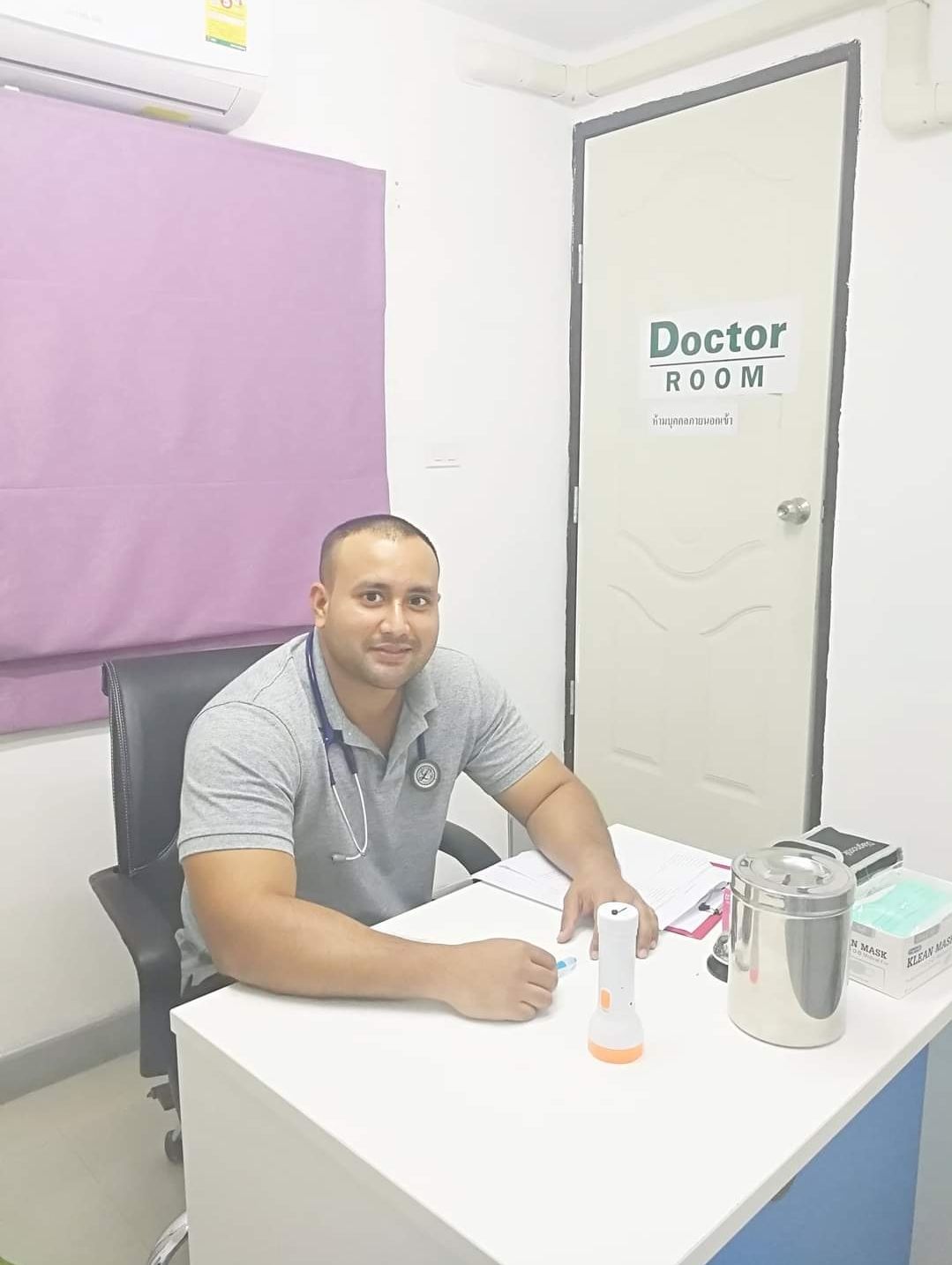
Dr. Ponlawat Pitsuwan is a physician at Doctor Bangkok, a private clinic in central Bangkok. He sees expats, residents, and medical tourists for general medicine, wellness consultations, and IV therapy. His focus is straightforward, evidence-based care delivered in plain language.