
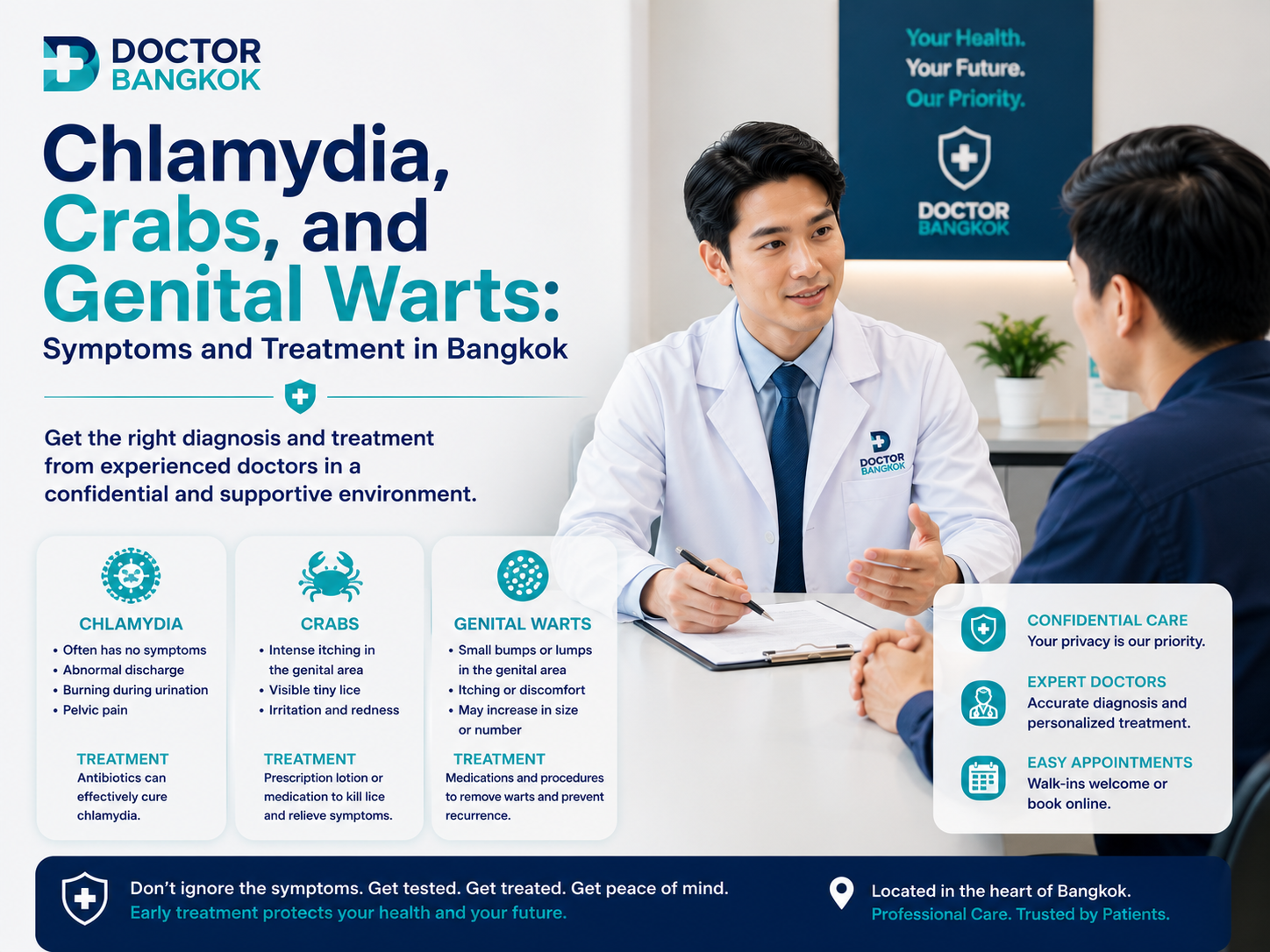
Chlamydia, pubic lice (crabs), and genital warts are three distinct sexually transmitted infections requiring different diagnosis and treatment. Chlamydia is a bacterial infection that usually causes no symptoms but can lead to serious reproductive complications when left untreated. Pubic lice are parasites causing intense itching in the pubic region and respond well to topical treatment. Genital warts are caused by low-risk HPV strains and require assessment to determine the most appropriate removal approach.
In this clinic, these three conditions represent different ends of the STD spectrum seen among Bangkok’s expat community. Chlamydia arrives silently. Most patients who test positive during routine screening had no symptoms and came in because of partner notification or as part of an annual health check. Pubic lice announce themselves with unmistakable itching, usually sending people to the clinic within days of onset. Genital warts fall somewhere between, often discovered during self-examination or mentioned by a partner during an unrelated conversation.
What connects these conditions is how often patients delay seeking care because they feel embarrassed or are unsure where to find confidential, English-language treatment in Bangkok. The practical reality is straightforward: all three conditions are common, all three are treatable, and getting a proper diagnosis early prevents complications and reduces the risk of passing the infection to partners. Confidential STD testing and treatment for all three conditions is available at Doctor Bangkok, centrally located with BTS access, with results typically returned within 24 to 48 hours.
The clinical approach to each condition differs significantly. Chlamydia requires antibiotic treatment and partner notification. Pubic lice require topical treatment and attention to reinfection sources in the immediate environment. Genital warts may need topical therapies or in-office removal procedures depending on their size, number, and location. Understanding these differences helps you know what to expect from testing and treatment at each step.

Chlamydia: The Silent Infection
Chlamydia trachomatis infects the urogenital tract and frequently produces no symptoms, particularly in women. Among patients tested at this clinic, most who test positive for chlamydia had no symptoms at all. They came in for routine screening or because a partner had been diagnosed. This is consistent with population-level data, which estimates that roughly 70 to 80 percent of chlamydia infections in women and 50 percent in men are asymptomatic.
When symptoms do occur, men typically notice urethral discharge, a burning sensation during urination, or testicular discomfort. Women may experience unusual vaginal discharge, pelvic pain, or spotting between periods. These symptoms can be mild and easily attributed to other causes, which is one reason the infection continues to spread across sexually active populations and why routine screening matters more than waiting for symptoms.
The clinical concern with untreated chlamydia extends well beyond the initial infection. In women, ascending infection can cause pelvic inflammatory disease, leading to chronic pelvic pain, increased risk of ectopic pregnancy, and infertility. In men, untreated chlamydia can cause epididymitis and, less commonly, reactive arthritis. Neither outcome is inevitable with early treatment, but both become significantly more likely the longer the infection goes undetected.
Chlamydia Testing and Window Periods
Nucleic acid amplification testing (NAAT) detects chlamydia DNA with high sensitivity and specificity. The test can identify infection approximately one to two weeks after exposure, but waiting two to three weeks after potential exposure produces more reliable results. Testing during the window period can generate a false negative, giving reassurance while the infection remains transmissible.
For patients who are symptomatic, testing proceeds immediately regardless of when exposure occurred. Symptoms indicate active infection. The window period guidance applies specifically to asymptomatic patients calculating from a defined exposure date. If a test returns negative during the window period, retest four to six weeks after the original exposure and use barrier protection with sexual partners in the interim.
Chlamydia Treatment
Chlamydia responds well to antibiotic treatment. First-line options are azithromycin as a single dose or doxycycline twice daily for seven days. Both are equally effective for uncomplicated urogenital chlamydia. In pregnant women, azithromycin is preferred over doxycycline due to safety profile. Antibiotic resistance in chlamydia remains rare, though treatment failure can occur when patients do not complete the full course or become reinfected from an untreated partner before the medication has cleared.
Partner treatment is not optional. All sexual partners from the preceding 60 days require testing and treatment even if they are asymptomatic and test negative. Chlamydia can be transmitted before a positive result appears, and reinfection cycles from untreated partners are a pattern seen regularly in this patient population. Patients should avoid sexual contact for seven days after completing treatment and until all recent partners have been treated.
What Are Crabs (Pubic Lice) and How Are They Treated?
Pubic lice (Pthirus pubis) are parasites that colonise coarse body hair, most commonly in the pubic region but also armpit hair, chest hair, and in heavy infestations, eyebrows. The lice attach their eggs, called nits, to individual hair shafts and feed on blood. Intense itching is the defining symptom, typically worse at night when lice are more active, and it usually drives patients to seek care within days of noticing it.
Transmission occurs almost exclusively through close physical contact, most often sexual activity. Pubic lice cannot survive more than 24 to 48 hours away from a human host, but they can temporarily infest bedding, towels, and clothing, making household transmission possible within that window. Toilet seats are not a meaningful transmission route. The lice need to grip hair to survive and do not move well on smooth surfaces.
Diagnosis is generally straightforward. Patients can often see the lice themselves on visual inspection. Adult lice are small, brownish, and slow-moving. Nits appear as small white or yellow oval eggs attached firmly to individual hair shafts. A clinical examination confirms the diagnosis and assesses the extent of the infestation.
How Do You Get Rid of Crabs?
Topical treatments are highly effective against pubic lice. Permethrin 1% cream rinse is first-line: apply to all affected areas, leave for ten minutes, then rinse thoroughly. Malathion 0.5% lotion is an alternative for patients who do not respond to permethrin or have a documented sensitivity. A second application one week after the first is recommended to catch any lice that hatched from eggs after the initial treatment.
Treating the environment at the same time as the person prevents reinfection. Wash all clothing, bedding, and towels used in the 72 hours before treatment in water above 50 degrees Celsius, then dry on high heat for at least 40 minutes. Items that cannot be washed should be sealed in plastic bags for 72 hours, after which any surviving lice will have died without a blood meal. All recent sexual partners require simultaneous treatment, even if asymptomatic, to prevent a reinfection cycle.

Genital Warts: HPV and Your Options
Genital warts result from human papillomavirus (HPV) infection, specifically HPV types 6 and 11, which are classified as low-risk strains because they cause warts rather than cancer. These are distinct from the high-risk HPV types, primarily 16 and 18, which are associated with cervical, anal, and oropharyngeal cancers. A person can carry multiple HPV types simultaneously, so the presence of genital warts does not rule out high-risk HPV co-infection.
Warts typically appear as small, flesh-coloured or slightly darker growths that may be flat, raised, or clustered. In more developed cases they take on a cauliflower-like texture. Common locations include the vulva, vaginal walls, cervix, penile shaft, scrotum, and perianal area. Many patients first notice warts during self-examination, or they are mentioned by a partner. Internal warts, particularly on the cervix, are often asymptomatic and found only during a pelvic examination or cervical screening.
The immune system eventually suppresses HPV in most people, though this process can take months to years. Some patients clear visible warts without any treatment. Others develop recurrent warts requiring ongoing management. The clinical decision about whether to treat, and which method to use, depends on wart size, location, number, and patient preference. HPV vaccines protect against the strains responsible for most genital warts and are recommended for eligible patients who have not yet been vaccinated.
Genital Wart Removal Options Available in Bangkok
Several treatment approaches are available, and selection depends on wart characteristics. Topical treatments include imiquimod cream, which stimulates local immune response, and podophyllotoxin solution, which destroys wart tissue directly. Both require multiple applications over several weeks and are most suitable for smaller, accessible warts that patients can reach themselves for home application.
In-office procedures include cryotherapy with liquid nitrogen, which freezes wart tissue, and electrocautery, which removes wart tissue using electrical current. These typically require one to three sessions depending on wart size, number, and response to treatment. Larger or recurrent warts may require excision under local anaesthesia. At Doctor Bangkok, both topical treatments and office-based removal procedures are available. Treatment selection follows clinical assessment of wart characteristics, anatomical location, and patient preference. Some patients see significant improvement within four to eight weeks; others require multiple sessions.
Urgent Symptoms That Require Same-Day Assessment
Severe pelvic pain in women warrants immediate assessment, as it may indicate pelvic inflammatory disease caused by ascending untreated chlamydia. PID can progress rapidly and lead to permanent reproductive damage when not treated promptly, often requiring intravenous antibiotics in a hospital setting.
Secondary bacterial infection of genital warts, particularly after scratching or attempted self-removal, requires urgent attention. Signs include worsening pain, discharge with an abnormal colour or odour, spreading redness, or fever. Any potential HIV exposure within the past 72 hours requires same-day assessment for post-exposure prophylaxis (PEP). PEP can prevent HIV infection when started within that window, with effectiveness declining sharply after 72 hours.
Concerned about chlamydia, pubic lice, or genital warts? Confidential STD testing and treatment are available at Doctor Bangkok. Our English-speaking medical team provides same-day consultations with results typically returned within 24 to 48 hours. Located in central Bangkok with BTS access. Book at doctorbangkok.co.th/std-test-bangkok.
Prevention and Partner Treatment
Consistent condom use substantially reduces transmission risk for chlamydia and HPV. For pubic lice, condoms provide less protection because transmission can occur through contact with infested areas that are not covered. The reality observed in this clinic is that prevention conversations more often happen after a diagnosis than before an exposure. Routine screening catches infections before that conversation becomes necessary.
Partner notification and treatment break reinfection cycles that otherwise persist for months. For chlamydia, all partners from the preceding 60 days require testing and treatment. For pubic lice, all recent sexual partners require simultaneous topical treatment. For genital warts, recent partners should be examined, though many exposed individuals will not develop visible warts even if they carry the virus. For fertility concerns arising from an STD history, assessment is available at Doctor Bangkok.
Regular STD screening detects asymptomatic infections before complications develop. Annual screening is appropriate for sexually active individuals; more frequent testing is warranted for those with multiple partners or other risk factors. Among the expat patients seen at this clinic, infrequent access to a trusted English-language provider is one of the most common reasons screening has been delayed.
U=U for Patients With HIV Co-infection
For patients with HIV who are also managing another STD, the U=U principle applies: undetectable equals untransmittable. People with HIV who maintain an undetectable viral load through consistent antiretroviral therapy cannot sexually transmit HIV to partners. This is established by the evidence reviewed in major HIV transmission studies and is directly relevant to patients managing multiple sexual health conditions simultaneously.
U=U does not provide protection against other STDs such as chlamydia, pubic lice, or HPV. Patients with HIV require the same screening intervals and prevention measures as HIV-negative individuals for all other sexually transmitted infections.
PrEP and PEP Availability in Bangkok
Pre-exposure prophylaxis (PrEP) is highly effective at preventing HIV acquisition when taken consistently by people at ongoing high risk. PrEP has no effect on other STDs, so patients using it still require regular screening for conditions including chlamydia and HPV. Post-exposure prophylaxis (PEP) can prevent HIV infection when started within 72 hours of a potential exposure. Delays significantly reduce its effectiveness. Both PrEP and PEP are available at Doctor Bangkok for patients who meet clinical criteria.
Frequently Asked Questions
Can you have chlamydia, pubic lice, and genital warts at the same time?
Yes, concurrent infections with multiple STDs are possible. Each of these three conditions has a different cause and transmission route, so having one does not confer any protection against the others. Patients with multiple concurrent STDs do present at this clinic, particularly among those with multiple sexual partners or inconsistent condom use. When any STD is diagnosed, it is worth screening for others at the same time rather than assuming symptoms point to a single infection.
How long after treatment am I no longer contagious?
This varies by condition. For chlamydia, the standard guidance is to abstain from sexual contact for seven days after completing the full antibiotic course and until all recent partners have also completed treatment. For pubic lice, the risk of transmission is effectively eliminated within 24 to 48 hours of completing successful topical treatment, though the second application one week later is important for confidence. For genital warts, the situation is more complex: wart removal does not eliminate the HPV virus from surrounding skin, so some degree of transmissibility may persist even after visible warts have cleared. Discuss specific timelines with your treating physician.
Do I need to tell previous partners about my diagnosis?
Partner notification is a clinical recommendation, not just an ethical consideration. For chlamydia, all sexual partners from the preceding 60 days should be contacted for testing and treatment, as untreated partners create reinfection cycles. For pubic lice, recent sexual partners need simultaneous treatment to prevent passing the infestation back. For genital warts, informing current and recent partners allows them to seek examination, though not everyone exposed to HPV will develop visible warts. Notification also applies to partners who appear asymptomatic, since all three conditions can be present without obvious signs.
Will any of these conditions affect my fertility?
Untreated chlamydia carries the most significant fertility risk. In women, ascending infection can cause pelvic inflammatory disease, which may lead to blocked fallopian tubes, chronic pelvic pain, and reduced fertility. Prompt antibiotic treatment prevents this outcome in the vast majority of cases. Pubic lice have no direct impact on fertility. Most HPV infections causing genital warts do not affect fertility, though extensive warts in certain anatomical locations may present management considerations during pregnancy. If you have concerns about fertility following a chlamydia diagnosis or a history of pelvic pain, assessment at Doctor Bangkok can include evaluation of any related complications.
How accurate are the STD tests for these three conditions?
NAAT testing for chlamydia offers high sensitivity and specificity when performed outside the window period. A negative result during the window period is not reliable and should be followed by repeat testing. Pubic lice diagnosis is primarily clinical, based on visual identification of lice or nits on examination rather than laboratory analysis. Genital warts are also usually diagnosed visually, with biopsy used selectively in atypical presentations or where other diagnoses need to be excluded. Testing at Doctor Bangkok is conducted by English-speaking physicians who can explain what each test measures, what the window period means for your result, and whether repeat testing is warranted.
I’m an expat in Bangkok. What should I know about accessing confidential STD care here?
Navigating sexual health care in an unfamiliar country adds a layer of hesitation that delays diagnosis more often than any other factor seen at this clinic. Most public hospitals in Bangkok have STD clinics, but they operate in Thai and often involve shared waiting areas that patients find uncomfortable. Private clinics serving the international community offer confidential, English-language consultations with shorter waiting times and discrete billing. The common practical concerns, whether results will appear on insurance documents, how quickly treatment can be obtained, and whether the conversation will be genuinely private, are reasonable and worth raising directly with the physician. All three conditions discussed in this article can be assessed, tested, and treated at a single visit.
Is there an HPV vaccine available in Bangkok, and should I get it?
HPV vaccines are available in Bangkok and protect against the HPV types responsible for the majority of genital warts as well as the high-risk strains associated with cervical and other cancers. The vaccine is most effective when given before any HPV exposure, but it still provides benefit for people who have not yet been infected with all vaccine-targeted strains. Current international guidelines recommend the vaccine for people up to age 26 routinely, with shared decision-making for ages 27 to 45 depending on individual risk factors. Whether you have already had genital warts does not automatically mean the vaccine offers no benefit, since you may not have been exposed to all strains covered. Discuss eligibility and timing at Doctor Bangkok.
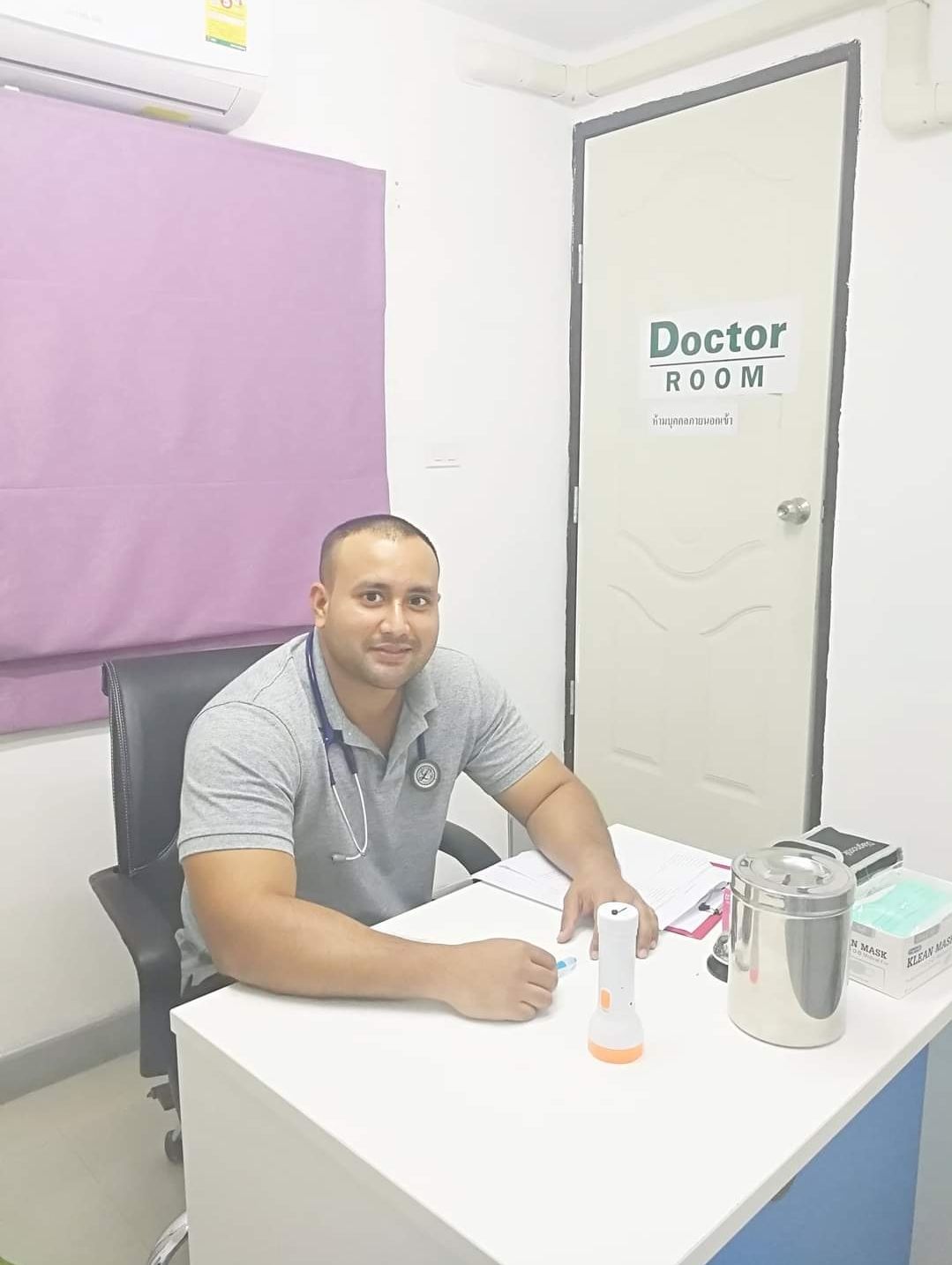
Dr. Ponlawat Pitsuwan is a physician at Doctor Bangkok, a private clinic in central Bangkok. He sees expats, residents, and medical tourists for general medicine, wellness consultations, and IV therapy. His focus is straightforward, evidence-based care delivered in plain language.