
STD testing timing depends on each infection’s window period, the interval during which a test may produce a false negative even if exposure has occurred. Bacterial infections such as chlamydia and gonorrhea become detectable one to two weeks after exposure using nucleic acid amplification testing. HIV is reliably detected two to four weeks after exposure with a fourth-generation combination test. Syphilis requires three to six weeks for accurate antibody results. Testing at the correct interval prevents false reassurance and ensures treatment begins without delay when needed.
For most patients who come in after a risk event, the first question is not whether to test. It is when. That question matters more than most people expect. Testing the morning after unprotected sex produces a negative result that means almost nothing. Testing at the right window for each infection produces a result you can act on. The difference between those two outcomes is what this article covers.
Bangkok’s expat and international community faces a specific version of this challenge. Many residents come from countries where STD testing was discussed openly with a regular GP, and that continuity of care is gone here. Patients may have navigated several partners across international travel and are unsure whether their last test was recent enough to be meaningful. At Doctor Bangkok, we see this pattern regularly: patients who are proactive about their health but uncertain about the specific timing rules that make testing reliable.
Window periods are not administrative formalities. They reflect the biology of how each pathogen replicates, how the immune system responds, and how different tests detect infection. Understanding them is the practical foundation of any sexual health routine.
When to Seek Immediate STD Testing
Some situations do not allow for the usual timing calculations. If you develop acute symptoms after potential exposure, such as unusual discharge, a burning sensation during urination, genital sores or ulcers, rash on the palms or soles, or pelvic pain, these symptoms warrant clinical assessment without waiting. Several STIs, including early syphilis and gonorrhea, can produce detectable signs before standard window periods have passed, and treatment started early reduces both complications and transmission risk.
If you have had unprotected sex with someone who is known to be HIV-positive, or if there is a meaningful risk of HIV exposure from a high-risk encounter, the window for post-exposure prophylaxis (PEP) is 72 hours. PEP is a 28-day antiretroviral course that, when started promptly, is highly effective at preventing HIV infection. Every hour matters. This is not a situation where waiting for a clinic appointment the following week is appropriate. Seek medical assessment the same day.
Sexual assault survivors require immediate medical attention, including a baseline STD test to establish pre-existing status, followed by follow-up testing timed to window periods. Healthcare workers with occupational exposure to blood or bodily fluids need the same baseline-plus-follow-up approach, with the specific schedule determined by the exposure type.
HIV, PEP, and PrEP: What Bangkok Residents Need to Know
HIV deserves its own section in any Bangkok STD testing article because the decisions around it are time-sensitive and frequently misunderstood. Thailand has invested significantly in HIV prevention infrastructure, and Bangkok residents, particularly those in higher-risk groups, have access to options that are not universally available elsewhere.
PrEP, pre-exposure prophylaxis, is a daily oral medication that reduces the risk of HIV acquisition through sex by over 99 percent when taken consistently. It is available in Bangkok at reasonable cost through both public and private providers, including Doctor Bangkok. Patients on PrEP require HIV testing every three months as part of the protocol, which also provides a natural structure for broader STI screening. If you are sexually active in Bangkok with multiple partners or partners of unknown HIV status, PrEP is worth a direct conversation with a physician.
One point that is under-communicated outside specialist circles: people living with HIV who are on effective antiretroviral therapy and who maintain an undetectable viral load cannot sexually transmit HIV to partners. This is the U=U principle, Undetectable equals Untransmittable, and it is backed by extensive clinical evidence. It changes how we counsel patients about disclosure, condom use, and partnership decisions. Any HIV-positive patient who is not yet engaged with treatment should understand that starting treatment is the most effective thing they can do for themselves and their partners.
Window Periods for Common STDs
The table below summarises the key window periods, the best testing method for each infection, and clinical notes relevant to Bangkok patients. Testing before these windows have closed does not rule out infection. It only establishes your status at the moment of the test.
| Infection | Window Period | Best Test | Notes |
| Chlamydia | 1-2 weeks | NAAT (urine/swab) | Often asymptomatic; treat both partners |
| Gonorrhea | 1-2 weeks | NAAT (urine/swab/throat/rectal) | Rectal and throat swabs needed for MSM |
| Syphilis | 3-6 weeks | Blood serology (RPR/TPPA) | Resurgent in Bangkok; early symptoms can be missed |
| HIV | 2-4 weeks (4th-gen) | 4th-gen combo Ag/Ab test | U=U applies; PEP within 72hrs if acute exposure |
| Hepatitis B | 4-10 weeks | HBsAg blood test | Vaccine-preventable; check immunity status |
| Hepatitis C | 8-12 weeks | Anti-HCV antibody | No vaccine; highly treatable if detected |
| Herpes (HSV) | 3-4 months (IgG) | PCR swab of active lesion | IgG most reliable; avoid IgM testing |
| HPV | 2-3 months+ | Pap smear / HPV DNA test | High-risk types may take longer to show |
A note on herpes testing: IgM antibody tests for herpes simplex virus are no longer recommended by most clinical guidelines because they produce a high rate of false positives and false negatives. IgG antibody testing is more reliable but requires three to four months to develop. If there is an active lesion present, a PCR swab of that lesion is the most accurate diagnostic approach and should be the first choice.
For patients in Bangkok who have sex with men, complete STI screening should include throat and rectal swabs for gonorrhea and chlamydia, not only urine samples. Pharyngeal and rectal infections are common, frequently asymptomatic, and missed entirely by urine-only testing. This is a pattern we encounter regularly in clinic: patients presenting with a history of negative urine results who have active rectal gonorrhea.
Incubation Periods vs Window Periods: The Distinction That Matters
Incubation period and window period are not the same thing, though patients often use them interchangeably. Incubation period refers to the time between exposure and symptom onset. Window period refers to the time required for a test to produce a reliable positive result. These timelines do not always align.
Gonorrhea can cause symptoms within two to five days, but many infections produce no symptoms at all and remain undetected without testing. Chlamydia symptoms, when they occur, typically appear one to three weeks after infection, but the majority of infections are asymptomatic, particularly in women. Syphilis may produce a painless genital ulcer within two to three weeks of exposure, but that ulcer is often missed or attributed to something else, and the infection continues to progress without treatment.
The asymptomatic nature of most STIs is the strongest clinical argument for routine testing rather than symptom-prompted testing. Waiting for symptoms before testing means waiting until the infection is advanced enough to have caused detectable harm. For Bangkok residents with active sexual lives, especially those whose partner network spans multiple countries, regular screening is the only reliable way to catch infections that will not announce themselves.
STD Testing by Situation
The timing of STD testing should match the clinical situation. The appropriate approach differs depending on why you are testing.
After a specific risk event, such as unprotected sex with a new or casual partner, test based on window periods rather than immediately. An immediate test establishes baseline status but cannot rule out an infection acquired during that encounter. A repeat test at the appropriate window for each target infection provides the meaningful result.
Before starting a new relationship without barrier contraception, both partners should complete a full STI screen and discuss results before making that change. The conversation can feel awkward. It is also the most practical form of mutual care available.
For routine annual screening in sexually active individuals, a standard panel covering HIV, syphilis, hepatitis B and C, chlamydia, and gonorrhea covers the most clinically significant infections. Those with multiple partners, those who engage in condomless sex regularly, or those in networks with elevated HIV prevalence should test every three months rather than annually. Bangkok’s expat social environment, which often involves international travel and shifting partnerships, makes the case for quarterly screening stronger than it would be in lower-prevalence settings.
Before international travel, testing provides a baseline. After returning from travel where unprotected sexual contact occurred, follow-up testing at the appropriate window completes the cycle.
What Blood Tests Can and Cannot Detect
Blood tests are essential for STI screening but do not detect everything. Serology, which identifies antibodies in the blood, is used for HIV, syphilis, hepatitis B and C, and herpes simplex virus. Fourth-generation HIV tests detect both antibodies and the p24 antigen, which is why they have a shorter window period than older antibody-only tests. This distinction matters when a patient is testing close to the window period.
Chlamydia and gonorrhea cannot be detected by blood tests. They require nucleic acid amplification testing (NAAT) of urine samples, genital swabs, or throat and rectal swabs depending on sexual practices. A sexual health screen that relies on blood tests alone will miss these two infections, which are the most commonly diagnosed bacterial STIs at this clinic.
Point-of-care rapid tests for HIV, syphilis, and sometimes hepatitis B provide results within fifteen to thirty minutes. They are useful when a quick answer is needed, but they generally have a slightly lower sensitivity than laboratory-based testing and longer effective window periods. A positive rapid test should be followed by confirmatory laboratory testing before treatment decisions are made.
STD Testing Costs in Bangkok
Private STD testing in Bangkok ranges from approximately 1,500 to 3,000 baht for individual tests to 6,000 to 15,000 baht for panels, depending on the infections included and whether testing is rapid or laboratory-based. Government hospitals offer lower-cost testing but typically involve longer wait times, less flexibility in scheduling, and limited English-language consultation. For expats and medical tourists who need clear communication about results and next steps, private testing is usually the practical choice.
Insurance coverage for STD testing is inconsistent across expat health plans. Many policies cover testing when symptoms are documented but not routine screening. Testing privately and paying out of pocket ensures confidentiality and removes any concern about employer notification through insurance claims. For many expats, this is the deciding factor.
Rapid point-of-care tests cost more per test but deliver results during the same visit, which is relevant for patients with travel plans or those who want to begin treatment without waiting several days for laboratory results. Laboratory-based NAAT testing for bacterial infections typically returns results within one to three working days.
Concerned about recent exposure, unsure which infections to test for, or due for routine screening? Doctor Bangkok provides confidential STD testing with English-language consultation and same-day appointments. Our physicians will advise on the correct window periods for your situation, which infections to include in your screen, and next steps if any result comes back positive. Book directly at doctorbangkok.co.th/std-test-bangkok.
Frequently Asked Questions
How soon after unprotected sex should I get tested?
Testing timing depends on the specific infections you want to screen for, and no single timepoint covers everything. Chlamydia and gonorrhea can be reliably detected one to two weeks after exposure using NAAT testing. HIV requires two to four weeks with a fourth-generation combination test. Syphilis needs three to six weeks for accurate antibody results. Testing the morning after exposure provides only baseline information. If your result at that point is negative, it does not mean you were not exposed. It means the test cannot yet detect the infection if it occurred. A follow-up test at the appropriate window is what produces the meaningful answer.
Do I need to get tested if I have no symptoms?
Yes. Symptom-free testing is not optional for sexually active people. Chlamydia causes no symptoms in most infected women and in roughly half of infected men. Gonorrhea, particularly pharyngeal and rectal infections, is frequently silent. Syphilis can progress through its early stages without producing symptoms that are recognised as significant. Waiting for symptoms before testing means allowing infections to progress, sometimes to the point of causing organ damage or being transmitted to partners who are also unaware. At Doctor Bangkok, the majority of positive bacterial STI results are found in patients who had no complaints at the time of their visit.
What is PrEP and should I consider it in Bangkok?
PrEP is pre-exposure prophylaxis, a daily oral medication taken by HIV-negative individuals to prevent HIV acquisition. When taken consistently, it reduces the risk of sexually acquired HIV by over 99 percent. It is appropriate for people who have multiple partners, engage in condomless sex, have partners of unknown HIV status, or are in serodiscordant relationships. Bangkok has a well-developed PrEP access infrastructure, and it is available through Doctor Bangkok at a reasonable cost relative to comparable private clinics. Patients starting PrEP will require an HIV test, a kidney function test, and a hepatitis B screen before beginning, and will need HIV testing every three months as part of the ongoing protocol. This three-monthly rhythm provides an excellent framework for broader STI screening at the same time.
What does U=U mean for HIV?
U=U stands for Undetectable equals Untransmittable. It is based on extensive clinical research demonstrating that a person living with HIV who is on effective antiretroviral treatment and who maintains an undetectable viral load cannot sexually transmit HIV to a partner. This is not a theoretical possibility or a probability reduction. It is the clinical conclusion of large-scale studies including the PARTNER and HPTN 052 trials. For HIV-positive patients in Bangkok who are engaged with treatment, U=U has significant implications for disclosure conversations, partnership decisions, and quality of life. For patients newly diagnosed, understanding U=U is part of the reason why starting treatment promptly is the most important step available.
How accurate are rapid STD tests?
Rapid point-of-care tests for HIV and syphilis are accurate when performed after the relevant window period has closed, but they have a longer effective window period than laboratory-based testing. A rapid HIV test performed three weeks after potential exposure may miss an early infection that a fourth-generation laboratory test would detect. For syphilis, rapid tests are a reasonable screening tool but require confirmatory serology for positive results before treatment begins. Rapid tests are not available for chlamydia or gonorrhea. Those infections require laboratory NAAT regardless of how quickly a result is needed. At this clinic, rapid tests are used where appropriate and are always interpreted alongside the patient’s exposure history and timeline.
What happens if my STD test is positive?
A positive result requires confirmation for some infections and initiates treatment planning for all of them. Bacterial infections including chlamydia, gonorrhea, and syphilis are fully treatable with antibiotics, and treatment success rates are high when the infection is caught before complications develop. Viral infections including HIV, herpes, and hepatitis B and C cannot be cured in most cases but can be effectively treated and managed with medications that control the virus, protect long-term health, and, in the case of HIV, eliminate transmission risk. At Doctor Bangkok, all results are handled confidentially. Partner notification is discussed with the patient and carried out with their consent. A positive result for any infection triggers a follow-up plan that includes treatment, repeat testing at the appropriate interval, and guidance on informing partners.
How often should I get tested for STDs?
Sexually active individuals with no specific risk factors should test at minimum once per year for the standard panel of HIV, syphilis, hepatitis B and C, chlamydia, and gonorrhea. Those with multiple partners, inconsistent condom use, or partners with multiple relationships should test every three months. Patients on PrEP are already testing every three months as part of the protocol, which conveniently aligns with recommended screening frequency for higher-risk groups. Bangkok’s expat environment, with its international travel, changing social circumstances, and access to a range of partners, makes quarterly screening a reasonable default for many residents rather than an exception.
Is STD testing confidential at private clinics in Bangkok?
Private clinic testing in Bangkok does not involve any mandatory reporting to employers, embassies, or government agencies for the standard STI panel. Results are held within the clinical record and shared only with the patient. This is one of the primary reasons expats and medical tourists choose private over public hospital testing: the process is in English, the results come back quickly, and there is no connection to insurance or employment records. At Doctor Bangkok, consultations and results are handled by English-speaking physicians, and no result is communicated to third parties without the patient’s explicit consent.
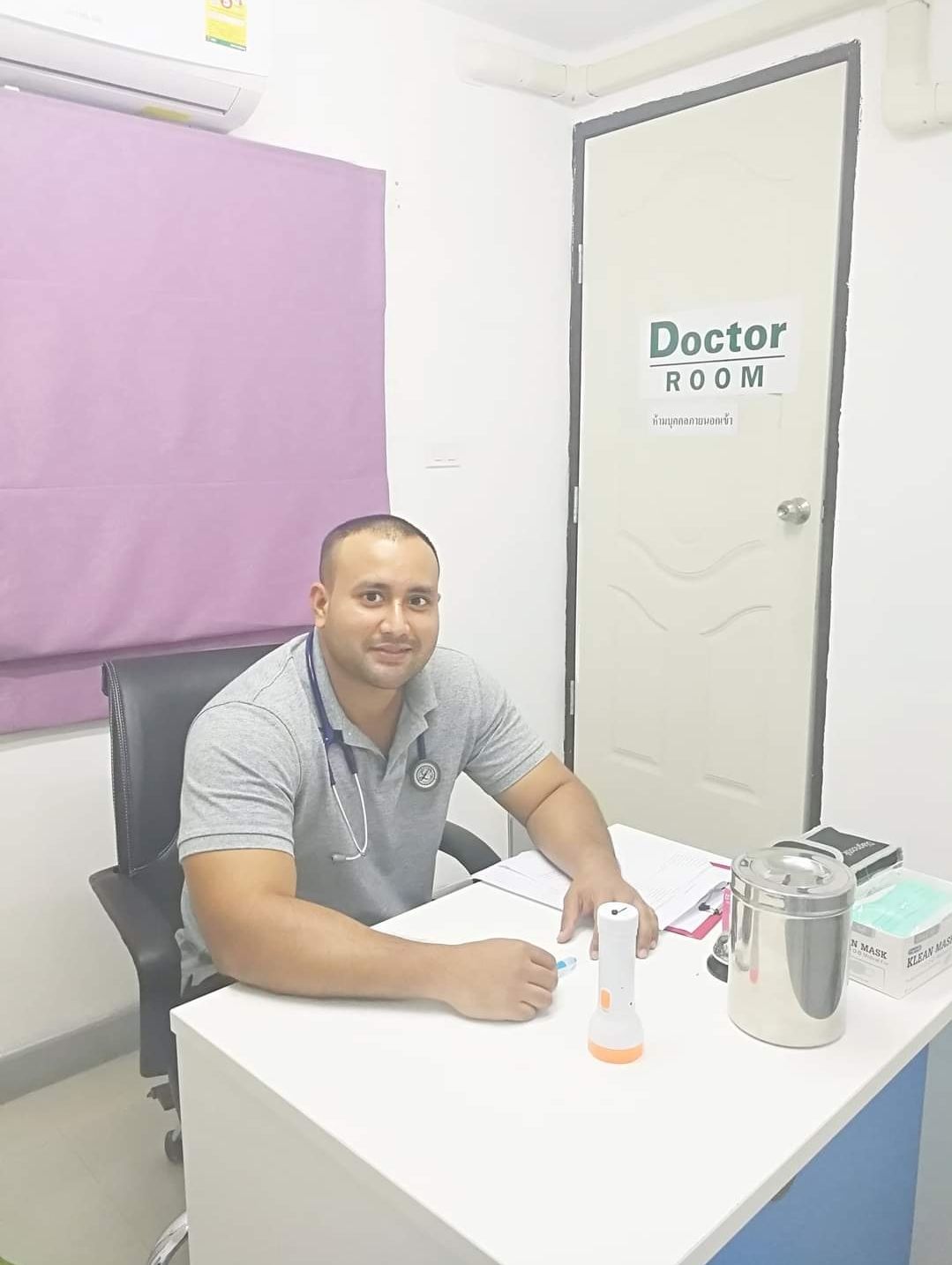
Dr. Ponlawat Pitsuwan is a physician at Doctor Bangkok, a private clinic in central Bangkok. He sees expats, residents, and medical tourists for general medicine, wellness consultations, and IV therapy. His focus is straightforward, evidence-based care delivered in plain language.