
A sexually transmitted disease (STD) is an infection passed between people through sexual contact, including vaginal, anal, or oral sex. STDs are caused by bacteria, viruses, or parasites and range from bacterial infections like chlamydia that are completely curable with antibiotics, to chronic viral conditions like herpes and HIV that are manageable but not curable. Many STDs cause no symptoms initially, which is why regular confidential testing matters more than waiting to feel unwell.
Sexual health questions come up every day in this clinic. Expats arrive from healthcare systems with different testing norms and often have not had a comprehensive STD screen in their home country. Medical tourists are navigating care in an unfamiliar language. And many patients have been in Bangkok for months or years before they realise that the private English-language sexual health services they need are actually accessible and straightforward to use.
What I see consistently is that people delay testing because they feel fine, assume symptoms would be obvious, or are uncertain where to go. Chlamydia and gonorrhea are among the most frequently diagnosed conditions in expats under 35 at this clinic, often in people who had no symptoms at all and tested only because a partner prompted them or they included it in a routine health check. That pattern is the clearest argument for regular screening regardless of how you feel.
Doctor Bangkok provides confidential STD testing in Bangkok for expats, residents, and medical tourists, with English-speaking physicians, same-day availability, and results typically within 24 to 48 hours.

What Is an STD?
An STD is any infection whose primary transmission route is sexual contact. The term covers more than 30 different pathogens that spread during vaginal, anal, or oral sex. Some also transmit through blood contact or from mother to child during pregnancy and delivery, but sexual transmission is the dominant route for all of them.
Bacterial STDs including chlamydia, gonorrhea, and syphilis are caused by organisms that live outside host cells. This is clinically important because it means they can be completely eradicated with the right antibiotic treatment. Viral STDs including herpes, HPV, HIV, and hepatitis B integrate with or persist in host tissue. They cannot be eliminated but can be managed effectively, in some cases so effectively that transmission to partners becomes impossible.
Parasitic STDs including trichomoniasis and pubic lice are caused by organisms that live on or in body tissue and respond well to targeted antiparasitic treatment. The key characteristic uniting all three categories is that transmission requires intimate contact. STDs do not spread through casual contact, shared toilets, swimming pools, or handshakes.
What Is the Difference Between an STI and an STD?
STI stands for sexually transmitted infection. STD stands for sexually transmitted disease. Medically they describe different stages of the same process. An STI is the presence of a pathogen in the body. An STD is what happens when that infection produces symptoms or measurable organ damage. Someone with asymptomatic chlamydia technically has an STI. Once that chlamydia causes pelvic pain or discharge, it has become an STD.
Most medical organisations now prefer STI because it is more accurate for the large proportion of cases where no disease symptoms develop. It also reduces stigma by framing the situation as an infection to be treated rather than a disease that defines the person. In practice, patients and clinicians use both terms interchangeably and either is acceptable.
The distinction matters most for testing. Because many infections remain in the STI stage indefinitely without producing symptoms, you cannot rely on how you feel to know your status. At this clinic we see the consequences of that assumption regularly. A test is the only way to move from uncertainty to certainty.

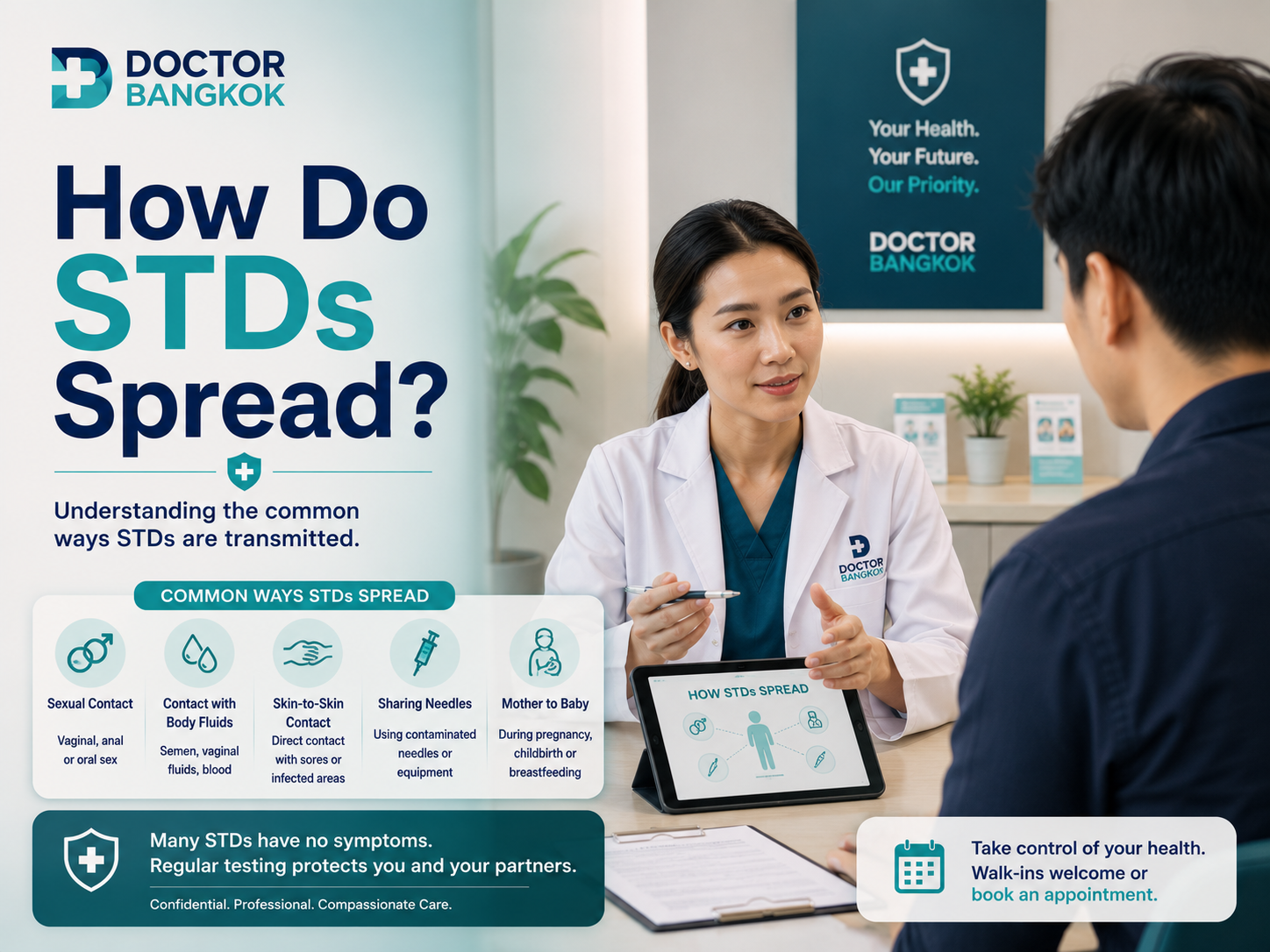
How STDs Spread and Transmission Routes
Sexual transmission occurs through contact with infected mucous membranes or bodily fluids during vaginal, anal, or oral sex. Each route carries different risk levels for different infections. Anal sex carries the highest transmission risk for HIV and most bacterial STDs because rectal tissue is thin and tears easily. Vaginal sex presents lower but significant risk. Oral sex is frequently underestimated: gonorrhea, chlamydia, syphilis, herpes, and HPV all transmit through oral contact, and throat infections from gonorrhea are common in patients at this clinic who assumed oral sex was risk-free.
Skin-to-skin transmission is relevant for herpes and HPV. Both can spread from infected skin to any mucous membrane or broken skin they contact, regardless of whether fluids are exchanged or penetration occurs. Condoms significantly reduce transmission risk for these infections but cannot cover all potentially infected skin, which is why herpes and HPV remain common despite consistent condom use.
Blood-borne transmission applies to HIV, hepatitis B, and syphilis through shared needles, contaminated medical equipment, or from mother to child during pregnancy, delivery, or breastfeeding. The clinical term for mother-to-child transmission is vertical transmission. Appropriate antenatal screening and treatment prevents most cases of vertical transmission for both HIV and syphilis.
What Is the Most Common STD?
Human papillomavirus (HPV) is the most common sexually transmitted infection worldwide. The majority of sexually active people will acquire at least one HPV type during their lifetime according to CDC surveillance data. Most infections clear naturally within two years without causing any symptoms or health consequences. The concern with HPV lies in the minority of infections that persist: high-risk types such as HPV 16 and 18 can cause cervical, anal, penile, and throat cancers. Low-risk types such as HPV 6 and 11 cause genital warts.
Chlamydia ranks as the most commonly reported bacterial STD globally and in Thailand. It is particularly prevalent among sexually active adults under 35. The infection causes no symptoms in the majority of women and a substantial proportion of men, which is what makes it so widely transmitted. Left untreated it causes pelvic inflammatory disease in women and epididymitis in men, both of which can affect fertility.
Herpes simplex virus affects a significant proportion of adults globally. HSV-1 traditionally caused oral herpes but now accounts for a large proportion of new genital herpes cases through oral-genital contact. HSV-2 primarily causes genital herpes. Many people are unaware they carry either type because initial infections are mild or asymptomatic.
Is Herpes an STD?
Yes. Herpes is a sexually transmitted disease caused by herpes simplex virus types 1 and 2. Both types can cause genital herpes through oral, vaginal, or anal sex. The virus establishes a lifelong infection in nerve cells and reactivates periodically, causing outbreaks of painful blisters or sores. Between outbreaks, the virus sheds asymptomatically from skin, meaning transmission is possible even when no symptoms are present.
Many people with herpes never develop recognisable symptoms or have such mild signs they attribute them to something else. Diagnosis during an asymptomatic period requires a blood test to detect HSV antibodies. Antiviral medications including valacyclovir reduce outbreak frequency, duration, and asymptomatic shedding, lowering transmission risk to partners. Daily suppressive therapy is often recommended for people in relationships where one partner is uninfected.
Is HIV an STD?
Yes. HIV is a sexually transmitted disease that targets CD4 T-cells, the immune cells that coordinate the body’s response to infection. Sexual transmission accounts for the majority of new HIV infections globally, occurring through contact with infected blood, semen, vaginal fluids, or rectal secretions during unprotected sex. Anal sex carries the highest per-act transmission risk.
Modern antiretroviral therapy suppresses HIV to undetectable levels in the blood within three to six months of starting treatment in most patients. People who maintain an undetectable viral load cannot sexually transmit HIV to partners. This is the principle known as U=U, undetectable equals untransmittable, and it has fundamentally changed how HIV is understood both clinically and socially. Early diagnosis and consistent treatment are what make U=U possible.
Pre-exposure prophylaxis, known as PrEP, prevents HIV acquisition in people at ongoing high risk when taken consistently, reducing risk by over 90 percent. Post-exposure prophylaxis, known as PEP, can prevent infection if started within 72 hours of a potential exposure. Every hour matters for PEP to be effective. Both PrEP and PEP are available at Doctor Bangkok following a physician consultation.
Is a UTI an STD?
A urinary tract infection is not a sexually transmitted disease. UTIs result from bacteria, most commonly E. coli from the digestive tract, entering the urinary system through the urethra. This is a mechanical process unrelated to sexual transmission. UTIs occur in people who are not sexually active, including children and elderly individuals.
Sexual activity can trigger UTIs in susceptible people, particularly women, because intercourse can introduce bacteria into the urethra. This is different from true STD transmission. The important clinical distinction is that some STDs produce urinary symptoms identical to a UTI. Chlamydia and gonorrhea frequently cause burning urination and urethral discharge. Someone self-treating for a UTI when they actually have an STD delays proper treatment and risks transmitting the infection to partners. If urinary symptoms develop after sexual activity with a new partner, an STD test is warranted alongside any UTI assessment.
Are Genital Warts an STD?
Yes. Genital warts are a sexually transmitted disease caused by specific HPV types, primarily HPV 6 and 11. These are classified as low-risk types because they rarely cause cancer, though they produce the characteristic raised growths on genital and anal skin that cause significant distress. HPV spreads through skin-to-skin contact during sexual activity and can infect areas not covered by condoms.
Treatment removes visible warts but does not eliminate the underlying HPV infection. Options include topical medications, cryotherapy, laser treatment, and surgical removal. Warts may recur in the first year after treatment. The immune system often clears HPV naturally over time, though this can take months to years. Vaccination against HPV types 6 and 11 alongside the high-risk types is available at Doctor Bangkok and is the most effective prevention available.
STD Symptoms and When to Seek Testing
The most important clinical fact about STD symptoms is that most infections produce none, particularly in the early stages. Waiting for symptoms before testing is how infections go undetected for months while continuing to transmit. When symptoms do occur they vary by infection but commonly include unusual discharge from the penis or vagina, burning or discomfort during urination, sores or ulcers in the genital or anal area, itching or irritation, and pelvic pain in women.
Women are disproportionately affected by asymptomatic STDs. Chlamydia and gonorrhea frequently cause no symptoms in women while producing pelvic inflammatory disease that damages fallopian tubes and affects fertility. In men, the same infections are more likely to cause noticeable discharge or discomfort, though a substantial proportion remain asymptomatic. This asymmetry means women in particular benefit from regular screening rather than waiting for something to feel wrong.
Bangkok’s heat and humidity do not cause STD symptoms but can worsen discomfort from existing infections and create skin irritation that mimics certain presentations. Any persistent genital symptom that does not resolve within a few days warrants clinical assessment rather than self-treatment with over-the-counter products.
When to Seek Urgent Attention
Most STD concerns warrant a routine appointment rather than emergency care. However, some presentations require prompt action rather than waiting for a scheduled slot.
Severe pelvic pain in women, particularly when accompanied by fever and abnormal discharge, may indicate pelvic inflammatory disease. This requires same-day assessment and antibiotic treatment to prevent fallopian tube damage and preserve fertility. Delayed treatment increases the risk of permanent scarring.
Symptoms consistent with acute HIV seroconversion appearing two to four weeks after a potential exposure, including fever, rash, sore throat, and swollen lymph nodes, should prompt immediate testing and clinical review. This window is when viral load is highest and transmission risk to partners is greatest.
If a potential HIV exposure has occurred within the past 72 hours, contact Doctor Bangkok or an emergency medical service immediately to assess whether PEP is appropriate. PEP must be started within 72 hours to be effective and the sooner it begins the better. Every hour of delay reduces efficacy. Do not wait for a routine appointment if this applies to your situation.
STD Testing Window Periods
The window period is the time between infection and when a test can reliably detect it. Testing during the window period produces a false negative result, which can create a dangerous false sense of security. Understanding window periods is one of the most practical pieces of information a sexually active person can have, yet it is consistently underexplained in most sexual health resources.
| STD | Window Period | Test Type | Follow-Up Timing |
| Chlamydia / Gonorrhea | 1 to 2 weeks | NAAT | 2 weeks post-exposure |
| Syphilis | 3 to 6 weeks | Blood (RPR/TPHA) | 6 weeks post-exposure |
| HIV (4th generation) | 18 to 45 days | Ag/Ab combo test | Confirm at 90 days |
| Herpes (HSV) | 2 to 12 days (symptoms) | Swab or IgG blood test | 12 weeks for serology |
| Hepatitis B | 6 weeks to 6 months | Blood (HBsAg) | 6 months post-exposure |
| HPV | Weeks to months | Visual exam / Pap smear | Per screening schedule |
Fourth-generation HIV tests, which detect both the viral antigen and the antibody response simultaneously, have significantly shortened the HIV window period compared to older antibody-only tests. If you are testing after a specific high-risk exposure, tell the clinician when it occurred. A negative result within the window period is not a definitive clear and requires a follow-up test at the appropriate interval.
STD Treatment Overview
Bacterial STDs are completely curable with appropriate antibiotic treatment when diagnosed and treated promptly. Chlamydia responds to azithromycin or doxycycline. Gonorrhea requires dual antibiotic therapy because of increasing resistance to single-drug regimens. Syphilis is treated with penicillin at doses and duration determined by the stage of infection. Completing the full prescribed course is essential, as is a test of cure to confirm clearance.
Antibiotic resistance is a growing clinical challenge that deserves direct attention. Gonorrhea in particular has developed resistance to multiple antibiotic classes over recent decades, which is why current treatment guidelines require dual therapy and follow-up testing rather than the single-drug courses used previously. Self-prescribing antibiotics, using leftover medication from a previous infection, or purchasing treatment without a physician consultation contributes directly to resistance patterns. Treatment must be guided by a physician who selects the appropriate antibiotic based on current resistance data.
Viral STDs cannot be cured but can be managed effectively, in some cases to the point where they pose no ongoing transmission risk. Herpes suppressive therapy with valacyclovir or acyclovir reduces outbreak frequency, duration, and asymptomatic viral shedding. HIV antiretroviral therapy achieves viral suppression in most patients within three to six months, preventing disease progression and enabling U=U. HPV often clears naturally through immune response, though this takes months to years, and associated cancers are prevented through vaccination and regular cervical screening.
Partner treatment is not optional. Treating one partner while the other remains untreated creates a reinfection cycle that makes individual treatment ineffective. All recent partners should be notified, tested, and treated simultaneously. Doctor Bangkok can assist with partner notification in a confidential and clinically sensitive way for patients who find this conversation difficult.
STD Prevention and Safer Sex Practices
Consistent condom use during vaginal, anal, and oral sex is the most effective single behavioural prevention strategy for most STDs. Latex and polyurethane condoms prevent contact with infected fluids and reduce skin-to-skin transmission risk. They do not provide complete protection against herpes and HPV, which can transmit from skin not covered by the condom, but they significantly reduce risk for these infections as well as providing strong protection against bacterial STDs and HIV.
PrEP reduces HIV acquisition risk by over 90 percent when taken consistently and is appropriate for people at ongoing high risk of HIV exposure. PEP can prevent infection following a specific high-risk exposure if started within 72 hours. Both require a physician consultation and are available at Doctor Bangkok. Vaccination against hepatitis B and HPV provides durable protection against two common sexually transmitted infections. The HPV vaccine is most effective before sexual debut but provides meaningful protection for sexually active adults who have not yet been exposed to all vaccine-covered types.
Regular testing, open communication with partners about STD status and testing history, and reducing the number of concurrent sexual partners all contribute to lower transmission risk. In Bangkok’s international community, where partners frequently come from different countries with different testing norms, establishing a personal testing routine is one of the most protective things a sexually active person can do.
Doctor Bangkok provides confidential STD testing and sexual health consultations in central Bangkok, close to the BTS network. English-speaking physicians conduct all consultations. Results for most panels are available within 24 to 48 hours. All consultations and results are handled with complete discretion. Same-day appointments are available for urgent concerns. Book your confidential STD test here.
Frequently Asked Questions
How long can you have an STD without knowing it?
Indefinitely, in many cases. Chlamydia and gonorrhea can persist for months or years without producing any noticeable symptoms, particularly in women, while causing progressive damage to the reproductive system. HPV can remain in the body for years without visible signs. Herpes can stay dormant in nerve cells between outbreaks for months at a time. HIV can progress silently for years without treatment while continuing to damage the immune system. The absence of symptoms is not a reliable indicator of the absence of infection, which is the fundamental reason regular screening exists.
Can you get STDs from oral sex?
Yes. Gonorrhea, chlamydia, syphilis, herpes, and HPV all transmit through oral sex, both giving and receiving. Throat gonorrhea is more common than many patients expect and is frequently asymptomatic. HIV transmission through oral sex is possible but considerably lower risk than anal or vaginal sex. The key clinical point is that testing panels should include throat and rectal swabs for patients who engage in oral or anal sex, not just genital testing, because infections at these sites are common and often missed by genital-only testing.
Are all STDs treatable?
All STDs can be treated but not all can be cured. Bacterial STDs including chlamydia, gonorrhea, and syphilis are completely curable with appropriate antibiotic therapy. Parasitic STDs including trichomoniasis are also curable. Viral STDs including herpes, HPV, HIV, and hepatitis B cannot be eliminated from the body but can be managed effectively with antiviral medication. HIV can be suppressed to undetectable levels, preventing transmission and allowing a normal lifespan. Herpes frequency and severity can be significantly reduced with daily suppressive therapy. HPV often clears naturally over time.
How accurate are STD tests?
Modern STD tests are highly accurate when performed after the appropriate window period. NAAT tests for chlamydia and gonorrhea are among the most sensitive diagnostic tools available, with false negatives occurring primarily when testing falls within the window period. Fourth-generation HIV combination tests are highly accurate after 45 days, with confirmatory testing recommended at 90 days for complete certainty. False positives are rare with confirmatory testing protocols. If you are uncertain about test timing for your specific exposure, the physician at Doctor Bangkok will advise on the appropriate approach before testing.
Can STDs cause infertility?
Yes, and this is one of the most significant long-term consequences of untreated bacterial STDs. Chlamydia and gonorrhea are the leading preventable causes of infertility in women. If left untreated, both infections can cause pelvic inflammatory disease, where the infection ascends from the cervix to the uterus and fallopian tubes. Scarring of the fallopian tubes can block the passage of eggs, leading to infertility or increasing the risk of ectopic pregnancy. In men, these same infections can cause epididymitis, inflammation of the tube carrying sperm from the testis, which can affect sperm production and transport. Early diagnosis and treatment prevent these complications in the vast majority of cases.
Do I need to tell previous partners if I test positive?
Partner notification is medically recommended for all STDs and legally required for certain infections in some jurisdictions. The practical reason is straightforward: untreated partners will reinfect you after your own treatment, creating a reinfection cycle that neither of you can break without simultaneous treatment. The notification window varies by infection. For chlamydia and gonorrhea, contacting partners from the past three to six months is appropriate. For syphilis and HIV, a longer lookback period may be relevant. Doctor Bangkok can assist with partner notification in a confidential and sensitive manner for patients who find this conversation difficult to initiate independently.
Are STD tests confidential in Bangkok?
Yes. At Doctor Bangkok, all consultations, test results, and treatment records are held in strict confidence under Thai medical privacy law. Results are communicated directly to you through your preferred method. We do not share patient information with employers, insurance providers, embassies, or any third party without your explicit written consent. For expats and medical tourists who may have concerns about confidentiality in their home countries or communities, private clinic testing in Bangkok provides an additional layer of discretion that government hospital testing typically does not.
How often should sexually active people get tested?
Annual screening is the standard recommendation for sexually active adults with a single partner. People with multiple partners, new partners, or partners of unknown STD status should consider testing every three to six months. If you are on PrEP for HIV prevention, quarterly testing is required as part of the monitoring protocol. The right frequency depends on your individual situation and risk profile. At Doctor Bangkok, the physician consultation before testing includes a brief risk assessment that helps establish the most appropriate screening schedule for your circumstances rather than applying a generic interval.
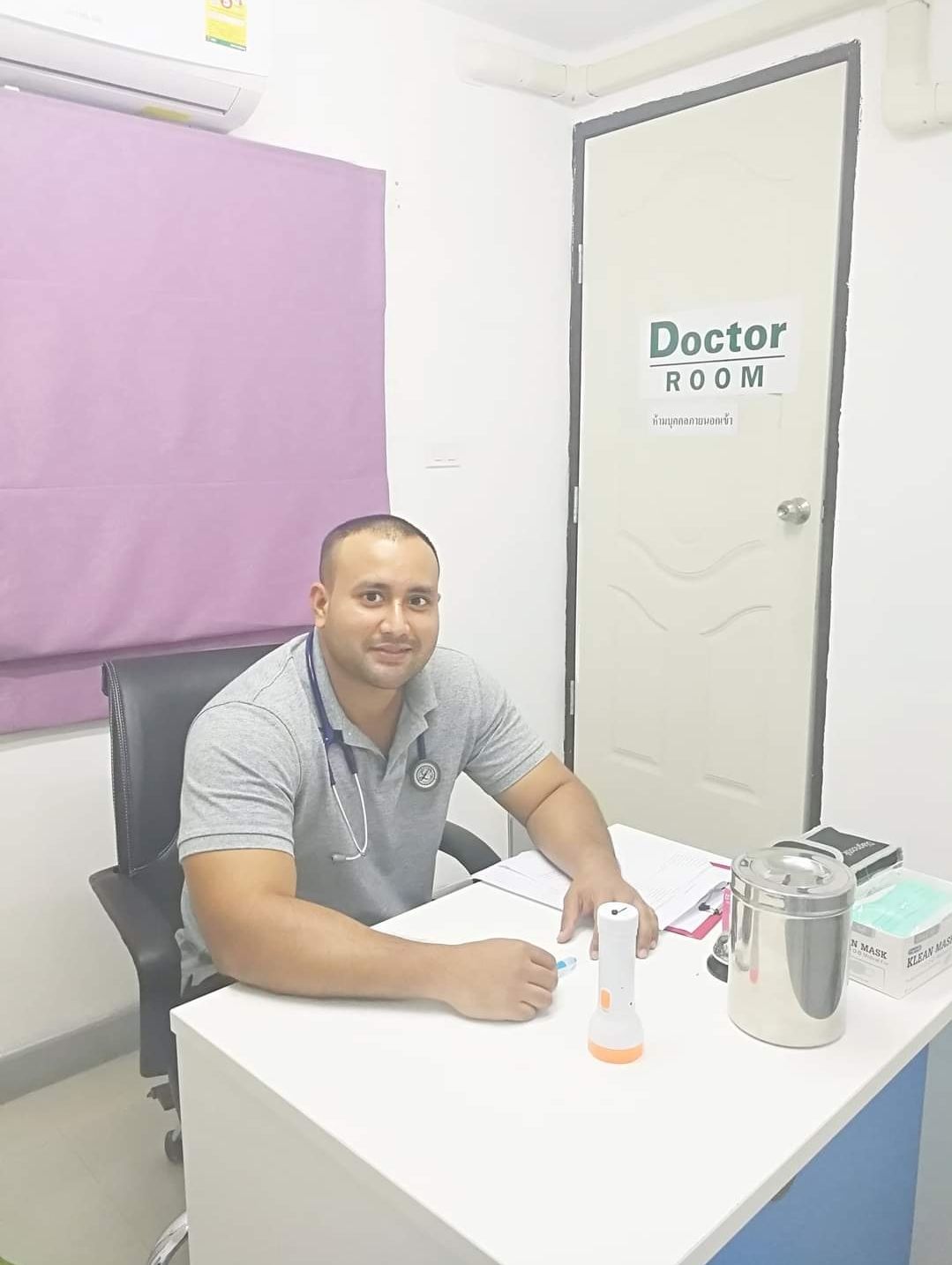
Dr. Ponlawat Pitsuwan is a physician at Doctor Bangkok, a private clinic in central Bangkok. He sees expats, residents, and medical tourists for general medicine, wellness consultations, and IV therapy. His focus is straightforward, evidence-based care delivered in plain language.