
Clinically reviewed by Dr. Ponlawat Pitsuwan, Physician, Doctor Bangkok.
Last reviewed: November 2026
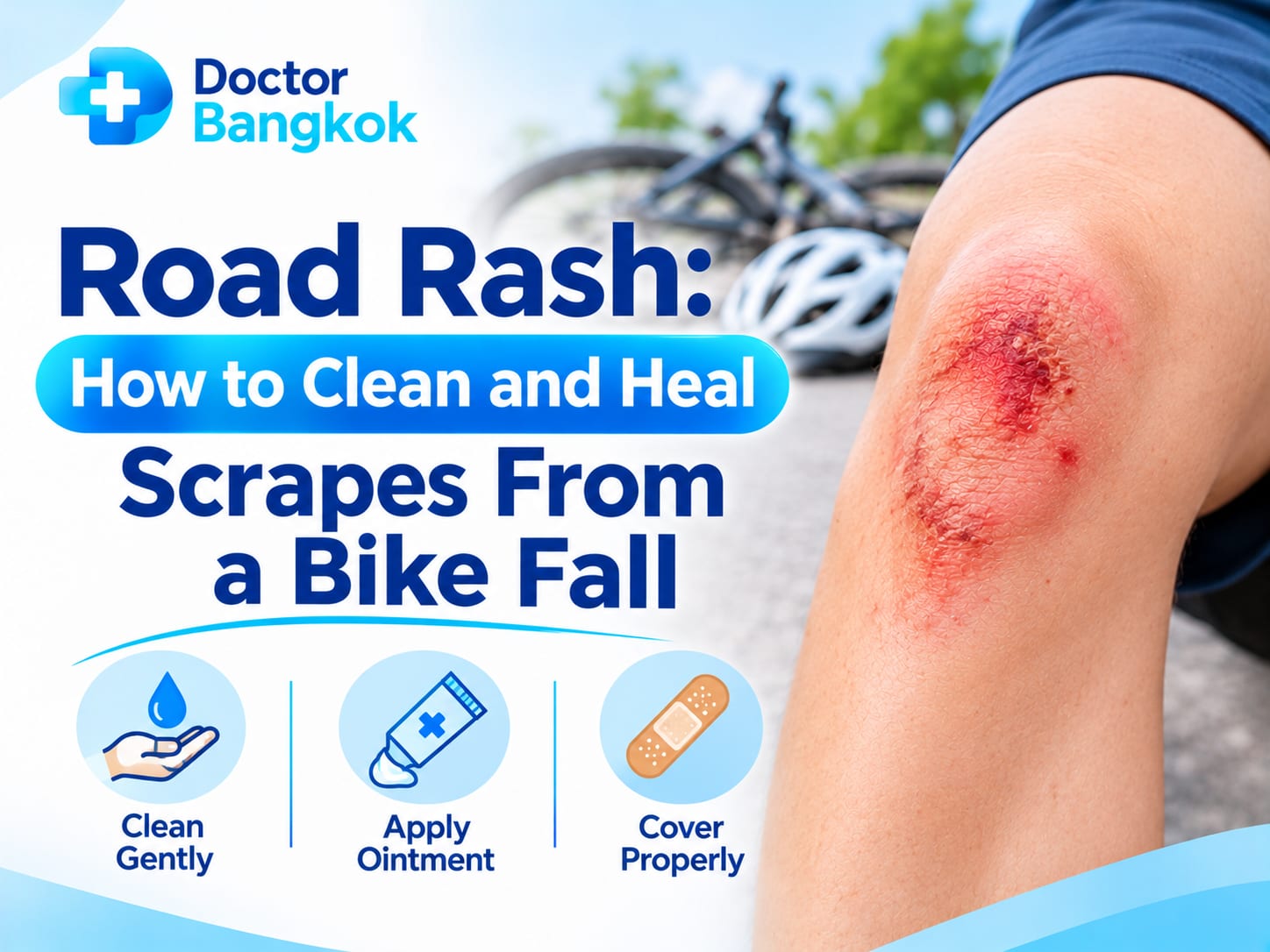
Road rash is a friction burn caused by skin contact with asphalt or gravel. Most cases can be managed at home with thorough cleaning, moist wound dressing, and daily monitoring. In Bangkok’s heat and humidity, infection can set in faster than in cooler climates, so watch for spreading redness, warmth, or pus within the first 24 to 48 hours. See a doctor if debris remains embedded, the wound is deep, or you are unsure about your tetanus vaccination status.
You just came off your rental scooter on Sukhumvit, or clipped a kerb on your morning bike ride through Lumpini Park. Now you have a palm-sized graze on your knee and gravel in it. Here is what to do, in order, before it gets worse.
Most road rash heals cleanly with the right care in the first hour. The part most people get wrong is cleaning: either too gentle, leaving debris behind, or so aggressive they damage new tissue. Bangkok’s climate adds urgency to wound care.
How Deep Is Your Road Rash?
Not all road rash is the same. A surface scrape that barely bleeds is a partial-thickness abrasion. The outer layers of skin are damaged but the deeper layers are intact, and these heal well on their own with correct dressing.
A deeper wound that exposes shiny white or yellow tissue beneath the skin is a different problem. That needs professional assessment. A graze smaller than your palm, with no embedded grit remaining after cleaning, is manageable at home. Anything larger, deeper, or with visible debris still present after washing warrants a doctor.
Speed matters. Wounds treated within the first few hours have better outcomes than those left until the next day.
Cleaning Out Grit and Gravel
This is the most important step, and the one people rush. Irrigate the wound with clean running water or saline for at least several minutes. The goal is to flush out loose grit, not just rinse the surface. Use gentle pressure, not a high-powered stream.
After irrigating, look closely at the wound in good light. If you can see embedded grit that does not come out with flushing, do not dig at it with tweezers. Debris that stays trapped under healing skin causes traumatic tattooing: permanent grey or dark pigmentation at the wound site. Grit that persists after thorough irrigation needs professional removal under local anaesthetic, ideally within the first few hours before the skin starts to close over it.
Avoid hydrogen peroxide and iodine directly on the wound. Both damage the cells that rebuild your skin. Soap around the wound edges is fine. Inside the wound, water or saline only.

Cleaning Road Rash When It Hurts Too Much to Do It Properly
The pain of irrigating a fresh road rash wound is real, and it causes people to rush or skip thorough cleaning. Taking an over-the-counter analgesic such as paracetamol or ibuprofen 30 minutes before you clean can help. For larger abrasions, a doctor can apply a topical anaesthetic before cleaning the wound, making thorough irrigation possible without the barrier of pain.
If you are alone in a hotel room and cannot clean the wound properly because of pain or limited visibility, that is a reasonable reason to call for help. Doctor Bangkok’s doctor-on-call service can come to your hotel, clean and dress the wound properly, and check your tetanus status while there.
Best Dressings for Road Rash
Once the wound is clean, keep it moist. Moist wound healing, where the wound is kept covered and hydrated rather than left to dry, consistently produces faster healing and less scarring than dry healing. A dry scab is not a sign of good healing. It is a sign of moisture loss.
For most road rash, a non-adherent dressing or a hydrocolloid dressing works well. Non-adherent dressings let the wound breathe without sticking to new tissue when you change them. Hydrocolloid dressings create a gel layer over the wound and can stay in place for several days, reducing the pain of dressing changes.
Apply a thin layer of petroleum jelly or an antibiotic ointment before covering. Change the dressing daily, or sooner if it becomes wet, dirty, or soiled. For wound dressing in Bangkok, Doctor Bangkok offers clean, 24/7 walk-in care on Sukhumvit Soi 13.
Infection Risk in Bangkok’s Heat
Bangkok’s heat and humidity create a faster bacterial environment for open wounds. A wound that might show early infection signs within several days in a cooler climate can deteriorate within 24 to 48 hours here.
Check the wound every time you change the dressing. The signs of infection are spreading redness beyond the wound edge, increasing warmth, swelling, pus, and sometimes a low-grade fever. A red line tracking up the limb from the wound is serious: get to a doctor immediately. Cellulitis, a bacterial infection of the deeper skin layers, is a known complication of untreated road rash and requires oral or intravenous antibiotics.
If you are not sure whether your wound is infected, the wound care team at Doctor Bangkok can assess it same day, with walk-in access any time and no appointment needed.
Tetanus Risk After a Road Fall
A road fall in Bangkok means contact with asphalt, grit, and potentially soil or rust. Tetanus bacteria are found in soil and dirt and can enter the body through a skin wound.
Health authorities recommend a tetanus booster if your last vaccination was more than five years ago and the wound is a dirty or contaminated one, such as road rash. If you are an expat or traveller whose vaccination records are incomplete, err on the side of getting the booster. Doctor Bangkok can administer a tetanus vaccination at the clinic or via a home visit, without a hospital queue.
Reducing Scarring After Road Rash
The two biggest drivers of road rash scarring are infection and UV exposure. Infection extends the inflammatory phase of healing and produces more disorganised collagen, leaving a more visible scar. UV exposure on healing skin drives postinflammatory hyperpigmentation, a darkening that can persist for months, particularly given Bangkok’s UV index year-round.
Keep healing wounds covered when outdoors. Once the wound has closed, apply SPF 50 or higher every day. Silicone gel, applied daily to the closed wound, has evidence supporting its use for reducing scar thickness and discolouration. Massage of the scar area once fully closed also helps flatten the tissue.
If a raised or thickened scar persists beyond three months, see a dermatologist. Raised, firm scars respond to different treatments than flat pigmented ones.
When You Need a Doctor for Road Rash
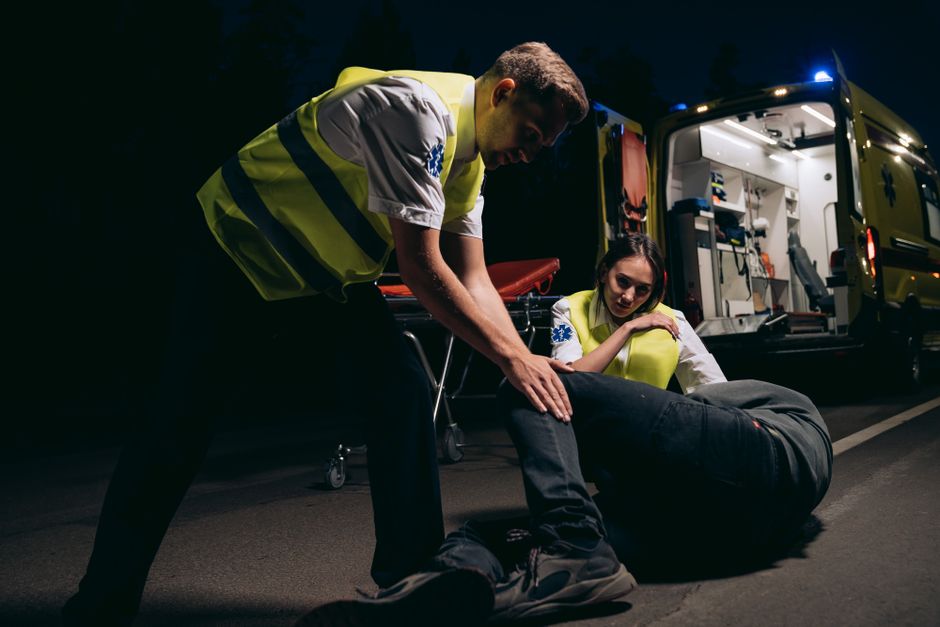
Most road rash does not need a hospital. Some does. See a doctor if the wound is deep enough to show yellow or white tissue beneath the surface. See a doctor if you cannot remove all visible grit after thorough irrigation. See a doctor if the wound is on your face, over a joint, or covers a large surface area.
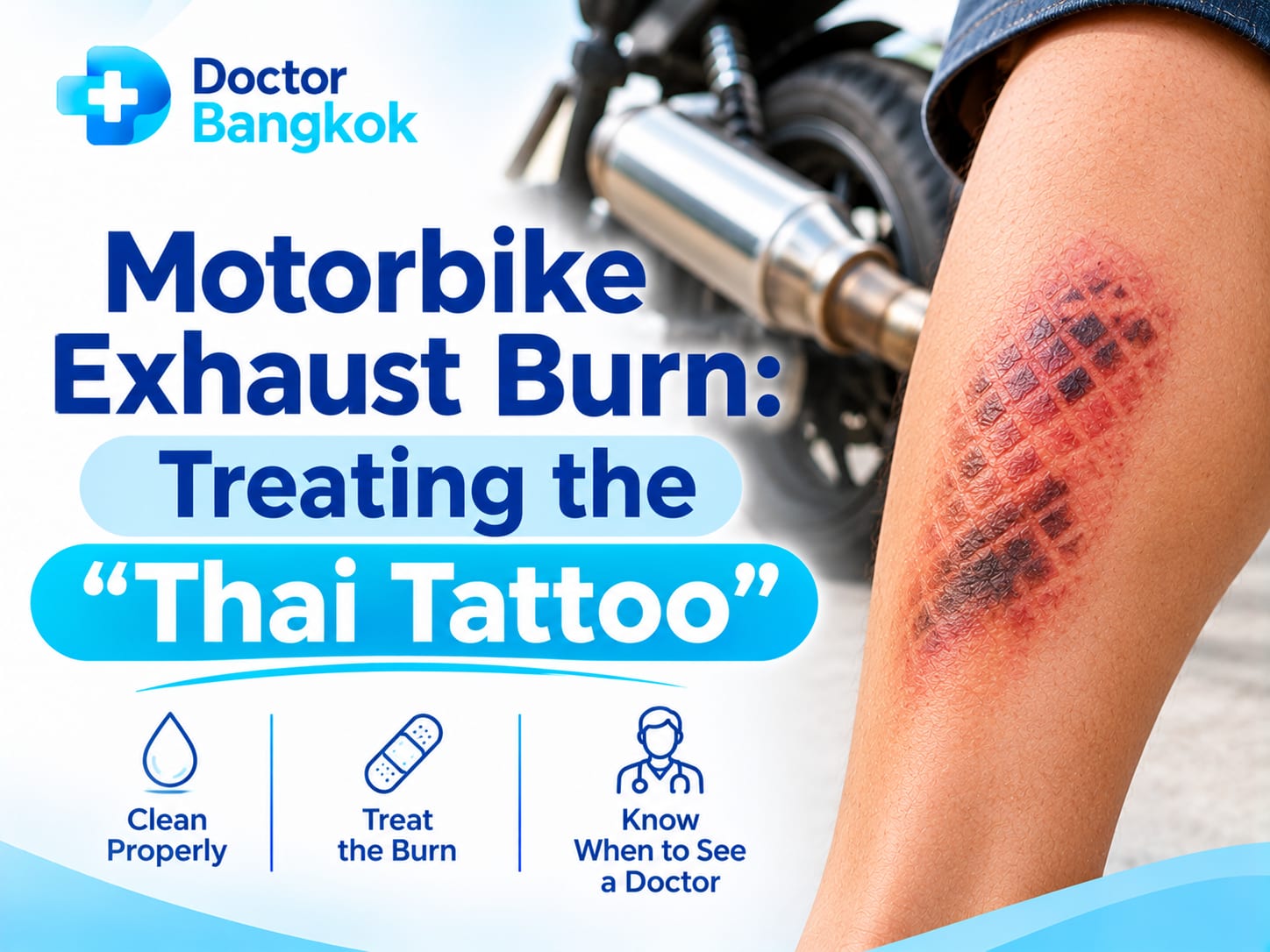
You also need a doctor if you are unsure about your tetanus status, or if the wound was caused by a motorbike crash rather than a bicycle fall. Motorbike road rash typically involves higher speeds, larger abrasion areas, deeper debris contamination, and a greater chance of partial or full-thickness skin loss. Do not apply the same home-care logic you would to a minor bicycle graze.
If getting to a clinic is the problem, Doctor Bangkok’s home visit service brings a doctor to your hotel or condo anywhere in Bangkok within one hour.
Road rash from a bike or scooter fall in Bangkok? Doctor Bangkok offers 24/7 wound care at our clinic on Sukhumvit Soi 13, with no appointment needed. We clean, assess, and dress wounds, check tetanus status, remove embedded debris under local anaesthetic when needed, and monitor for infection. If you cannot travel, our doctor-on-call service comes to your hotel or condo anywhere in Bangkok within one hour, day or night. Walk in anytime or contact us to book a home visit.
Frequently Asked Questions
Dr. Ponlawat Pitsuwan
Physician, Doctor Bangkok
a private medical clinic in central Bangkok, open 24/7, with a doctor-on-call service that comes to your hotel or condo within one hour. He sees expats, residents, and medical tourists for wound care, road rash assessment, skin infection management, and travel health. His focus is straightforward, evidence-based care delivered in plain language.
References
- Centers for Disease Control and Prevention. Chapter 21: Tetanus. Epidemiology and Prevention of Vaccine-Preventable Diseases (Pink Book). CDC, 2024.
- O’Brien L, Jones DJ. Silicone gel sheeting for preventing and treating hypertrophic and keloid scars. Cochrane Database of Systematic Reviews. 2013;(9):CD003826.
- Junker JPE, Kamel RA, Caterson EJ, Eriksson E. Clinical Impact Upon Wound Healing and Inflammation in Moist, Wet, and Dry Environments. Advances in Wound Care. 2013;2(7):348-356.
The information in this article is for educational purposes only and does not constitute medical advice. It should not be used to self-diagnose or replace a consultation with a qualified physician. If you have concerns about your health, contact a licensed medical professional. For appointments at Doctor Bangkok, visit doctorbangkok.co.th.
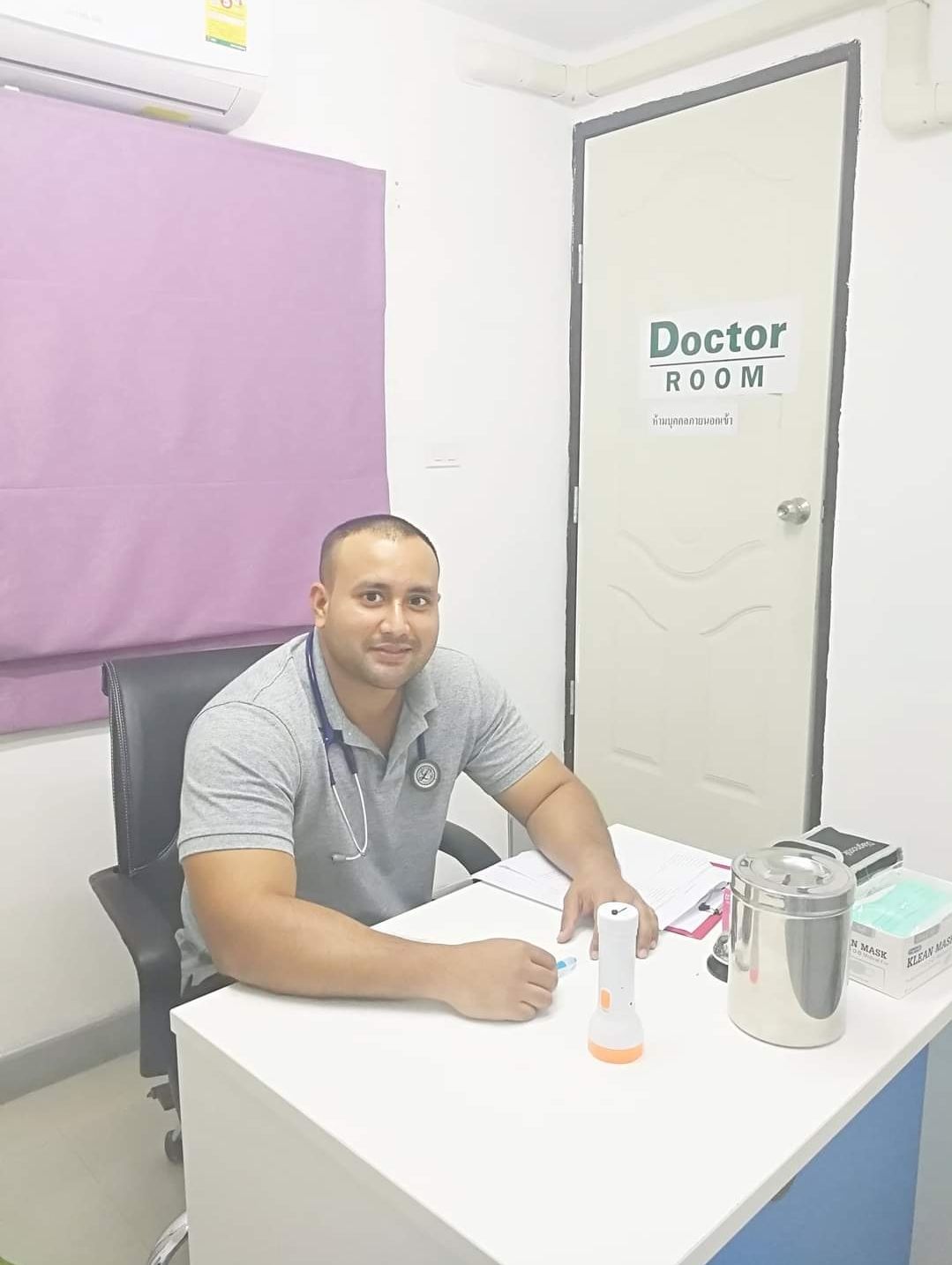
Dr. Ponlawat Pitsuwan is a physician at Doctor Bangkok, a private clinic in central Bangkok. He sees expats, residents, and medical tourists for general medicine, wellness consultations, and IV therapy. His focus is straightforward, evidence-based care delivered in plain language.