
Clinically reviewed by Dr. Ponlawat Pitsuwan, Physician, Doctor Bangkok.
Last reviewed: October 2026
GLP-1 receptor agonists are injectable medicines used to treat type 2 diabetes. They lower blood sugar, reduce HbA1c, and carry cardiovascular and kidney benefits supported by large clinical trials. In Thailand, they require a prescription. A doctor needs to review your full medication list before you start, adjust your dose, or continue a prescription from abroad.
You have type 2 diabetes, you are in Bangkok, and someone has mentioned GLP-1 medicines. Maybe your doctor back home already has you on one. Maybe you have seen Ozempic everywhere and wondered whether it applies to you. The question is the same: what does this actually mean for managing your diabetes here?
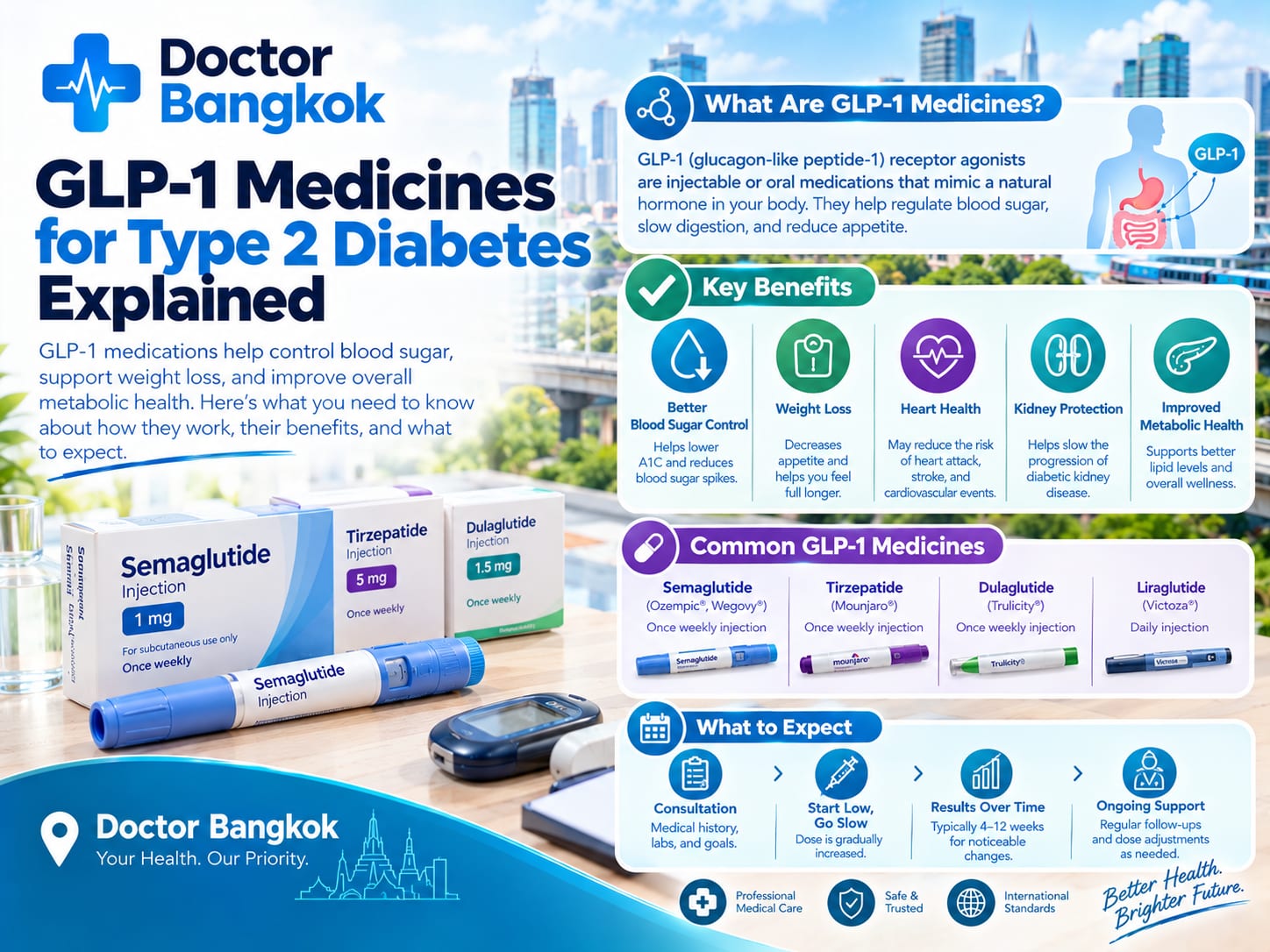
GLP-1 agonists, a group that includes semaglutide, liraglutide, and dulaglutide, do more than lower blood sugar. They have trial-backed evidence for heart and kidney protection in people with type 2 diabetes. That changes how they fit into a treatment plan. This article covers what matters most for diabetic patients: how these medicines work alongside your other tablets, what to expect, and how to keep your care on track when you are far from home.

Why GLP-1 Medicines Were Developed for Diabetes
GLP-1 stands for glucagon-like peptide-1. It is a hormone the gut produces naturally after eating. It tells the pancreas to release insulin when blood sugar rises and suppresses glucagon, the hormone that pushes blood sugar up between meals. In type 2 diabetes, this signalling becomes blunted. GLP-1 receptor agonists work by mimicking and amplifying that signal.
One important feature is glucose dependence. These medicines stimulate insulin release only when blood sugar is actually elevated. That is why, used alone, they carry a low risk of hypoglycaemia, meaning blood sugar dropping dangerously low, unlike older drug classes such as sulfonylureas.
Blood Sugar Control and Weight Effects
The primary goal when a GLP-1 agonist is prescribed for type 2 diabetes is HbA1c reduction, your three-month average blood sugar reading. These medicines also reduce fasting plasma glucose, the reading you get after an overnight fast.
Weight loss does happen. But here is something worth knowing before you start: people with type 2 diabetes lose less weight on GLP-1 agonists than people without diabetes on the same medicine at an equivalent dose. The STEP 1 and STEP 2 trials illustrated this pattern directly: participants without diabetes on semaglutide 2.4 mg lost around 14.9% of body weight (STEP 1), while those with type 2 diabetes on the same dose lost less (STEP 2). This is not a reason to avoid them. The blood sugar and cardiovascular benefits are real. But if weight loss is your main expectation, the picture is more complicated than general press coverage suggests.

Heart and Kidney Protection in Current Guidelines
This is where GLP-1 agonists changed diabetes treatment most. Two large trials, LEADER with liraglutide and SUSTAIN-6 with semaglutide, showed reductions in major cardiovascular events such as heart attack and stroke in people with type 2 diabetes who had established heart disease or high cardiovascular risk. These results are reflected in the ADA Standards of Care 2025, which recommend GLP-1 agonists with proven cardiovascular benefit for patients with type 2 diabetes and cardiovascular disease, independent of HbA1c target.
The kidney picture also matters. GLP-1 agonists are generally considered protective in early diabetic kidney disease. Current guidelines support their use in patients with chronic kidney disease, though monitoring of kidney function is required and caution applies at severe renal impairment.
You can check your cardiovascular risk using the cardiovascular risk calculator at Doctor Bangkok, which gives you a 10-year heart and stroke risk estimate as a starting point for that conversation.
How This Differs From Weight-Only Use
The same pen, a different clinical picture. When a GLP-1 medicine is prescribed for obesity without diabetes, the targets, monitoring, and combination decisions are different. In a diabetic patient, the prescribing doctor is tracking HbA1c, renal function, and interactions with existing diabetes medicines. The dose titration schedule is the same, but the reasons for adjustments are not.
A diabetic patient should never assume a weight-loss consultation covers their full clinical needs. The two pathways require different assessments.
Combining GLP-1 Agonists With Other Diabetes Medicines
Most people starting a GLP-1 agonist are already on something. Adding it to metformin is well-supported, and there is no meaningful interaction to manage between them.
Adding a GLP-1 agonist to a sulfonylurea, such as glipizide or glibenclamide, requires more caution. Sulfonylureas stimulate insulin release regardless of blood sugar level. When combined with a GLP-1 agonist, the hypoglycaemia risk rises, and your doctor will often reduce or stop the sulfonylurea when starting a GLP-1.
Triple therapy combining a GLP-1 agonist, an SGLT2 inhibitor (a medicine that removes glucose through the kidneys), and metformin is increasingly used and covered in current guidelines. It requires baseline kidney function testing and ongoing monitoring. Bringing your full medication list to the consultation is not optional.
Who Should Not Use GLP-1 Medicines
GLP-1 agonists are not for everyone with type 2 diabetes. They are not appropriate for suspected or confirmed type 1 diabetes, or for diabetic ketoacidosis, a serious complication requiring urgent hospital care.
A personal or family history of medullary thyroid carcinoma or multiple endocrine neoplasia type 2 is a contraindication listed on all product labels. Pregnancy is also a contraindication. Active thyroid disease requires careful evaluation before starting.
Pancreatitis, inflammation of the pancreas, has been reported in association with GLP-1 use. If you have a history of pancreatitis, tell your doctor before starting. Severe persistent abdominal pain once on treatment should prompt you to stop and seek assessment promptly.
Why Your Diabetes History Changes the Bangkok Consultation
If you are managing type 2 diabetes in Bangkok, the consultation is more involved than a straightforward new prescription. Your doctor needs to see your recent HbA1c, your kidney function results, your current medication list, and any cardiovascular history.
GLP-1 medicines in Thailand require a prescription issued by a Thai-licensed physician. A foreign prescription cannot be used at a Thai pharmacy. You need a locally issued prescription to keep your treatment on track.
Once you start a GLP-1 agonist, HbA1c should be reviewed within three months, and renal function should be checked at baseline and at intervals appropriate to your kidney disease stage. If you also take an SGLT2 inhibitor, more frequent kidney monitoring applies.
If you cannot get to a clinic, Doctor Bangkok’s doctor-on-call service can come to your hotel or condo within one hour. For an expat managing a long-term condition, that means you are not forced to choose between a full day at a large hospital and going without medical review. A same-day consultation at the clinic on Sukhumvit Soi 13 is available any time of day or night.
For a full breakdown of the types of GLP-1 medicine available and how they differ, see the GLP-1 medicines page at Doctor Bangkok.
If you are also thinking about whether your weight is affecting your diabetes management, the BMI calculator at Doctor Bangkok is a quick starting point before your consultation.
Managing type 2 diabetes in Bangkok, or thinking about starting a GLP-1 agonist? Doctor Bangkok is open 24/7 at Trendy Office, Sukhumvit Soi 13. Walk in any time, or book a doctor to come to your hotel or condo within one hour. English-speaking physicians can review your current diabetes medications, issue a Thai prescription where appropriate, check your HbA1c and kidney function, and help you continue your care without gaps. No referral needed.
Frequently Asked Questions
Dr. Ponlawat Pitsuwan
Physician, Doctor Bangkok
a private medical clinic in central Bangkok open 24/7, with a doctor-on-call service that reaches your hotel or condo within one hour. He sees expats, residents, and medical tourists for diabetes management, GLP-1 therapy initiation and continuation, general medicine, and preventive health. His focus is evidence-based care delivered in plain language.
References
- Marso SP, et al. Liraglutide and Cardiovascular Outcomes in Type 2 Diabetes (LEADER). New England Journal of Medicine. 2016;375(4):311-322.
- Marso SP, et al. Semaglutide and Cardiovascular Outcomes in Patients with Type 2 Diabetes (SUSTAIN-6). New England Journal of Medicine. 2016;375(19):1834-1844.
- American Diabetes Association. Standards of Care in Diabetes 2025. Diabetes Care. 2025;48(Supplement 1).
- Wilding JPH, et al. Once-Weekly Semaglutide in Adults with Overweight or Obesity (STEP 1). New England Journal of Medicine. 2021;384:989-1002.
- Davies M, et al. Semaglutide 2.4 mg once a week in adults with overweight or obesity, and type 2 diabetes (STEP 2): a randomised, double-blind, placebo-controlled, phase 3 trial. Lancet. 2021;397(10278):971-984.
- FDA. Ozempic (semaglutide) injection prescribing information. Novo Nordisk. 2022 (revised, includes 2 mg dose).
The information in this article is for educational purposes only and does not constitute medical advice. It should not be used to self-diagnose or replace a consultation with a qualified physician. If you have concerns about your health, contact a licensed medical professional. For appointments at Doctor Bangkok, visit doctorbangkok.co.th.
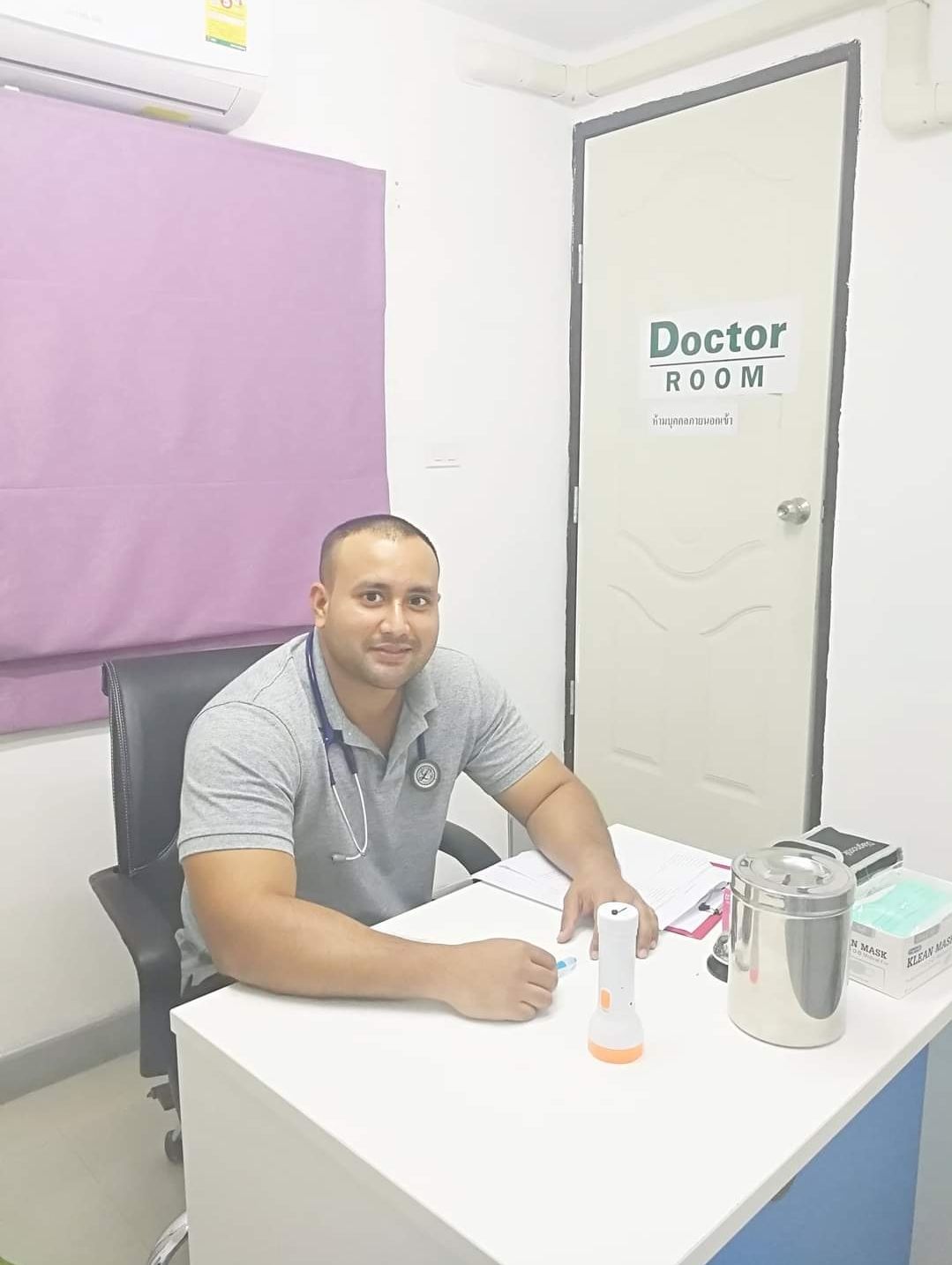
Dr. Ponlawat Pitsuwan is a physician at Doctor Bangkok, a private clinic in central Bangkok. He sees expats, residents, and medical tourists for general medicine, wellness consultations, and IV therapy. His focus is straightforward, evidence-based care delivered in plain language.