

Clinically reviewed by Dr. Ponlawat Pitsuwan, Physician, Doctor Bangkok. Last reviewed: August 2026
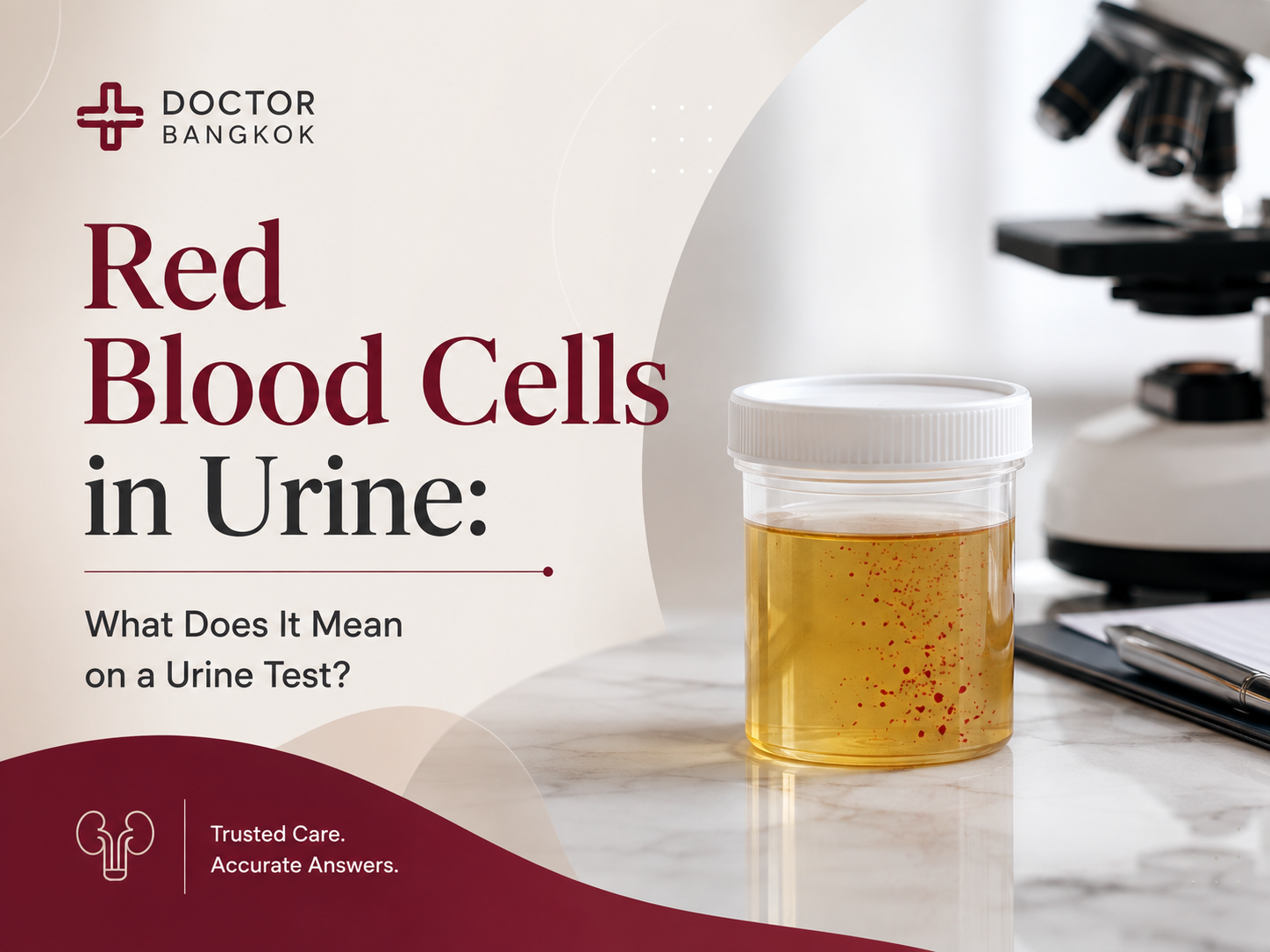
Red blood cells in urine, called hematuria, can come from something as minor as dehydration or as serious as kidney disease or bladder cancer. A urine test at a clinic can usually identify the cause quickly. If you can see blood with the naked eye, or if you have pain, fever, or difficulty urinating alongside it, get checked today, not next week.
You got a urine test done, maybe as part of a health check, maybe because something felt off, and now the result says red blood cells are present. Or you looked down at the toilet and the water was pink. Either way, you want a straight answer about how worried to be.
Most causes are benign and treatable. But some are not, and you cannot tell the difference from symptoms alone. That is why a proper urine test matters. At Doctor Bangkok, we can run a urinalysis the same day, usually with results within a few hours.

What "Red Blood Cells in Urine" Actually Means
There are two versions of this finding, and they are quite different.
The first is gross hematuria. That means you can see the blood. Your urine looks pink, red, or cola-brown. The second is microscopic hematuria. You cannot see anything unusual, but a urine test picks up blood cells under the microscope. Many patients discover this during a routine health check with no symptoms at all.
The clinical threshold is more than three red blood cells per high-power field on microscopy. Below that, a single finding may be a contaminated sample or minor irritation. Above it, we look further. A urine dipstick can flag blood quickly, but microscopy is what confirms it.
Common Causes of Red Blood Cells in Urine
The most common cause I see in Bangkok, especially in expats, is a urinary tract infection. The bacteria inflame the lining of the urinary tract and red blood cells leak into the urine as a result. Bangkok’s heat makes dehydration worse, concentrated urine irritates the bladder, and a minor infection can escalate fast.
Kidney stones are another frequent culprit. Stones scratch the lining of the urinary tract as they move, causing bleeding. The pain is usually severe and sudden, often on one side of the lower back. In a hot, humid city where many people do not drink enough water, stones form more easily than people realise.
Inflammation of the kidney’s tiny filters, called glomerulonephritis, is another cause. One type, IgA nephropathy, often causes visible hematuria after a viral infection or intense exercise. It is not rare, and it is frequently missed when people write the bleeding off as a one-off.
More serious causes include bladder cancer and kidney cancer. These conditions are found early precisely when people take an unexpected urine finding seriously and get it investigated. Persistent or recurrent hematuria without an obvious cause always needs further workup.
For travellers arriving in Bangkok from sub-Saharan Africa or parts of the Middle East, schistosomiasis is worth mentioning. It is a parasitic infection that causes bladder inflammation and hematuria. Not common in Bangkok itself, but relevant if you have been moving around recently.

Things That Turn Urine Red But Are Not Blood
This happens more than you would think, especially with expats eating new foods.
Beetroot, dragon fruit, and rhubarb can all turn urine pink or red. So can certain medications, including rifampicin, an antibiotic used for tuberculosis. If you are on warfarin, apixaban, or rivaroxaban, these do not directly cause red urine, but they can allow small amounts of bleeding in the urinary tract to become visible that would otherwise go unnoticed.
Menstrual contamination is a common false positive in women. A clean mid-stream sample, where you let some urine flow before collecting, helps avoid this. If the result is borderline and you are menstruating, we will usually repeat the test.
A red or pink urine colour alone does not confirm hematuria. A dipstick or microscopy does. Do not panic based on colour alone, but do get it checked.
Bangkok-Specific Risk Factors Worth Knowing
Bangkok’s climate changes the risk profile for hematuria in ways that most online guides do not cover, because those guides are not written for people living here.
Heat and humidity mean you sweat more and likely drink less water than your body needs. Concentrated urine irritates the bladder lining and makes it easier for bacteria to take hold. I see a spike in UTI-related hematuria every hot season without fail. Active expats who run or train outdoors are also more likely to develop exercise-induced hematuria, where physical stress briefly causes red blood cells to appear in urine. This usually clears within 24 to 48 hours with rest and hydration.
Self-medication is a real problem here. Antibiotics are sold over the counter at many Bangkok pharmacies. Many people treat what they think is a UTI without confirming the diagnosis or completing a proper course. This masks symptoms without curing the infection, and antibiotic-resistant UTIs are increasingly common in Thailand as a result. If your symptoms returned after self-treating, or never fully cleared, you need a urine culture, not just another course of whatever you bought at the pharmacy.
Tests We Use to Find the Cause
The first test is a urinalysis. We collect a mid-stream urine sample, run a dipstick for a rapid screen, then confirm any positive finding with microscopy. This takes a few hours at most. If infection is suspected, we send a urine culture to identify the specific bacteria and which antibiotic will work against it. Results usually come back within 24 to 48 hours.
If red blood cells are found and there is no obvious infection, the next step is usually an ultrasound of the kidneys and bladder, to look for stones, structural issues, or masses. If more detail is needed, we can arrange a referral for CT urography, which gives a clearer picture of the entire urinary tract. Urine cytology, where cells in the urine are checked under a microscope to screen for abnormal cells, is another option depending on the clinical picture.
You do not need to arrive knowing which test you need. You come in, describe your symptoms, and we work through it with you. Doctor Bangkok provides insurance documentation for all consultations, which most international health policies will accept for reimbursement.
When to See a Doctor Urgently
See a doctor today if you can see blood in your urine, if you are passing clots, if you have fever alongside the bleeding, if you have pain in your back or side, or if you are having difficulty urinating. These combinations need prompt assessment.
Book an appointment within a few days if your urine test came back with microscopic hematuria as an incidental finding, you have no symptoms, and this is the first time it has appeared. A single isolated finding can sometimes be a contaminated sample or minor irritation. We would repeat the test and investigate from there.
Do not wait until you get home to see your GP. If hematuria is persistent or has a structural cause, weeks of delay matter. Some travel insurance policies also require that you sought available local care at the time of the finding, not months later.
What Happens If You Leave It
The biggest mistake I see is people deciding to wait it out.
An untreated urinary tract infection can travel up to the kidneys, causing pyelonephritis. That means fever, flank pain, and in some cases hospitalisation. What started as a manageable course of antibiotics becomes a more complicated problem. Kidney inflammation left unaddressed can cause long-term damage to kidney function.
The more serious concern is bladder cancer. The single most common presenting symptom is painless hematuria. No burning, no urgency, just blood in the urine that comes and goes. People explain it away, assume it was something they ate, and come back months later with a more advanced diagnosis. Early detection changes outcomes significantly.
Most people with hematuria do not have cancer. But the only way to know for certain is to get tested.
If your urine test has flagged red blood cells, or if you have noticed blood in your urine in Bangkok, Doctor Bangkok offers same-day urinalysis, urine culture, and full clinical assessment at our central Bangkok clinic, accessible by BTS. Our physicians speak English and can arrange imaging referrals and insurance documentation where needed. Walk-ins are welcome, or book an appointment online at doctorbangkok.co.th.
Frequently Asked Questions
Dr. Ponlawat Pitsuwan
Physician, Doctor Bangkok
a private medical clinic in central Bangkok. He sees expats, residents, and medical tourists for urinary symptoms, general health checks, STD testing, and travel medicine consultations. His focus is straightforward, evidence-based care delivered in plain language.
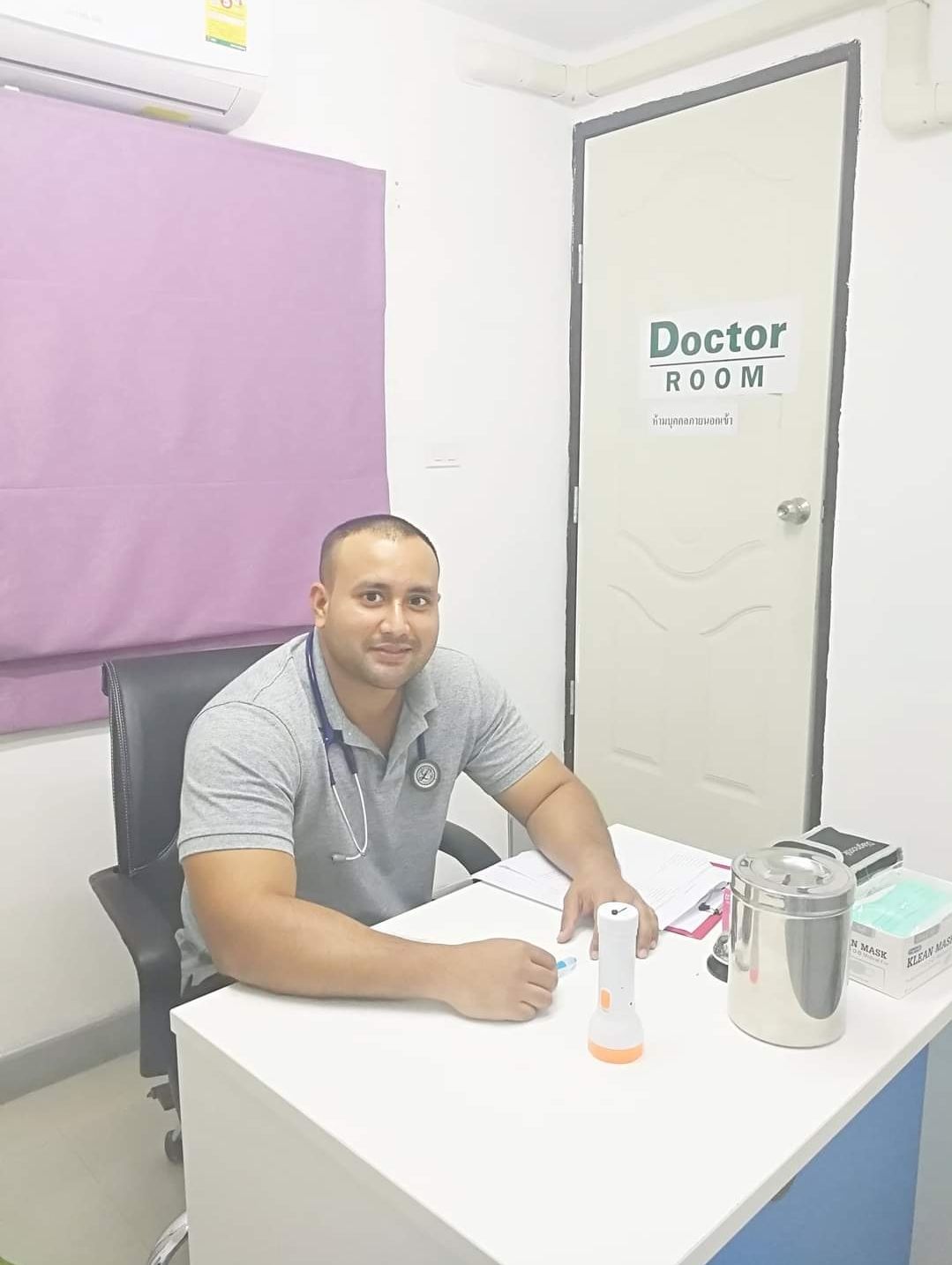
Dr. Ponlawat Pitsuwan is a physician at Doctor Bangkok, a private clinic in central Bangkok. He sees expats, residents, and medical tourists for general medicine, wellness consultations, and IV therapy. His focus is straightforward, evidence-based care delivered in plain language.