

Clinically reviewed by Dr. Ponlawat Pitsuwan, Physician, Doctor Bangkok.
Last reviewed: July 2026
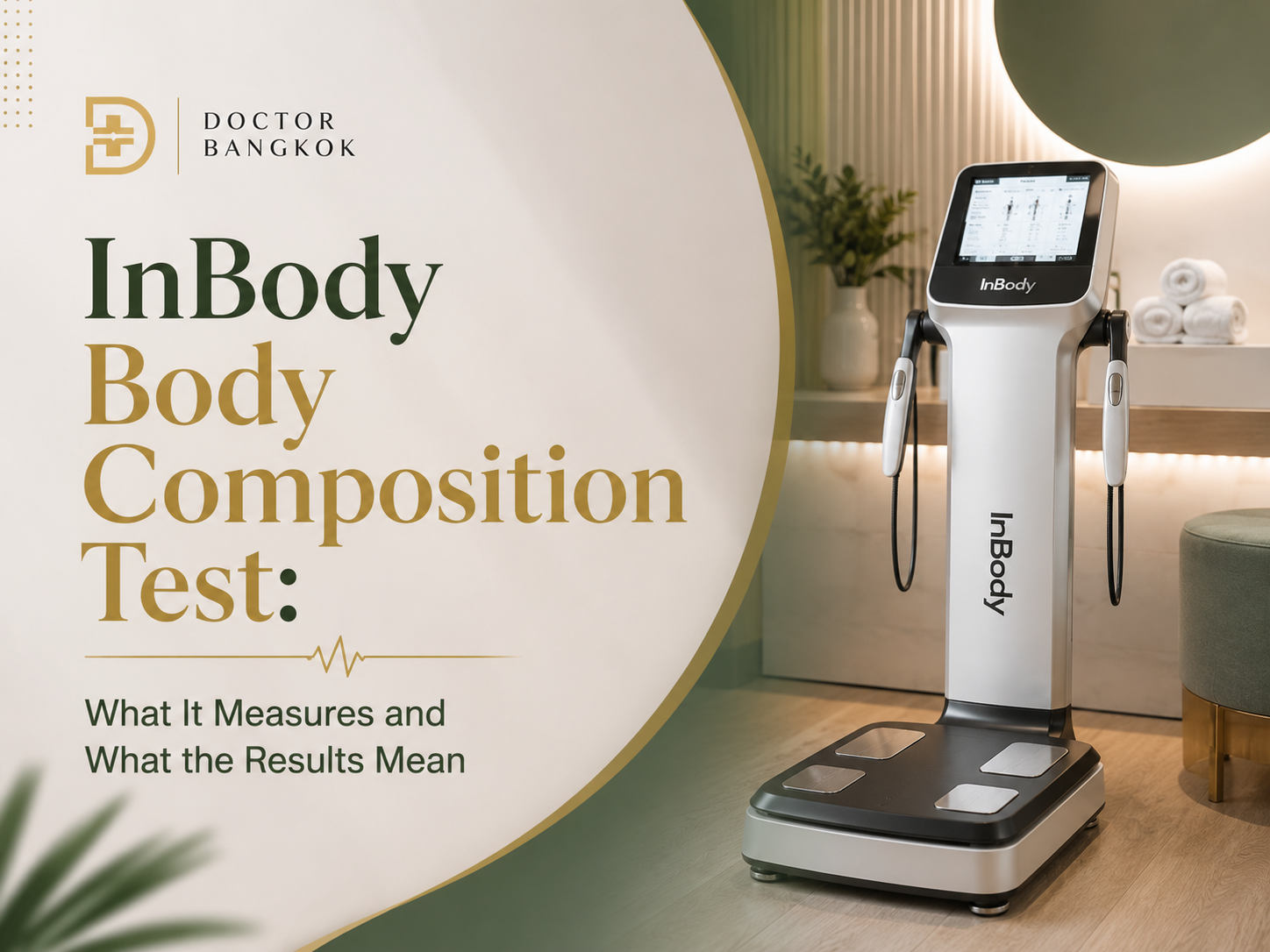
The InBody test measures your muscle mass, body fat, and body water using a small electrical current passed through your body. The whole thing takes under a minute. Your result sheet gives you more than a dozen data points, but the ones that actually matter for your health are body fat percentage, visceral fat level, skeletal muscle mass, and phase angle. A doctor reviewing those numbers in context of your lifestyle tells you far more than the numbers alone.
Most people who come in for an InBody test have already had one somewhere. A gym, a wellness centre, a hospital package. They got a printout, looked at the numbers, and had no idea what to do with them. That is the part nobody seems to explain well.
If you are an expat living in Bangkok, this test is one of the most useful things you can do for a quick health check. The city makes it easy to sit at a desk all day, eat well, drink regularly, and still feel fine. The InBody result sheet is often the first time someone realises their body composition does not match how they feel. At Doctor Bangkok, we review these results with patients face to face, in English, and connect them to the bigger picture of their health.

How the InBody Test Works
The InBody uses a method called bioelectrical impedance analysis. A very small electrical current, completely painless, passes through your body via the hand grips and foot pads. Muscle conducts the current well because it holds a lot of water. Fat and bone resist it.
What I tell patients is: this is not a gym-grade scale. The device sends currents at several different frequencies, which lets it distinguish between fluids inside your cells and fluids outside them. That matters for accuracy. Older single-frequency devices fill in the gaps with population estimates. The InBody measures directly.
What Your Result Sheet Actually Shows
The printout can look overwhelming. Here is how I walk patients through it.
Skeletal Muscle Mass and Body Fat Mass
These two numbers sit at the top for a reason. Skeletal muscle mass is the muscle you can build and lose. Body fat mass is total fat in your body. The goal for most people is not just to lose fat. It is to maintain or grow muscle while fat comes down. You can lose weight on a scale and still be in a worse metabolic position if that weight was muscle.
Body Fat Percentage
This is more useful than weight alone. A healthy range is roughly 10 to 20 percent for men and 18 to 28 percent for women, though this shifts with age. I use this number alongside visceral fat level rather than in isolation.
Visceral Fat Level
This is the one most people underestimate. Visceral fat sits around your internal organs, deep in the abdomen. It is not the fat you can pinch. It raises your risk of insulin resistance, cardiovascular disease, and metabolic syndrome. The InBody scores visceral fat on a scale of 1 to 59. A level above 10 is where I start a clinical conversation.
Some patients look lean but have a high visceral fat score. That is the combination I worry about most. You can also have visible belly fat that is mostly subcutaneous, which is far less dangerous.
Basal Metabolic Rate
This is the number of calories your body burns at rest. It is driven largely by your muscle mass. More muscle means a higher basal metabolic rate. Crash diets that burn through muscle pull this number down, which is one reason weight regain happens so easily after rapid weight loss.
Segmental Muscle Analysis
The InBody breaks down muscle mass by body segment: right arm, left arm, trunk, right leg, left leg. This is genuinely useful. A lot of expats who sit at a desk have reasonable overall muscle mass but very low leg muscle. Leg muscle matters a great deal for long-term metabolic health and mobility.
Body Mass Index
BMI is on the sheet, but I rarely lead with it. It does not distinguish between muscle and fat. A muscular patient can have a BMI in the overweight range and excellent body composition. Use it as one data point, not the main verdict.

Advanced Metrics: Phase Angle and ECW/TBW Ratio
These two numbers appear on every InBody sheet. Almost no gym or wellness centre explains them. They are, in my view, two of the most clinically interesting outputs.
Phase Angle
Phase angle reflects how well your cells are holding their structure and fluid. A higher phase angle generally means healthier, more intact cells. A low phase angle can suggest inflammation, muscle wasting, or poor nutritional status. It is not a diagnostic test on its own, but in a patient whose other markers also look off, a low phase angle prompts a deeper look.
For adults in reasonable health, a phase angle above 5 degrees is generally reassuring. Below 4 degrees in a younger person is worth discussing with a doctor.
ECW/TBW Ratio
Your body water divides into two compartments: water inside your cells and water outside them. ECW/TBW is the ratio of outside-cell water to total body water. In a healthy body, this sits between 0.36 and 0.39. When it rises above 0.39, fluid may be shifting outside your cells. That can reflect inflammation or early kidney or liver changes.
This marker is not one you need to act on alone. But if your ratio is elevated, it is worth a conversation with a doctor rather than ignoring the number.
Who Should Not Take the InBody Test
The InBody is very safe for most people. There are a few situations where it is not appropriate.
If you have a pacemaker or an implanted cardiac defibrillator, do not use the InBody. The electrical current can interfere with the device. Pregnant women are advised to skip it. If you have significant visible fluid retention in your legs or abdomen, the results will likely distort several readings. If you have metal surgical implants in your limbs, speak to a clinician before proceeding.
At Doctor Bangkok, we ask about all of these factors before the test. If you are unsure, raise it during your consultation.
How to Prepare for the Best Results
Preparation matters more than most people realise, especially in Bangkok’s climate.
Test at the same time of day each visit. Morning before eating is ideal. Avoid food and drink for two to three hours before the test. Skip intense exercise for the twelve hours prior. Remove shoes, socks, and any metal jewellery. Bangkok heat causes more fluid loss through sweating than people account for, so arrive normally hydrated rather than dehydrated or having just downed a litre of water.
Alcohol the night before will affect your hydration balance and shift your results. If you had a big night, reschedule.
How Often Should You Retest
Testing every six to eight weeks is enough for most people tracking general health. That gives your body enough time for measurable changes in muscle or fat to show up. If you are actively managing your weight or adjusting medications that affect body composition, every four to six weeks gives you more useful data.
Testing weekly is almost never helpful for body composition. What changes week to week is body water, and those daily fluctuations can make your results look very different for no clinical reason.
What Your InBody Results Can Reveal About Metabolic Health
One pattern I see fairly often in Bangkok expats is something called sarcopenic obesity. Weight is in the normal range, BMI looks fine, but skeletal muscle mass is low and visceral fat is elevated. It is a combination that carries real metabolic risk but often goes undetected because the person does not look or feel overweight.
A quick gym scan without clinical review can miss this entirely. A doctor looking at the full result sheet alongside your age, lifestyle, and medical history can identify patterns that justify further testing or lifestyle changes before anything becomes a problem. Our diagnostics service at Doctor Bangkok includes exactly that kind of review.
Getting Your InBody Test at Doctor Bangkok
At Doctor Bangkok, the InBody body composition test is part of our diagnostics service. What makes this different from a gym scan is what happens after the printout. An English-speaking physician reviews every section of your result sheet with you. We connect the numbers to your actual health picture: your activity level, your diet, any symptoms you have raised, your travel health history, and any medications you are on.
The clinic is BTS accessible on Sukhumvit, which makes it convenient whether you live here or are visiting. Walk-ins are welcome. If you want to book ahead, you can do that through the Doctor Bangkok website.
If you are new to Bangkok and getting your bearings with healthcare here, a body composition assessment alongside a general health check is one of the most practical starting points I can suggest. You leave with real data and a doctor who has explained what it means.
Ready to get your InBody body composition test reviewed by an English-speaking doctor? At Doctor Bangkok, we do not just hand you a printout. We sit with you and walk through every result in clinical context. Book your diagnostics appointment at doctorbangkok.co.th or walk in to our Sukhumvit clinic. BTS accessible. Same-day appointments usually available.
Frequently Asked Questions
How accurate is the InBody test compared to a DEXA scan?
InBody uses multi-frequency bioelectrical impedance, which research has found to be a reliable tool for tracking body composition trends over time. Individual measurements can vary with hydration status, which is why preparation and consistency matter. For clinical monitoring purposes it is a well-validated option, though it is not identical to DEXA.
What do the phase angle and ECW/TBW ratio on my InBody result mean?
Phase angle reflects how healthy and intact your cells are. A lower value can suggest inflammation, poor nutrition, or muscle loss. ECW/TBW ratio reflects fluid balance, and a value above 0.39 may indicate fluid shifting outside your cells, which can be linked to inflammation or early organ changes and is worth discussing with a doctor.
How should I prepare for an InBody test to get accurate results?
Test at the same time each visit, ideally in the morning before eating. Avoid food and drink for two to three hours beforehand, skip intense exercise for twelve hours prior, and remove all metal jewellery. In Bangkok’s heat, arrive normally hydrated rather than over- or under-hydrated, and avoid alcohol the night before.
Can anyone take the InBody test, or are there people who should avoid it?
People with pacemakers or implanted cardiac devices should not use the InBody, as the electrical current can interfere with the device. Pregnant women are advised to skip it. Significant visible fluid retention will also distort the results. If any of these apply to you, speak to a doctor before proceeding.
How often should I repeat the InBody test to track my progress?
Every six to eight weeks is right for general monitoring. If you are actively working on weight management or adjusting your training, every four to six weeks gives you more actionable data. Testing more frequently than that usually just reflects normal daily changes in body water rather than real changes in muscle or fat.
What is sarcopenic obesity and can the InBody test detect it?
Sarcopenic obesity is when someone has low muscle mass and elevated body fat at the same time, often without obvious signs of being overweight. The InBody picks this up by showing low skeletal muscle mass alongside high visceral fat, even when weight or BMI looks normal. It is one of the most clinically important patterns a physician can spot on the result sheet.
Does Bangkok’s heat or humidity affect my InBody results?
It can. Heat increases sweating and fluid loss, which shifts your body water balance and can affect readings. Arriving significantly dehydrated will skew results toward lower muscle mass and higher fat estimates. Coming in after a cool commute rather than after walking in the midday heat gives the most consistent results.
Dr. Ponlawat Pitsuwan
Physician, Doctor Bangkok
a private medical clinic in central Bangkok. He sees expats, residents, and medical tourists for body composition assessment, metabolic health reviews, diagnostics, and general medical consultations. His focus is straightforward, evidence-based care delivered in plain language.
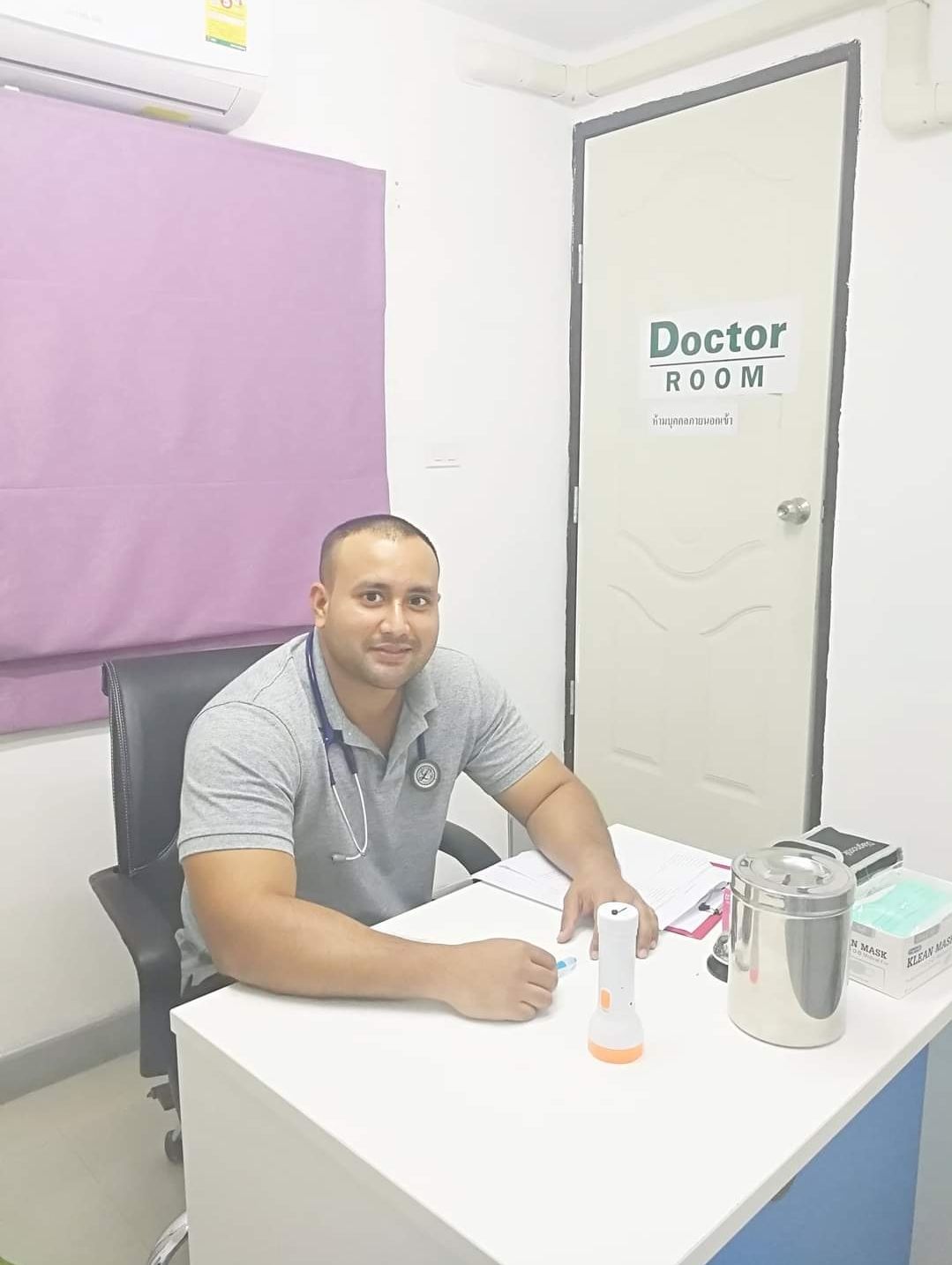
Dr. Ponlawat Pitsuwan is a physician at Doctor Bangkok, a private clinic in central Bangkok. He sees expats, residents, and medical tourists for general medicine, wellness consultations, and IV therapy. His focus is straightforward, evidence-based care delivered in plain language.