

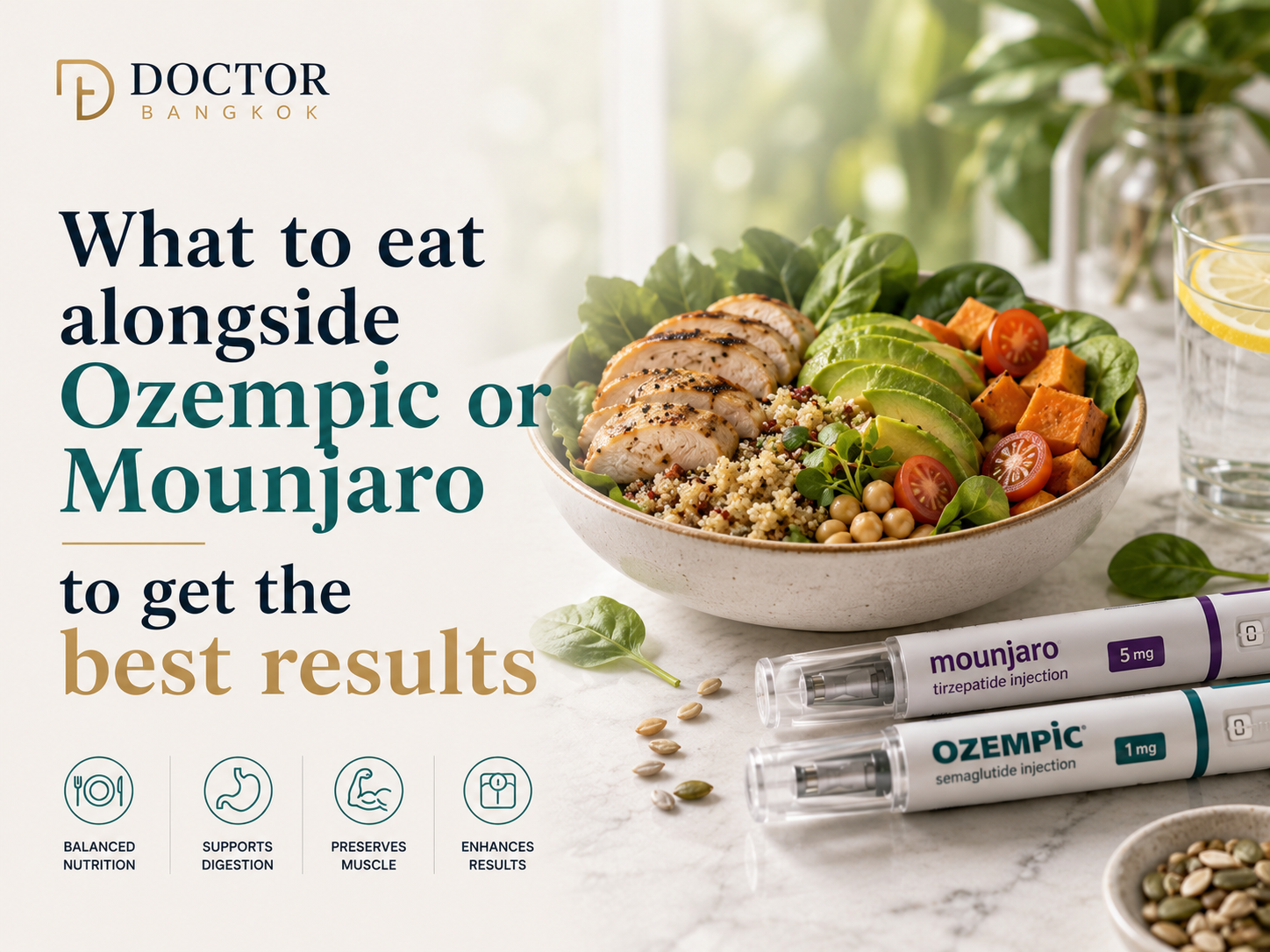
Clinically reviewed by Dr. Ponlawat Pitsuwan, Physician, Doctor Bangkok. Last reviewed: July 2026
A weight loss injection diet is not just about the medication. What you eat determines whether you lose fat and keep muscle, or simply eat less and feel worse. At Doctor Bangkok, we guide patients through both: the right medication at the right dose, and a practical eating plan that works in Bangkok’s food environment.
You are on Ozempic or Mounjaro, or you are thinking about starting. The injection is doing its job. You are not as hungry. But you are staring at a plate of pad kra pao wondering whether this is helping or hurting you. That confusion is exactly what this article is for.
Every bite matters more than it did before. Eat the wrong things and you will feel sick, lose muscle instead of fat, and plateau earlier than you should. Eat the right things and the medication works with your body, not against it.

Why what you eat matters more on these medications
When your appetite drops by half, your total food intake drops with it. That sounds like a good thing. But if those smaller meals are not built around protein and vegetables, you end up under-eating nutrients your body needs to hold onto muscle.
Muscle loss is the quiet problem with rapid weight loss. The number on the scale looks good. But if a large portion of what you lost was muscle, your metabolism slows and weight comes back faster when you reduce or stop the medication.
The other issue is nausea. High-fat, greasy, or heavily fried food sits in your stomach far longer than it used to. In Bangkok, that means the khao man gai with extra skin, the fried rice with a fried egg on top, or the coconut-heavy curry can hit your stomach like a wall. I see patients who were doing fine until they ate a heavy street food meal and spent the next day feeling awful.
The core rules for a weight loss injection diet
Protein comes first, every meal
This is the rule I repeat most in consultations. When your portions shrink, protein has to take priority. It protects your muscle, keeps you fuller for longer, and supports your metabolism.
Aim for roughly 80 to 120 grams of protein per day. That requires deliberate choices when you are eating less overall. In Bangkok, good options are easy to find: grilled chicken or fish from most local restaurants, tofu in soups and stir-fries, boiled eggs, plain Greek yoghurt from Villa Market or Tops, and khao tom with lean pork or shrimp. Clear soups like tom yum with seafood or chicken are genuinely good choices, particularly if you are feeling nauseous and cannot face a full meal.
Vegetables fill the space, not rice or noodles
Jasmine rice is not the enemy, but it should not be the centre of your plate anymore. On a suppressed appetite, the carbohydrates you eat need to earn their place. A small portion of rice alongside protein and vegetables is fine. A large plate of fried rice with very little else is not.
Non-starchy vegetables are easy to find in Thai food: morning glory, broccoli, cucumber, cabbage, baby corn. They should make up the bulk of your volume. They are low in calories, high in fibre, and gentle on a sensitive stomach.
Watch what Bangkok’s food culture does to your nausea
This is something the UK and US diet guides do not tell you, because they are not written for someone eating in Sukhumvit or Silom. A few specific Bangkok patterns tend to make side effects worse.
Very oily street food is the main one. Pad see ew cooked in a lot of oil, fried rice with pork crackling, or any dish swimming in coconut cream will leave you bloated and nauseous for hours. Ask for dishes to be cooked with less oil. Most vendors and restaurants will accommodate this without any fuss.
High-sugar fruit smoothies are a second trap. Mango, banana, and pineapple smoothies are everywhere in Bangkok and feel healthy, but many are blended with sweetened condensed milk or syrup. Fresh papaya, guava, or a small portion of watermelon are better choices. Alcohol worsens nausea and slows your progress. You do not need to stop entirely, but heavy nights out work directly against the injection.
Eating on injection day
Both Ozempic and Mounjaro are weekly injections, so the effect builds over time rather than peaking on a single day. That said, some patients notice stronger nausea in the 24 to 48 hours after injecting. On those days, smaller meals, lighter food, and plenty of water help more than any specific food choice.
Staying hydrated is always important in Bangkok’s heat. Dehydration makes nausea and fatigue worse. Aim for two to two and a half litres of water per day, more if you are spending time outside.

Foods to limit or avoid
You do not need a strict banned list. But these categories consistently cause problems for patients on these medications.
Very fatty or deep-fried dishes worsen nausea and bloating. High-sugar drinks, including fruit smoothies, bubble tea, Thai iced coffee with syrup, and soft drinks, raise blood glucose and add empty calories. Processed snacks like chips, crackers, and convenience store pastries tend to disappear through the nausea window without contributing protein or nutrients. Large meals taken all at once are harder to tolerate than smaller, more frequent ones.
None of this means you eat perfectly every day. It means building a pattern that works most of the time.
Buying safely in Bangkok: counterfeit pens are a real risk
I want to be direct about this because it matters. Bangkok customs seized more than 119,000 counterfeit GLP-1 injectables in 2025. These were fake Ozempic and Mounjaro pens sold through social media, Telegram channels, and informal online sources. Some contained wrong doses. Some contained nothing at all. Some contained unknown substances.
If you are buying weight loss injections outside of a licensed clinic, you are taking a serious risk. Red flags include prices well below what a licensed clinic charges, no original manufacturer packaging, no cold-chain delivery, and no requirement for a medical consultation before purchase.
At Doctor Bangkok, all medication is sourced through licensed pharmaceutical distributors. Every patient has a medical consultation before any prescription is issued, and pens come in original manufacturer packaging with cold-chain documentation.
Prescription and legal status in Thailand
As of early 2026, the Thai Ministry of Public Health classified GLP-1 injectable medications as specially controlled drugs. This means they require a valid Thai doctor’s prescription. A prescription from your home country does not transfer directly. You need a consultation with a licensed Thai physician.
Any clinic or website offering these medications without a consultation is operating outside Thai law. This is not a technicality. It is a safety issue.
Already on Ozempic or Mounjaro at home? Here is how to continue
This is one of the most common situations I see at the clinic. Expats and medical tourists who are mid-programme at home and need a refill, a dose review, or bridging documentation before flying back.
Bring your existing prescription or original medication packaging to your consultation. We can review your current dose, issue a Thai prescription for the duration of your stay, and provide documentation for your home doctor. If you are flying back with medication, carry it in your cabin luggage in its original packaging. A prescription letter from the clinic makes customs straightforward in most countries.
What happens if you stop the medication
Appetite returns when you stop, and weight regain is common without sustained dietary habits already in place. This is why the eating guidance in this article is not a short-term fix. It is the foundation of a longer pattern.
The patients who keep weight off after stopping or reducing medication are the ones who used the suppressed-appetite period to genuinely change how they eat. Before stopping, talk to your doctor about a gradual exit plan. Dose reduction, continued dietary habits, and follow-up monitoring make a real difference to long-term outcomes.
Doctor Bangkok offers medically supervised weight loss injection consultations for expats, residents, and medical tourists. Whether you are starting treatment, continuing a programme from home, or need a prescription review, our English-speaking physicians can assess your eligibility, prescribe safely, and guide your diet plan for Bangkok’s food environment. We are located in central Bangkok, BTS accessible, with same-day and next-day appointments available. Visit doctorbangkok.co.th to book.
Frequently Asked Questions
What should I eat on a weight loss injection diet in Bangkok?
Prioritise protein at every meal: grilled chicken, fish, tofu, eggs, or lean pork. Keep portions of rice and noodles small and fill the rest of your plate with vegetables. Heavily oiled street food and high-sugar smoothies are the two things most likely to worsen nausea on these medications.
How do I avoid counterfeit weight loss injection pens in Bangkok?
Only get medication from a licensed clinic with a valid Thai prescription. Warning signs include unusually low prices, no original manufacturer packaging, and any supplier who does not require a medical consultation. Bangkok customs seized over 119,000 fake GLP-1 pens in 2025, so this risk is genuine.
Do I need a prescription for weight loss injections in Thailand?
Yes. As of 2026, GLP-1 injectable medications are classified as specially controlled drugs in Thailand and require a Thai doctor’s prescription. Your home-country prescription cannot be used directly. Any supplier offering these medications without a consultation is not operating legally.
I am already on Ozempic or Mounjaro at home. Can Doctor Bangkok help me continue?
Yes. Bring your existing prescription or original medication packaging to the consultation. We can review your dose, issue a Thai prescription, and provide documentation for your home doctor. Carry medication in cabin luggage in its original packaging, with a prescription letter, when flying.
How much weight can I realistically expect to lose?
Clinical trial data shows average body weight reduction of around 15% with semaglutide and 15 to 21% with tirzepatide, but those results came alongside structured diet and lifestyle changes. Realistic progress depends on consistency, diet quality, and how long you stay on the programme.
What foods make nausea worse on Ozempic or Mounjaro?
Very fatty or deep-fried foods, high-sugar drinks, and large meals taken all at once are the most common triggers. These medications slow how fast your stomach empties, so heavy food sits much longer than it used to. Smaller, lighter, protein-focused meals manage this best.
What happens to my weight when I stop the injection?
Appetite returns when you stop the medication, and weight regain is common without dietary habits already in place. The goal during treatment is to build those habits, not just eat less. Talk to your doctor about a gradual exit plan before stopping.
Dr. Ponlawat Pitsuwan
Physician, Doctor Bangkok
a private medical clinic in central Bangkok. He sees expats, residents, and medical tourists for weight management, general health consultations, and medically supervised treatment programmes. His focus is straightforward, evidence-based care delivered in plain language.
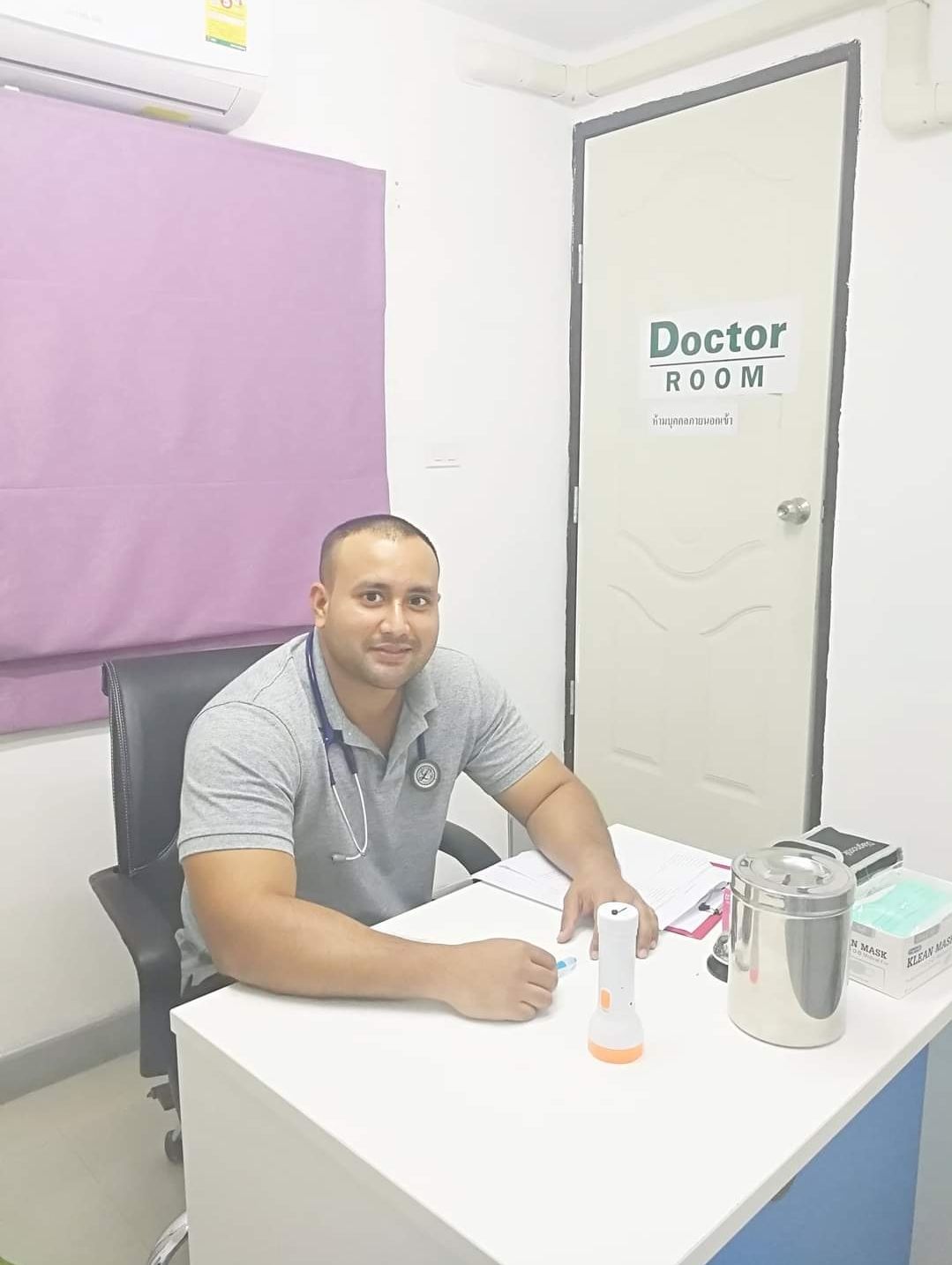
Dr. Ponlawat Pitsuwan is a physician at Doctor Bangkok, a private clinic in central Bangkok. He sees expats, residents, and medical tourists for general medicine, wellness consultations, and IV therapy. His focus is straightforward, evidence-based care delivered in plain language.